






Elif Özaksu
Corporate
- Thread Author
- #1
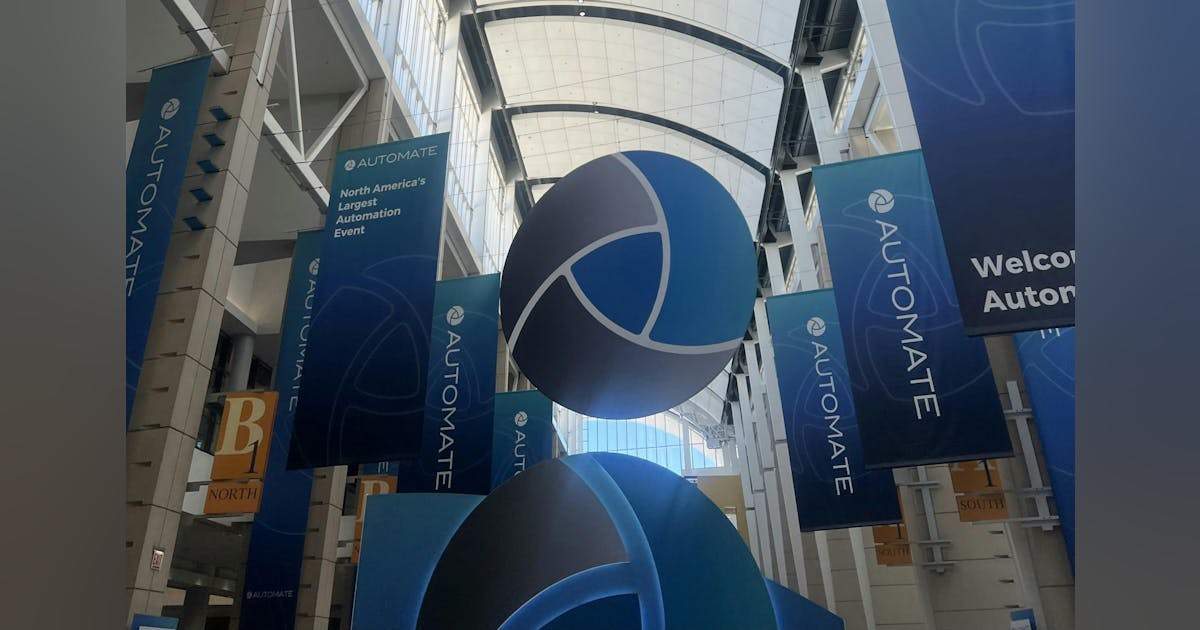
The Automate 2026 exhibition in Chicago hosted innovative technologies that shed light on the future of the manufacturing sector. Among this year's most striking themes were artificial intelligence (AI)-powered software-defined automation, advanced connectivity solutions, and flexibility in technology.
─────────────────────────
💡 AI Everywhere: Emphasis on Connectivity and Flexibility
Traces of artificial intelligence were visible in every corner of the exhibition. Companies showcased how they are increasing connectivity and flexibility through the agents and platforms they have developed. Industrial AI has now moved into the "application phase."
─────────────────────────
📡 Ericsson: The Key to Digital Transformation with Private Networks
Telecommunications giant Ericsson demonstrated how its private network solutions contribute to manufacturers' digital transformation journey. It was particularly emphasized that 5G technology plays a critical role in connected factory and warehouse environments.
[]Physical AI and Connectivity: Ericsson showcased the benefits of transitioning to physical AI in terms of connectivity.
[]The Power of 5G: Private 5G networks optimally connect employees, machines, and data, increasing efficiency.
[]Predictive Maintenance: The company's AI-powered, 5G-enabled predictive maintenance solution reduces downtime, while allowing sensors to be placed in challenging locations and enabling real-time data flow.
[]Unified Connectivity Platform: A unified connectivity platform that integrates existing digital assets facilitates the adoption of new technologies. 5G offers scalable and flexible solutions for managing the large volume of data from industrial IoT devices.
─────────────────────────
⚙️ Beckhoff: Software Automation and AI Development
Beckhoff demonstrated at the exhibition how it helps companies integrate AI into their processes with various tools and platforms.
[]TwinCAT CoAgent: Beckhoff introduced TwinCAT CoAgent, which it describes as an "open, model-agnostic AI assistant" for automation programming and control engineering.
[]Open System Approach: This digital assistant is designed as an open system that allows the user to choose their preferred large language model.
[]Supporting Engineers: TwinCAT CoAgent aims to support engineers throughout the automation lifecycle by combining generative AI with specialized agents.
[]Solution to Industry Challenges: It aims to address industry challenges such as shorter development cycles, high-quality requirements, and a shortage of skilled labor. By automating routine tasks, it allows engineers to focus on more complex work.
─────────────────────────
🤝 Universal Robots: Flexibility in Developing AI Models
Universal Robots (UR), specializing in AI-powered collaborative robots, focuses on AI in physical, real-world operations. UR serves as a platform for other companies to develop their AI models.
[]Production-Quality Test Environment: UR allows companies to test their AI models, and even humanoid robots, in a production-quality environment.
[]Early Problem Detection: This approach ensures that models encounter variability and physical interaction early on, helping to reveal problems before deployment.
[]Scalability and Speed: It increases the flexibility of AI applications by providing scalability, speed, and reduced downtime.
[]Live Demos: Live demos showcased with Mobile Industrial Robots highlighted the benefits and applications of AI-powered robots:
Smart Pallet Depalletizing with AI Vision
[]Vision-Guided Precision Assembly
[]AI-Powered Inspection
[]Intelligent Unstructured Picking
[]Flexible Machine Tending
[]Real-Time Force-Controlled Polishing
[]Autonomous Mobile Robots for Dynamic Material Movement
[]Extensive Partner Network: UR has over 1,200 technology and OEM solution partners worldwide to provide secure foundations for AI robots.
[]Safety and Replication: Prioritizing safety in every deployment, the company aims to reduce deployment risk and shorten the time between pilot phases and widespread adoption by supporting the replication of models and technologies across factories.
─────────────────────────
Automate 2026 once again proved that the future of the manufacturing sector will be built on artificial intelligence, advanced connectivity, and flexibility. Companies are looking for ways to increase operational efficiency, reduce costs, and gain a competitive advantage by using these technologies.