








Cengiz Özemli
Academic
- Thread Author
- #1
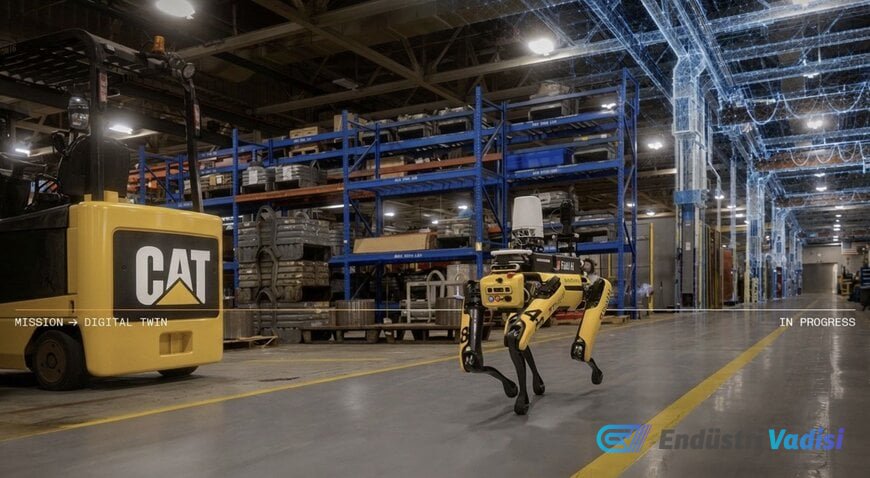
🚀 A Big Step Towards Autonomy in Heavy Industry
Caterpillar and FieldAI have joined forces to integrate physical AI and robotic systems in heavy industry and manufacturing facilities. This collaboration aims to bring foundational models for robotics into existing industrial operations, supporting autonomous inspection and operational analysis.
⚙️ Solution to Industrial Automation Challenges
The collaboration addresses technical constraints in deploying autonomous systems in dynamic and unstructured environments such as mining sites and manufacturing plants. Traditional rule-based automation systems struggled to adapt to changing spatial variables and active work areas. To solve this problem, Caterpillar's engineering parameters and operational data are being combined with FieldAI's robot-agnostic foundational models. This approach processes high-volume sensor data, enabling robotic hardware to navigate and operate reliably in complex industrial automation scenarios.
🧠 Technical Architecture and System Responsibilities
The system architecture utilizes NVIDIA accelerated computing hardware and NVIDIA Omniverse software platforms to create high-fidelity digital twins of physical sites. Responsibilities are clearly delineated: Caterpillar provides the necessary operational parameters, job site metrics, and mechanical engineering context for heavy machinery. FieldAI, on the other hand, provides the foundational physical AI algorithms and autonomy models that translate these datasets into localized spatial awareness for robotic platforms. By simulating environments through the digital infrastructure before physical deployment, the system continuously refines its operational logic without interrupting active industrial workflows.
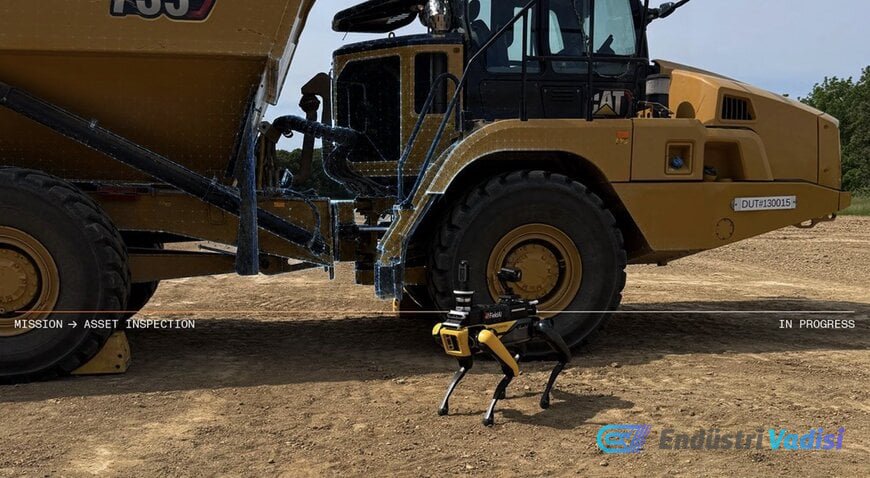
🌍 Application Areas and Implementation
The deployed technologies have been configured for construction, mining, and internal manufacturing facilities. The application focuses on creating digital twins of job sites and factories to provide foundational spatial data. Concrete applications include autonomous visual and sensor-based inspections to monitor infrastructure integrity and equipment health. Additionally, the system runs operational optimization simulations to identify bottlenecks in equipment flow and plant logistics. Caterpillar outlined this operational model at CES in January 2024, emphasizing the necessity of connected workflows and data-driven site management for future industrial applications.
📈 Operational Impact and Metrics
By converting real-time observations into structured digital insights, the integrated systems are designed to stabilize process execution and enhance job site safety. Reliance on physics-based simulation and AI-driven decision pathways enables autonomous machines to assess spatial data to identify potential hazards, maintaining operational continuity in environments where manual data collection is inefficient.
John Tuntland, Senior Vice President at Caterpillar, stated, "These technologies provide our teams with greater visibility into how our facilities operate and help us identify opportunities to enhance safety, optimize flow, and make more informed decisions."
Through the ongoing deployment of these foundational models across hundreds of test and operational sites, the combined systems are delivering measurable improvements in situational awareness and production logistics.






















