







Süeda Asil
Corporate
- Thread Author
- #1
A New Era in Industrial Data Flow
With the widespread adoption of industrial artificial intelligence applications, access to reliable data at the equipment level has become a critical need for manufacturers. Although over 300 million motorized systems worldwide account for approximately 60% of industrial electricity demand, most remain "invisible" to analytical platforms. While 84% of manufacturers report benefiting from AI, only 20% of AI use cases are successfully scaled due to barriers such as data quality and accessibility. Adding external sensors to existing motors can create installation complexity and lead to data silos.
ABB Intelleqt™: Factory-Integrated Smart Motor
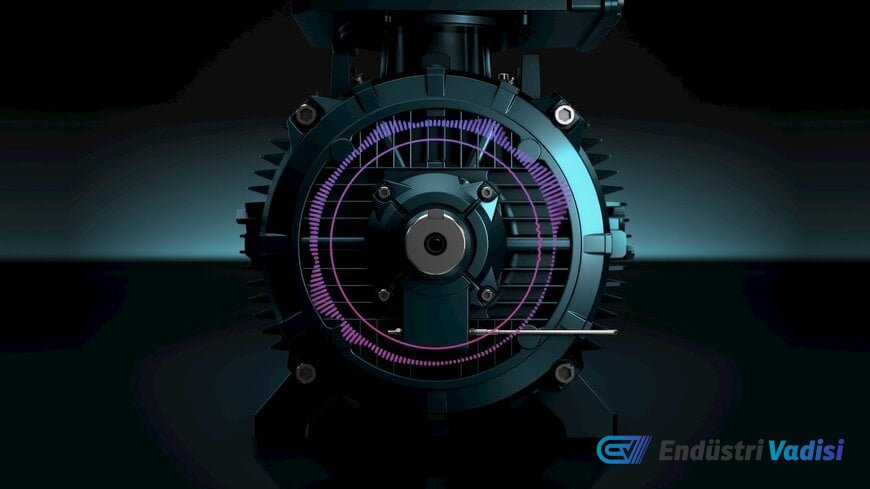
To overcome these challenges, ABB has introduced the Intelleqt™ low-voltage motor, featuring factory-integrated sensing and edge computing capabilities. This new generation motor captures and processes operational data directly at the asset level, helping to prevent unplanned industrial downtime. Introduced at the SPS trade fair in Germany, Intelleqt™ is claimed by the company to be the first motor in the global $18 billion IEC and NEMA low-voltage motor market to integrate sensing, edge computing, and connectivity features during the manufacturing phase.
Plug-and-Play Approach and Data Sovereignty
Intelleqt™'s plug-and-play approach allows operators in critical sectors such as data centers, water infrastructure, and food production to stream motor health and performance data to their existing digital platforms from the very first startup. Thanks to its open architecture, end-users retain full ownership of their data, enabling them to build the necessary data infrastructure to scale AI-powered operations.
Predictive Fault Detection and Energy Optimization
By transforming motor data into actionable insights at the edge, Intelleqt™ supports early fault detection before failures disrupt production. According to ABB, early fault detection can reduce unplanned downtime by up to 50% and help operators avoid costly failures that can amount to $1.5 million in the event of a 12-hour outage of a critical 110 kW motor. Continuous operational data also helps plant teams improve reliability and productivity, identifying opportunities for energy savings of 30% or more.
Future Plans and Competition
Stefan Floeck, President of ABB's IEC Low Voltage Motors Division, states that the transition to AI-powered operations is accelerating, but most motors do not generate data and remain "invisible" to this intelligence. Intelleqt™ is entering a customer co-creation phase with OEMs and end-users, initially focusing on Europe, Japan, China, and India, with a broader rollout planned for 2027. This development is supported by ABB's $1.3 billion R&D investment in 2025 and approximately 7,800 R&D employees.
While condition monitoring in industrial rotating machinery is often guided by ISO 20816-3 vibration severity limits, motor efficiency is classified under IEC 60034-30-1 (IE1 to IE5). Traditional motor fleet monitoring relies on external wireless vibration and temperature sensors attached to the motor frame, such as ABB Ability Smart Sensors, Schaeffler OPTIME, or SKF Enlight. While such clip-on sensors simplify retrofits, each asset requires separate installation, commissioning, and data integration.
In the connected low-voltage motor market, ABB Intelleqt™ competes with motor and digital service ecosystems from suppliers such as Siemens (SIMOTICS motors with SIDRIVE IQ platform), WEG (W22 motors with WEG Motor Scan), and Nidec. By integrating sensing and edge computing into the motor at the factory, ABB aims to provide standardized, ready-to-use asset data for integration into SCADA, MES, and industrial AI applications.