





Erkan Teskancan
Corporate
- Thread Author
- #1
🚀 Industrial Automation and the Balance of Safety
In an era of rapidly expanding industrial automation, manufacturers face the significant challenge of integrating robotic systems and advanced machinery into high-efficiency environments without compromising safety. Collaborative robots (cobots), autonomous mobile robots (AMRs), and automated storage systems have transformed everything from production lines to distribution centers. However, without proper safeguarding measures, these innovations can pose serious risks to both employees and equipment.
🛡️ Why Physical Barriers Matter
An effective machine guarding strategy requires more than just compliance with regulations. It's essential to deeply understand how machines interact with people and to develop designs that reduce downtime, facilitate access, and protect everyone, keeping this intersection point in mind.
In automated manufacturing environments, guarding systems serve as critical barriers between people and hazardous equipment. These barriers protect against everything from flying debris to unexpected equipment movements. In systems like CNC machines, robotic arms, and high-speed conveyors, even a minor incident can lead to injuries or costly downtime if appropriate precautions are not taken.
Unlike sensor-based systems such as light curtains or pressure-sensitive floor mats, physical guarding offers a visible and consistent point of protection. While sensor-based systems can complement guarding, they also have some drawbacks. For example, a floor mat might unnecessarily stop a machine when a worker inadvertently steps on it, reducing productivity.
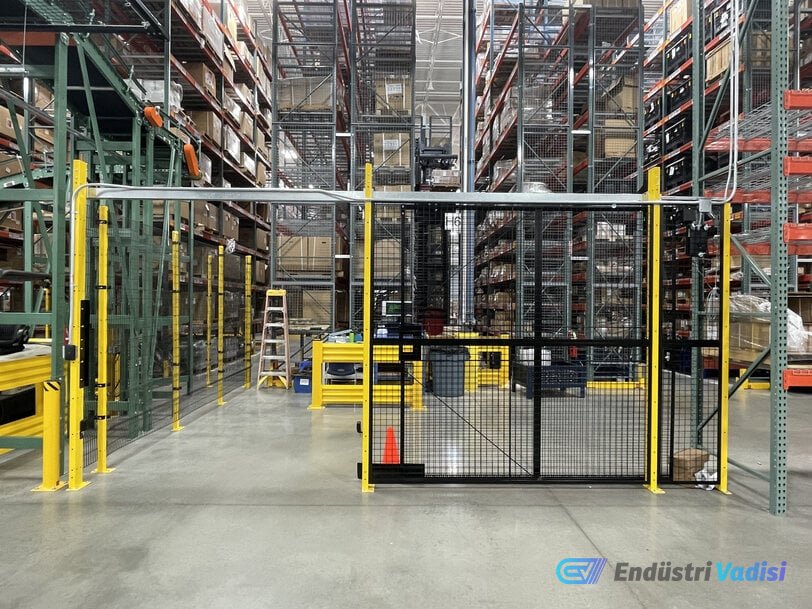
Wire mesh guarding systems, on the other hand, offer a tangible and visual deterrent that cannot be overlooked. They define clear boundaries, can be customized for machine access, and can be designed to withstand high-impact zones, thereby ensuring both safety and production reliability.
⚙️ Flexibility and Scalability: Solutions for the Future
The integration of robotic and automated systems into manufacturing processes has prompted regulatory bodies to re-evaluate best practices. Guarding designs now must account not only for injury prevention but also for operational protocols such as entering a robotic cell or changing materials. Therefore, many facilities prioritize flexible designs that support both regulation and workflow efficiency.
Modular wire mesh systems, particularly frameless panel designs, offer significant advantages in this context. These systems can be quickly modified on-site; they can be cut, adjusted, or reconfigured without requiring new engineering drawings or long lead times. For facilities that need to implement guarding after equipment is already installed, flexibility becomes critical. This ensures that safety upgrades can be completed during planned downtime or on second/third shifts, minimizing disruption to first-shift production.
💡 Design Considerations
Implementing an effective guarding system is not always a one-size-fits-all solution. The ideal solution strikes a balance between safety, durability, accessibility, and installation speed. Some of the most important considerations include:
- Access Needs: Integrated sliding or hinged doors with interlocks provide controlled entry and exit. These systems can be wired to shut down machinery the moment a door is opened, ensuring safety while allowing quick access for operators and maintenance crews.
- Durability Requirements: Facilities must assess whether guarding will be exposed to external impacts from forklifts, AMRs, or other equipment. In such environments, framed mesh systems offer better structural integrity, while frameless systems may suffice in lighter-duty areas.
- Customization Factors: Some applications require specialized access windows, tight integration around unique machine layouts, or panel cutouts to accommodate electrical conduits and control boxes. Accounting for these needs early on prevents costly rework.
- Spatial Awareness: A common mistake is underestimating how much space guarding will occupy. Machine layouts that appear compatible on paper might infringe on pedestrian aisles or forklift paths once guarding is installed. Overhead obstructions like pipes or lighting can also affect panel placement if not considered beforehand.
⚡ Balancing Speed and Safety
One of the biggest misconceptions in industrial design is that robust safety measures slow down production. In reality, well-designed guarding systems streamline processes by clarifying movement, minimizing maintenance delays, and reducing unplanned downtime due to human error or exposure to hazards.
When safety and automation are treated as mutually reinforcing rather than opposing forces, the result is a more agile and responsive facility. For facilities that need to implement custom safety solutions quickly, companies leading in wire mesh safety solutions and protective guarding systems have stepped in with modular offerings tailored to the demands of modern automation. For example, SpaceGuard's RageWire robotic guarding system features frameless wire mesh panels that can be easily modified on-site without engineering approvals. This allows maintenance crews to respond to real-time challenges without delay, shortening installation times and increasing the facility's responsiveness.
At the same time, SpaceGuard's BeastWire product line supports applications requiring fully framed panels and a more robust, engineered solution. By working with a provider that offers both options, manufacturers can have the flexibility to prioritize speed, durability, or a combination of both, according to their specific needs.
🌟 Smarter Automation, Smarter Safety
As robotics advance, so too will the discussions around industrial safety. Technologies like collaborative robots (cobots) with internal sensors that detect contact and halt movement promise greater coexistence between humans and machines. However, while these features reduce risk, they do not eliminate the need for physical barriers, especially in shared spaces or environments where unexpected situations can still occur.
Ultimately, the goal is not just to comply with safety regulations but to create a workplace where humans and machines can work in harmony. This requires not only smarter equipment but also smarter planning.