








Semih Asil
Industry Valley
- Thread Author
- #1
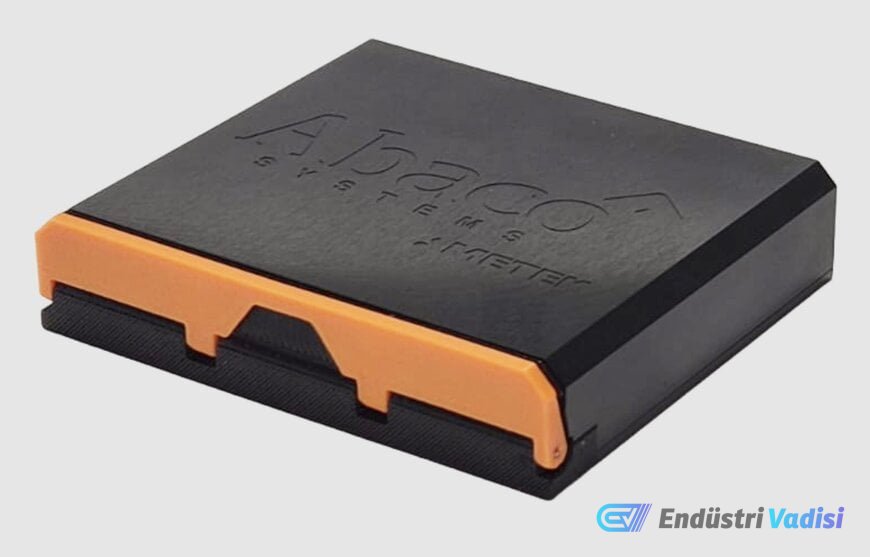
Abaco Systems Makes a Rapid Entry into the VNX+ Series!
Abaco Systems has introduced the VNX382, the first product in its VNX+ small form factor product class. This embedded single-board computer (SBC) is designed to bring functional safety and edge AI acceleration to size, weight, and power-constrained defense platforms.
Technical Details and Performance
- Processor Power: Utilizing the NXP i.MX95 system-on-chip (SoC), the VNX382 offers multi-core processing capability with six lockstep Arm Cortex-A55 cores and a dedicated Arm Cortex-M7 core that acts as an isolated security domain.
- AI Acceleration: Thanks to its onboard Arm Mali graphics processor and integrated neural processing unit (NPU), it seamlessly handles local AI workloads with 2 TOPS of inference capability.
- Hardware Security: The NXP EdgeLock Secure Enclave provides hardware-based security with cryptographic isolation, in-memory encryption, and post-quantum cryptographic primitives.
Standard Compliance and Modular Design
Developed in compliance with VITA 90 and VNX+ open standards, the VNX382 brings the VPX architecture to small-sized platforms. It offers peripheral networking options such as 1GbE and 10GbE interfaces, Time-Sensitive Networking (TSN) compatibility, USB, and CAN bus connectivity.
System integrators can configure the VNX382 as a SOSA-aligned VNX+ module in VITA 90.0 sidewall conduction-cooled or VITA 90.4 wedge-lock conduction-cooled form factors, or as a standalone System-on-Module (SOM) for custom enclosure integrations.
Additional Information
The VITA 90 (VNX+) standard creates a modular open systems architecture (MOSA) occupying approximately 30% of the physical volume of a traditional 3U VPX chassis while maintaining compatibility with modern high-speed serial interconnect fabrics. In VITA 90.4 implementations, wedge-lock retention systems transfer thermal dissipation directly from the module heat frame to the chassis sidewall fins, enabling sealed convection-free conduction cooling capable of withstanding mechanical shocks up to 40g and wide operating temperatures from -40°C to +85°C.





















