



Cengiz Özemli
Academic
- Thread Author
- #1
✨ Quality and Efficiency Through Automation
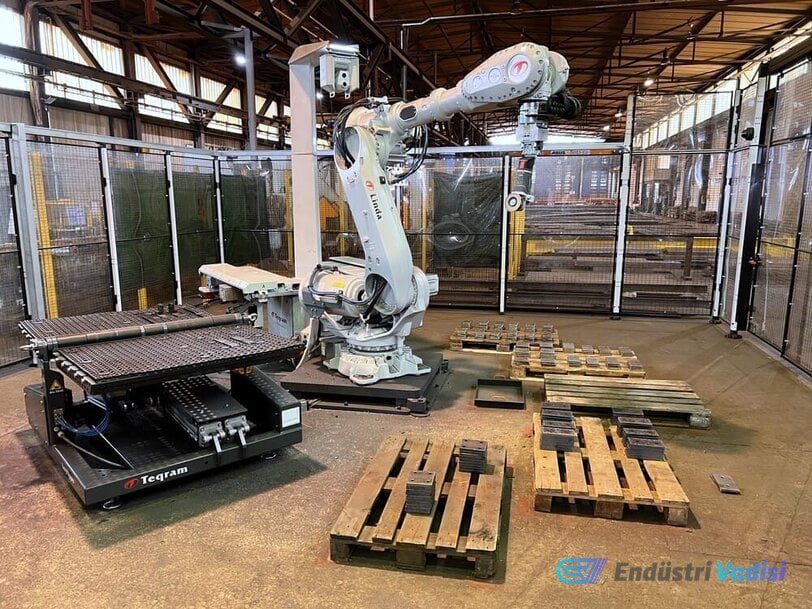
Claus Queck GmbH has taken a significant step by integrating Teqram's AI-powered EasyGrinder robot for deburring and grinding flame and plasma-cut steel parts. Previously, manual grinding created a production bottleneck due to inconsistent surface quality caused by worker fatigue and physical strain. Thanks to the EasyGrinder, Stahlbau Queck can now reliably achieve the P3 preparation grade required for demanding projects like those for Deutsche Bahn.
👁️ Smart Vision, Flawless Results
Equipped with advanced 3D vision technology, the EasyGrinder autonomously recognizes part geometries and applies the optimal grinding sequence without requiring manual programming or teaching. This robot, affectionately named "Linda" by the workshop team, has significantly improved workplace ergonomics and safety by taking over heavy and repetitive tasks. This transition provides Stahlbau Queck with fully repeatable surface quality, reducing the need for costly rework, while enhancing its competitiveness in international tenders and attracting talent seeking modernized work environments.
⚙️ Meeting Industry Standards
In the structural steel industry, meeting the P3 preparation grade of the DIN EN ISO 8501-3 standard is quite challenging. This requires surfaces to be free of all significant defects, complete removal of slag residues, and precise edge rounding (typically a 2 mm radius). Manually achieving this level of precision on heavy, thermally cut components is both labor-intensive and hazardous. The shortage of skilled labor in the European metalworking sector makes it difficult to find workers for such physically demanding roles. Systems like the Teqram EasyGrinder, which utilize advanced sensors and AI, eliminate the complex CAD programming associated with robotic welding or grinding. This allows manufacturers to efficiently automate high-mix, low-volume productions, which are characteristic of specialized structural steel work, and redeploy human talent to higher-value fabrication tasks.