








Süeda Asil
Corporate
- Thread Author
- #1
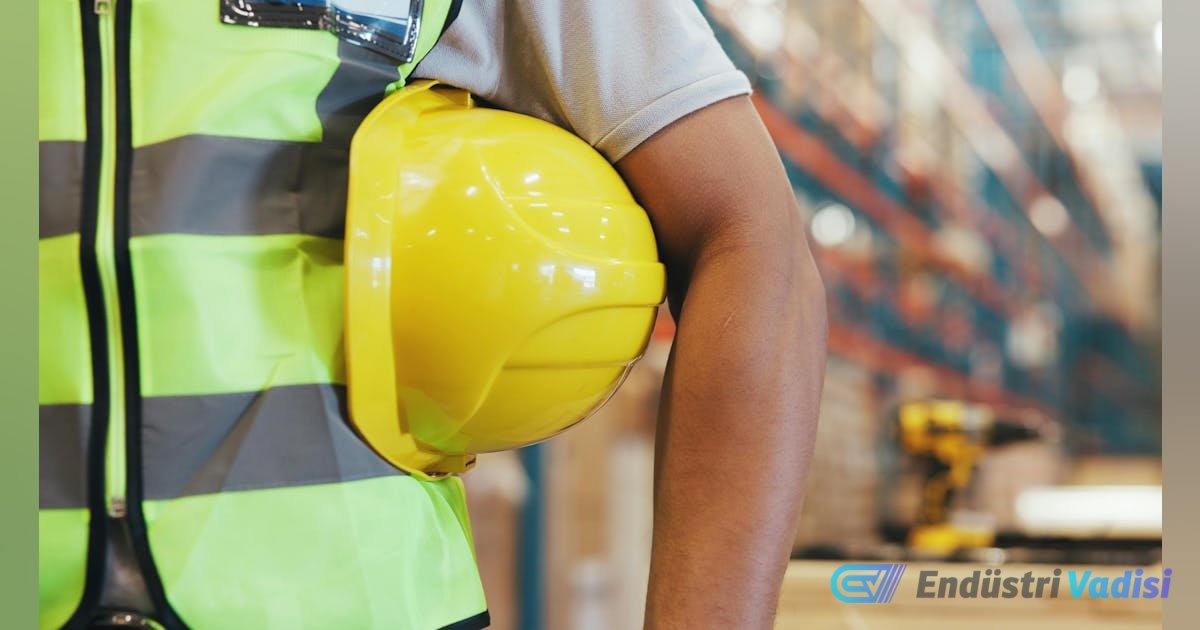
The Place of PPE in Digital Transformation
In modern industrial facilities, digitalization is evident in every corner. Sensors are integrated into conveyors, and compressors send status data to central panels. Production systems record every output and error in real-time. While equipment, inventory, and processes have digital identities, the personal protective equipment (PPE) used by employees has, until now, remained outside this digitalization.
Challenges of Traditional PPE Management
In most facilities, a safety helmet worn by a maintenance technician is tracked the same way it was 30 years ago. The safety manager manually records PPE, stores it in a file, and audits it with checklists. PPE management had become the last major operational category to be run with manual processes, as it was viewed as a compliance obligation rather than an operational data problem. This created the biggest gap in a connected digital transformation.
Digital Revolution in PPE with RFID and NFC
Today, chips like RFID and NFC are changing this disconnect. NFC chips embedded in production equipment such as helmets, harnesses, self-retracting lifelines, and safety vests are transforming passive protective equipment into connected assets with a permanent digital record. These chips can be read by smartphones that employees already carry, eliminating the need for specialized reader hardware.
Advantages of Smart PPE
- 🔋 Battery-Free Operation: NFC chips do not require batteries.
- ⚖️ Lightweight Design: Does not add significant weight to the equipment.
- 📝 Comprehensive Records: Can store all operational records such as issue date, inspection history, certifications, expiration dates, and the employee's emergency medical profile.
- 🌐 No Connectivity Issues: Works even in environments where most connected systems cannot reach, such as remote maintenance sites, high-noise facilities, and places where new hardware installation is costly, as it does not require gateways, power lines, or network infrastructure.
Data-Driven Inventory Management
Each piece of smart PPE carries a unique digital identity linked to a specific employee at the time of issuance. This allows the platform to provide a real-time view of the entire PPE fleet across every shift and location. Information such as where each piece of equipment is, who has it, when it was issued, and when it needs to be replaced according to manufacturer guidelines can be tracked instantly.

This creates a significant operational change in procurement processes. Replacement decisions shift from reactive responses to equipment failures, losses, or audit warnings, to planned, data-driven purchases based on actual usage patterns. For facilities managing multiple buildings or rotational contract workforces, the reduction in urgent orders and duplicate purchases is where the financial return is first seen.
Automated Inspection Records
Employees receive digital inspection alerts for their assigned equipment and complete guided checklists via their smartphones at specified intervals, such as before and after each shift. Each completed inspection is automatically recorded, timestamped, and linked to the equipment's digital identity, and thus to the employee. This eliminates the need for manual entry by the safety manager.
According to OSHA 29 CFR 1910.132, organizations are required to maintain inspection records. An online platform can be used to simplify this process. When an inspection is overdue, managers are alerted, and notifications are automatically sent to the employee via the app.
When an auditor arrives, the complete inspection history of every piece of equipment in the fleet becomes instantly accessible, reducing audit preparation that previously took days to a single digital export. The financial return is also evident in the prevention of potential compliance violations.
Instant Access to Medical Information in Emergencies
Every safety management system is tested by a medical emergency in the workplace. When such a moment arrives, access to critical medical information determines the outcome.
When an employee is injured and unable to communicate, first responders can access the employee's medical profile in seconds by scanning an NFC-enabled helmet with a smartphone or tablet. The profile can include allergies, medications, emergency contacts, and pre-existing conditions. This information is stored offline on the chip and can be accessed without network connectivity or a central database.
This information allows responders to avoid guesswork and treat the injured employee more informedly.
Benefits of Smart PPE for the Business
Smart PPE carries a nominal premium over standard equipment, and a safety management platform subscription increases this premium. However, most applications recoup the investment through improved procurement planning, reduced emergency purchases, staff time saved from manual record-keeping, and avoidance of compliance penalties resulting from poor record-keeping.
The more challenging argument involves costs that do not appear on any current dashboard: uninspected equipment noticed too late, slowed emergency response due to missing medical information, and purchasing expenditures based on losses rather than usage data. These unattributed items can accumulate over time without a better system, leading to major problems.
The investment in digital transformation in manufacturing is only as complete as its least connected component, and for most facilities, that component is still the human wearing and using protective equipment.























