








Alper Aktaş
Endüstri Vadisi
- Thread Author
- #1
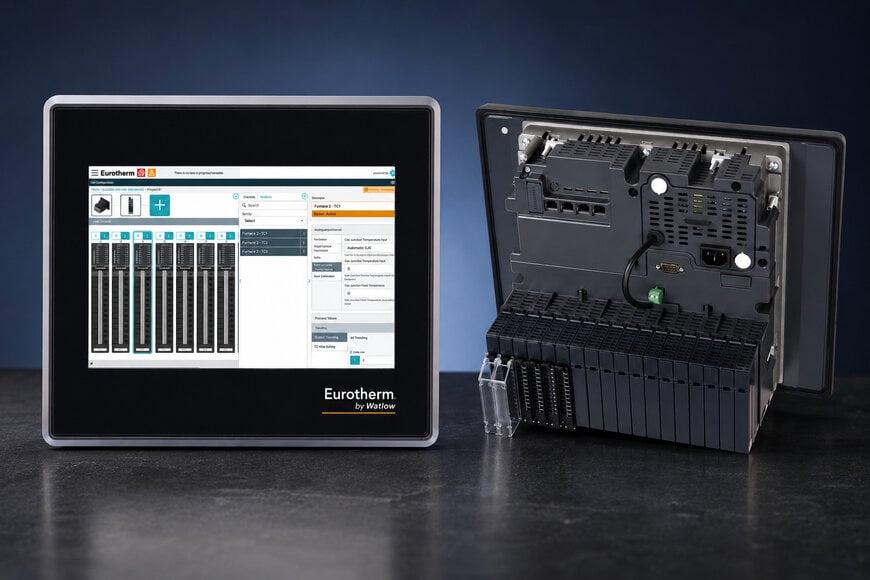
In industrial production, temperature control is critically important, especially in regulated sectors. Now, a groundbreaking platform is entering our lives to manage precise process data and create secure digital records in this area.
─────────────────────────
💡 Next-Generation Integration: A Revolution in Data Management
A new technical approach offers an integrated hardware and software architecture that unifies process control, automation, and industrial data management at the point of measurement. This system provides localized data capture capability to create secure, time-synchronized digital records for thermal production workflows.
─────────────────────────
⚙️ Operational Challenges and Data Fragmentation Come to an End
Regulated manufacturing environments require continuous monitoring of thermal processing metrics to strictly adhere to quality guidelines. Traditional systems often rely on fragmented architectures, such as physical recorders or discrete software layers. This increases system complexity and raises the likelihood of data inconsistency during audits.
To resolve these integration constraints, engineering operations require a unified data pipeline that guarantees continuous data integrity without introducing additional operational burden. Implementing localized data configuration at the physical sensor interface mitigates data loss risks, simplifies validation pathways, and establishes a standardized digital supply chain framework for enterprise-wide industrial automation.
─────────────────────────
🔬 Technical Architecture and Instrumentation Details
The process management solution employs a modular architecture that can scale from single-entity operations to enterprise-level distributed digital infrastructure. Hardware deployment includes the EPM-07 unit, configured for low-channel applications such as compact furnaces and processing skids, and the higher-density EPM-15 unit, designed for multi-zone thermal systems.
Hardware subsystems integrate high-precision inputs with field calibration capabilities designed to meet stringent thermal processing specifications, including the AMS2750 aerospace standard and CQI-9 automotive infrastructure guidelines. The accompanying Data Reviewer software layer manages historical telemetry visualization, facilitating electronic signatures and secure administrative chains of approval. The platform implements data isolation and security protocols compliant with FDA 21 CFR Part 11 and Annex 11 standards, transforming raw instrumentation data directly into tamper-proof records on the factory floor.
─────────────────────────
🏭 Industrial Application Areas and Operational Benefits
This distributed platform is applicable in high-reliability industries such as metalworking, heat treatment, life sciences, power generation, wastewater management, and food production. By executing data acquisition in parallel with primary thermal control loops, the system allows plant operators to monitor real-time variables, while quality assurance teams maintain long-term, verifiable process records.
This decentralized approach ensures process stability and audit readiness by documenting precise thermal profiles during critical production stages. The resulting data localization optimizes component traceability, reduces field validation times, and provides definitive verification metrics to resolve component performance claims or regulatory inquiries.
─────────────────────────
📊 Edge Architecture: Challenging Traditional Systems
This distributed edge architecture represents a structural departure from centralized supervisory control and data acquisition (SCADA) systems. Traditional SCADA systems often experience increased network latency and susceptibility to data loss during transmission interruptions. This platform eliminates the single point of failure found in monolithic enterprise databases by embedding compliant storage mechanisms directly at the measurement interface. Compared to traditional paper-based systems or basic programmable logic controllers without embedded cryptographic signatures, this modular solution reduces compliance processing times and minimizes the physical space required for thermal process control equipment.





















