



Elif Özaksu
Corporate
- Thread Author
- #1
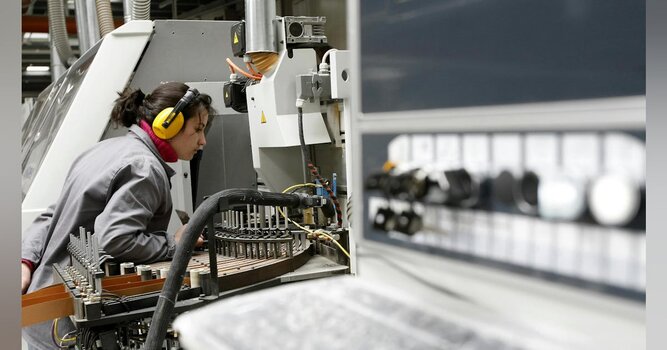
Homeowners try to preserve old elements when renovating, right? Manufacturers face a similar dilemma: How will they manage costs as they transition from the promises of Industry 4.0 to the human-centric vision of Industry 5.0?
─────────────────────────
💡 Why Digital Retrofit?
The Internet of Things (IoT) continues to gain momentum in industry; the number of IoT devices, which was 103 million in 2022, is expected to exceed 200 million by 2030. Keeping up with this pace is essential to remain competitive. This is where digital retrofit comes in. It's the most practical way to integrate existing factory equipment into the world of smart manufacturing without completely replacing it.
─────────────────────────
🤖 Transition from Industry 4.0 to 5.0
While Industry 4.0 focuses on data and automation, Industry 5.0 takes this framework a step further by making it human-centric. This means better production for both employees and the planet. The goal is to strengthen human-machine collaboration with advanced technologies like artificial intelligence (AI), reduce algorithmic biases, and equip the existing workforce with new skills. Furthermore, aligning with broader goals such as climate neutrality, in parallel with sustainability targets of regions like the EU, is critical.
In this transition, cyber-physical production systems (CPPS), which integrate physical machines with digital platforms, will lead to innovations by increasing autonomy and efficiency in production processes. For example, artificial intelligence can quickly scan large data sets to identify problems and support human decision-making processes with technological power.
─────────────────────────
⏳ The Challenge of Old Equipment
Industrial machines often have a service life of decades. This durability is a double-edged sword: while these machines represent significant capital, many lack the connectivity and data richness features of today's devices. This hinders manufacturers' ability to respond to the call of Industry 5.0.
Approximately 70% of production devices consist of old, non-IoT machines; meaning there is much to modernize. Even maintenance costs range from 15% to 70% of the cost of manufactured goods. Therefore, machine updates need to be very carefully considered. Many manufacturers use a mix of old and new machines to balance cost concerns with modern needs.
─────────────────────────
🔧 What Does Digital Retrofit Mean?
Digital retrofit enables data collection by equipping old operational technology (OT) with sensors. Then, manufacturers can use edge computing technologies (such as gateways or edge devices) to convert old protocols into IoT-compatible formats, allowing machines to communicate with each other.
These upgrades transform independent equipment into collaborative nodes within the entire system, paving the way for modern capabilities such as analytics and automation. A systematic retrofit journey begins with a comprehensive audit that assesses existing capabilities and process requirements. Then, the following can be implemented:
[] Sensor networks to monitor things like vibration and temperature.
[] Protocol bridges or gateways to convert old signals into modern industrial IoT streams.
- Middleware and edge computing to manage data flow and interoperability with cloud or enterprise systems.
Working with a competent partner is important to anticipate and mitigate these risks. Deploying an IoT platform can help by creating an abstract layer to collect data from any machine and create metadata that can integrate with any IT system.
─────────────────────────
💰 The Value of Retrofit for Industry 5.0
From the cost-effectiveness of an organization's investment in physical assets to the value derived from new analytics and automation capabilities, retrofit has countless benefits for Industry 5.0. Retrofit solutions can be implemented modularly and piloted quickly, providing early return on investment (ROI) in elements such as predictive maintenance and energy optimization.
By implementing powerful IoT solutions on existing machines with a reliable partner, manufacturers of all sizes can move towards a future where people and machines thrive in harmony.