





Ahmet Ö.
Corporate
- Thread Author
- #1
### The Importance of Position Sensors in Real-Time Condition Monitoring
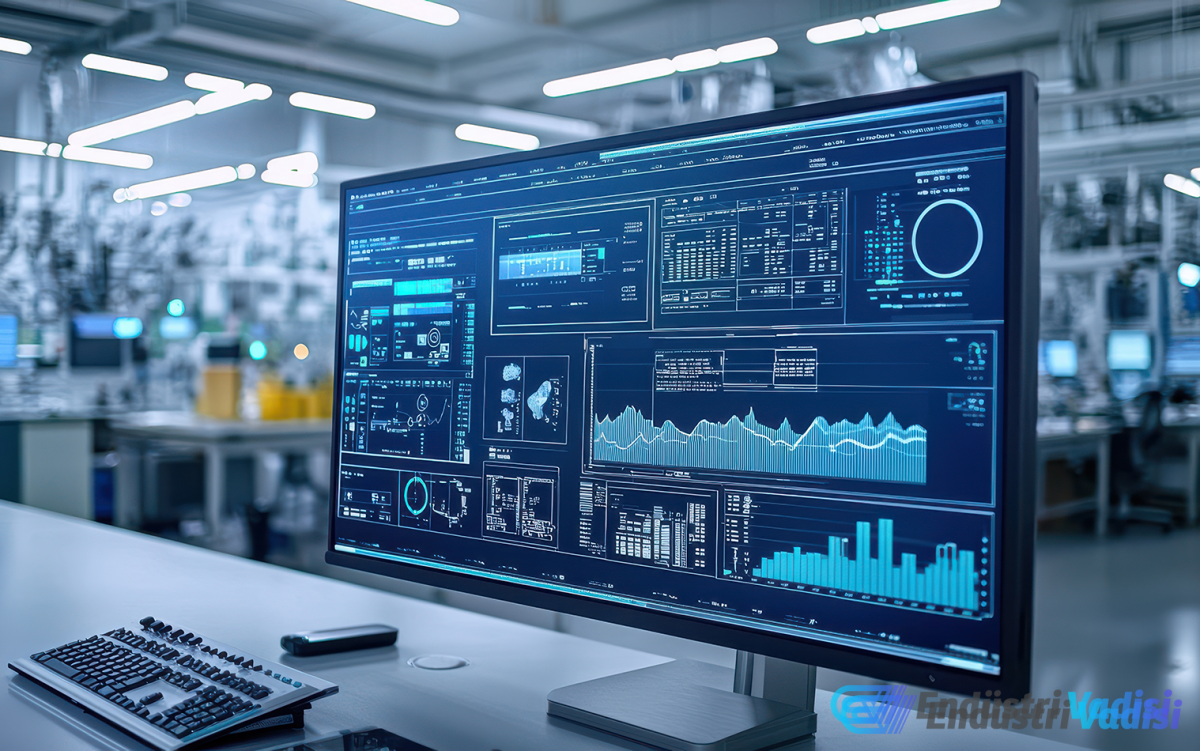
Production downtimes in industrial facilities lead to significant costs. In modern factory environments, the instantaneous detection of micron-level displacements and minor wear prevents production stoppages, resulting in substantial cost savings. Position (displacement) sensors, integrated with IIoT-supported Predictive Maintenance (PdM) systems, are revolutionizing preventive maintenance in this process.
### Position Sensors and Operating Principles
- Laser Triangulation Sensors: Detect changes in the position of a reflected point via a photodiode by shining light on the target. They offer micron-level accuracy.
- Eddy Current Sensors: Measure movements on metal surfaces through electromagnetic induction. They are resistant to high temperatures and can be used up to 500°C.
- Capacitive Sensors: Determine distance by measuring changes in capacitance created with the target. They have sub-micron accuracy but are for short distances.
- Ultrasonic Sensors: Measure the reflection times of high-frequency sound waves. They are used for longer distances, but their accuracy is not at the micron level.
### Key Applications in Industry
- Rotating Machinery: Shaft movements of turbines, motors, and pumps are monitored to detect imbalance, misalignment, and bearing wear.
- Belt Conveyor Systems: Belt deviations and roller wear are tracked in real-time using laser or LiDAR sensors.
- Press and Mold Monitoring: Tool deviations in metal sheet forming and injection molds are observed, preventing faulty production.
- Bridge and Structural Health Monitoring: Cracks and connection movements are monitored with laser or capacitive sensors, enabling early intervention.
### Integration Process into PdM Systems
- The correct sensor type is determined (laser, eddy, capacitive, etc.)
- Sensors are positioned close to the target with robust mounting
- Cabling and electrical protection are implemented
- Edge devices process real-time data and apply Pre-processing
- Anomaly detection and AI-based analyses are applied
- Monitoring and alert mechanisms are established with SCADA or IoT panels
### Real-World Success Stories
- Refinery Pump Monitoring: The existing system detected early bearing wear, 100% preventing fire risk and reducing maintenance costs by 20%.
- Wind Turbine: Blade tip movements were tracked with laser sensors, detecting early cracks and fatigue signs, extending lifespan by 25%.
- Pharmaceutical Filling Line: High-speed filling machines were optimized without downtime due to vibration and wear, ensuring quality and production continuity.
### Challenges and Solutions
- Electromagnetic interference and noise were reduced, especially with filtration and shielding techniques
- Calibration drifts were corrected with automatic reset routines
- Wireless communication improved cost and infrastructure in large-scale facilities
### Future Trends
- Anomaly detection improves with AI-supported edge analytics
- More accurate fault diagnosis with multi-sensor fusion
- Instant monitoring with millisecond latency-free 5G technology
### Conclusion
Real-time PdM systems supported by position sensors reduce production downtimes by 30-50%, providing a high return on investment. This technology monitors micron-level precise movements in industrial facilities, preventing emergency interventions and optimizing maintenance processes. It is critically important for power plants, automotive lines, and heavy process facilities.