





Erkan Teskancan
Corporate
- Thread Author
- #1
### Seamless Condition Monitoring with Displacement Sensors
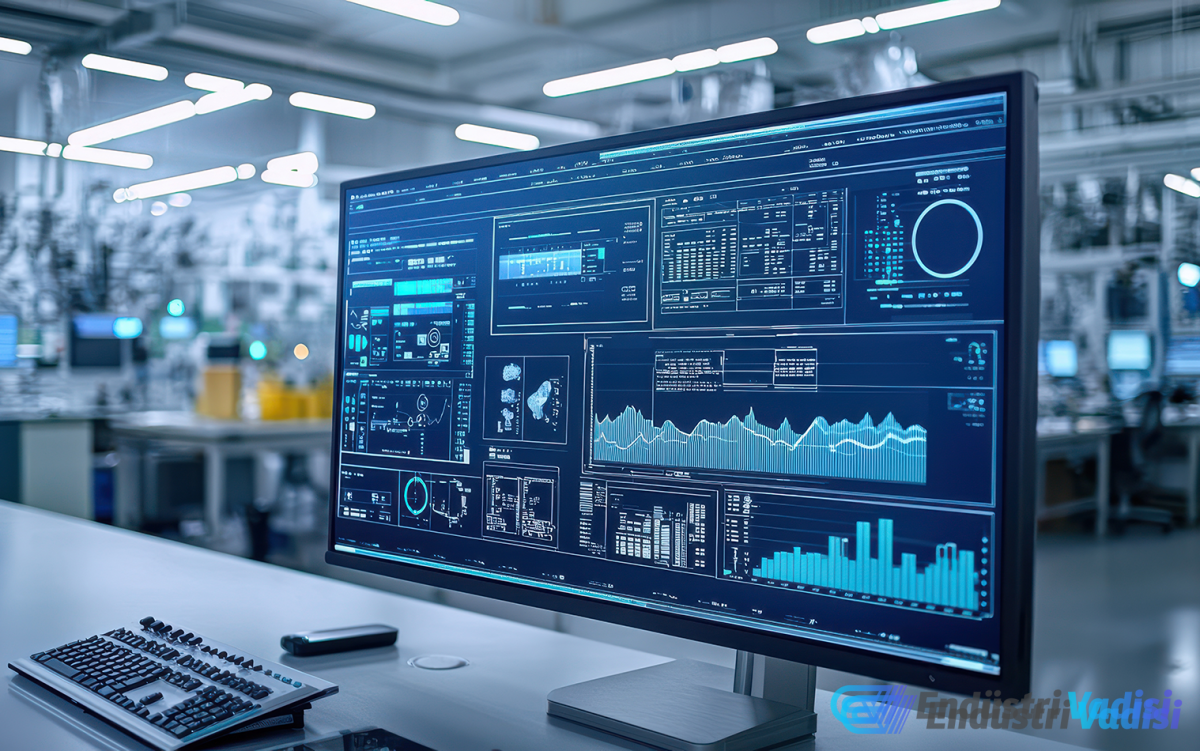
In 2025, a hidden shaft misalignment in a steel factory led to an unplanned shutdown, resulting in $100,000 worth of production loss for every hour of downtime. This incident highlights how downtime in modern industrial facilities can generate six-figure losses per hour. While traditional reactive maintenance intervenes after a failure, planned preventive maintenance often falls short. Predictive Maintenance (PdM), on the other hand, offers the possibility of intervention based on data before damage occurs.
### The Role of Displacement Sensors in PdM
Non-contact displacement sensors can instantly detect small movements in machine parts by measuring motion and gaps with micron or sub-micron precision. Laser triangulation, eddy current probes, capacitive, and ultrasonic sensors can perform reliable measurements even in harsh industrial conditions, including dust, oil, and high temperatures. These sensors transmit their measurements in real-time to IIoT (Industrial Internet of Things) systems, signaling abnormal conditions long before a failure.
### Technical Operating Principles
- Laser Triangulation: Measures micro-changes in distance and millimeter shifts by reflecting infrared light. Models with 0.005 µm repeatability and 400 kHz sampling rates are available.
- Eddy Current Sensors: Detects changes in proximity to metal targets using a high-frequency magnetic field. Can operate at temperatures up to 500°C and have a fast response time.
- Capacitive Sensors: Provides highly precise distance data by measuring changes in capacitance, especially preferred for conductive and dielectric layered surfaces.
- Ultrasonic Sensors: Based on the return time of high-frequency sound waves, can perform long-distance measurements but their precision is above the micron level.
### Key Application Areas in Industry
- Rotating Machinery: Axial or radial movement of shafts, sudden increases in clearances in turbines, motors, and pumps are used as early warnings.
- Conveyor Systems: Belt slippage and roller wear are monitored with laser or LiDAR sensors, enabling intervention before repairs are needed.
- Presses and Molds: Precise position measurement and component deviations in metal stamping and injection molds improve product quality.
- Bridge and Structural Monitoring: Crack propagation and structural shifts are continuously monitored, and maintenance planning is done at an early stage.
### Integration into PdM Systems
- Sensor type and technical specifications should guide selection.
- Robust mounting and correct wiring improve signal quality.
- Edge devices are used for data pre-processing; meaningful data is extracted with FFT and filtering.
- Artificial intelligence and machine learning algorithms can be applied for anomaly detection.
- Data is transmitted to SCADA or IoT panels via protocols like OPC UA, MQTT, and alerts are sent instantly.
### Real-World Applications
- In an oil refinery, an online PdM system detected slow shifts in pump bearings early, eliminating fire risks and reducing maintenance costs by 20%.
- Blade tip movements in a wind turbine were monitored with laser sensors, extending its lifespan by 25%.
- Motor and bearing issues in a pharmaceutical filling line were caught early, reducing unplanned shutdowns to zero.
### Challenges and Solutions
- Magnetic and optical noise filtering is reduced by vibration isolation.
- Calibration drifts in capacitive sensors are corrected with automatic zeroing.
- Wireless solutions like Wireless HART, 5G are preferred in large facilities to reduce cabling costs.
### Looking at Future Trends
- AI-powered edge analytics enable sensor networks to detect small signals instantly.
- 5G technology allows for real-time control with sub-millisecond latencies.
- Displacement sensors, integrated with vibration, acoustic, and temperature sensors, provide more comprehensive and accurate diagnostics.
### Conclusion
Displacement sensors significantly reduce maintenance costs and unplanned downtime by catching small positional changes before a failure. Industrial facilities reduce outages in critical equipment by 30-50% thanks to this technology. High accuracy and continuous monitoring enable planned maintenance, thus ensuring production continuity.