





Cengiz Özemli
Academic
- Thread Author
- #1
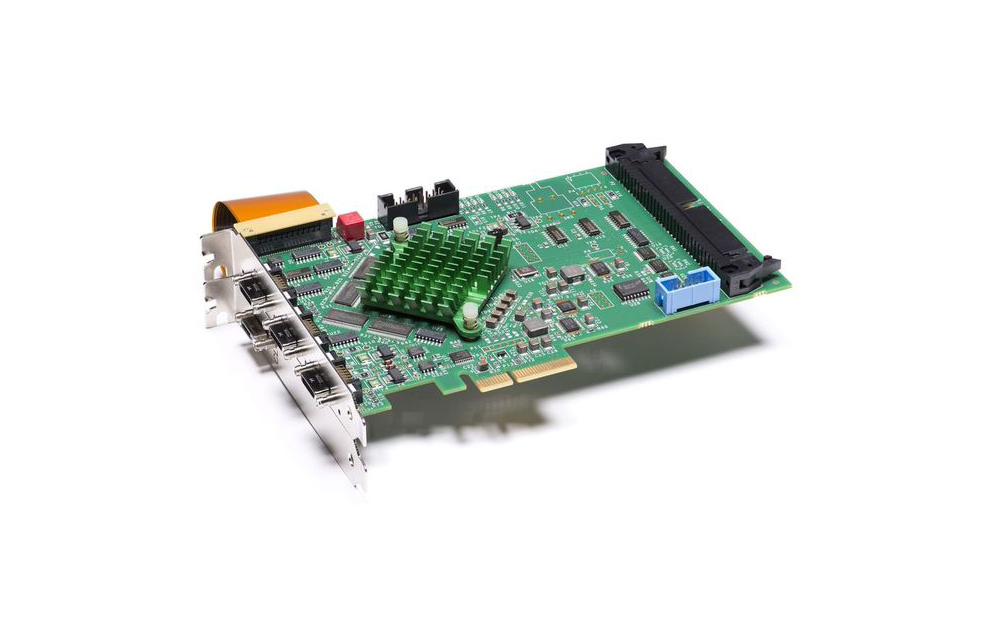
BitFlow, Inc. announced that its Axion-CL Camera Link frame grabber was selected by NASA Goddard Space Flight Center engineers as the ground-based interface device in their Single Event Effects (SEE) test campaign.
The tests, conducted under the NASA Electronic Parts and Packaging (NEPP) Program, involved subjecting the Princeton Infrared Technologies (PIRT) 1280MVCam InGaAs short-wave infrared (SWIR) camera to challenging radiation environments. These tests were performed at the NASA Space Radiation Laboratory (NSRL) at Brookhaven National Laboratory, using high-energy heavy ion beams.
### Camera System Used in the Test
- Camera: PIRT 1280MVCam, back-illuminated, thinned InGaAs focal plane array
- Resolution: 1280×1024 pixels
- Pixel pitch: 12 micrometers
- Analog-to-digital conversion: 14-bit
High-energy iron (Fe), silver (Ag), and terbium (Tb) ion beams were irradiated onto the camera at an energy of 575 MeV/nucleon. The objective was to qualify a commercially available camera system as a candidate for space-based instrumentation for the ARGOS (Aerosol Radiometer for Global Observation of the Stratosphere) program. ARGOS is a compact, NASA-supported instrument designed to measure stratospheric aerosols.
### BitFlow Frame Grabber's Role
At the heart of the test architecture, the BitFlow Axion-CL frame grabber served as the sole communication and data acquisition link between the irradiated camera system and the control computer. Installed in a host computer adjacent to the beam port, the frame grabber provided continuous real-time image capture and transmission of system commands to the PIRT 1280MVCam camera via the Camera Link standard.
The Camera Link connection simultaneously carried image and serial command traffic, allowing NASA engineers to monitor post-test Single Event Functional Interrupt (SEFI) signatures within a single interface.
### Challenging Test Environment and Results
- While the camera was positioned directly in the ion beam, the frame grabber and control computer were remotely operated from a shielded environment via a 30-meter Ethernet cable.
- The Camera Link connection ensured data integrity over this long distance, and the device operated under continuous ion bombardment at high linear energy transfer (LET) values on its triple-layer printed circuit boards.
The test campaign provided critical engineering data, including the detection of permanent SEFIs at low LET thresholds and the occurrence of system communication errors at minimal doses. This data guided NASA's component screening strategy for future ARGOS missions.
Throughout seven separate irradiation runs, from the initial iron beam exposure to the irreversible failure of the system, the BitFlow frame grabber and Camera Link bus provided an uninterrupted data stream, contributing to the comprehensive dataset published in the NASA Technical Memorandum.
ARGOS was launched on March 15, 2025, with the SpaceX Transporter-13 mission from Vandenberg Space Force Base.
Donal Waide, Business Development Manager at Advantech iSystems, stated, "NASA engineers chose BitFlow in a radiation test environment where every data packet is critical, and no errors in the data stream are acceptable. BitFlow's involvement in the NASA NEPP program is a strong indicator of its reliability and technical depth."
### About BitFlow
Since 1993, BitFlow has been developing reliable and high-performance Frame Grabber solutions. A leader in CoaXPress and Camera Link frame grabbers, the company offers high camera and frame grabber densities, trigger performance, and price advantages. Used in numerous applications worldwide, BitFlow continues its operations as part of Advantech.
### About Advantech
Advantech is a global leader in intelligent systems and embedded platforms, encompassing IoT, big data, and artificial intelligence. It focuses on connecting industrial chains with IoT hardware and software solutions and accelerating the goal of intelligent industry.