








Erkan Teskancan
Corporate
- Thread Author
- #1
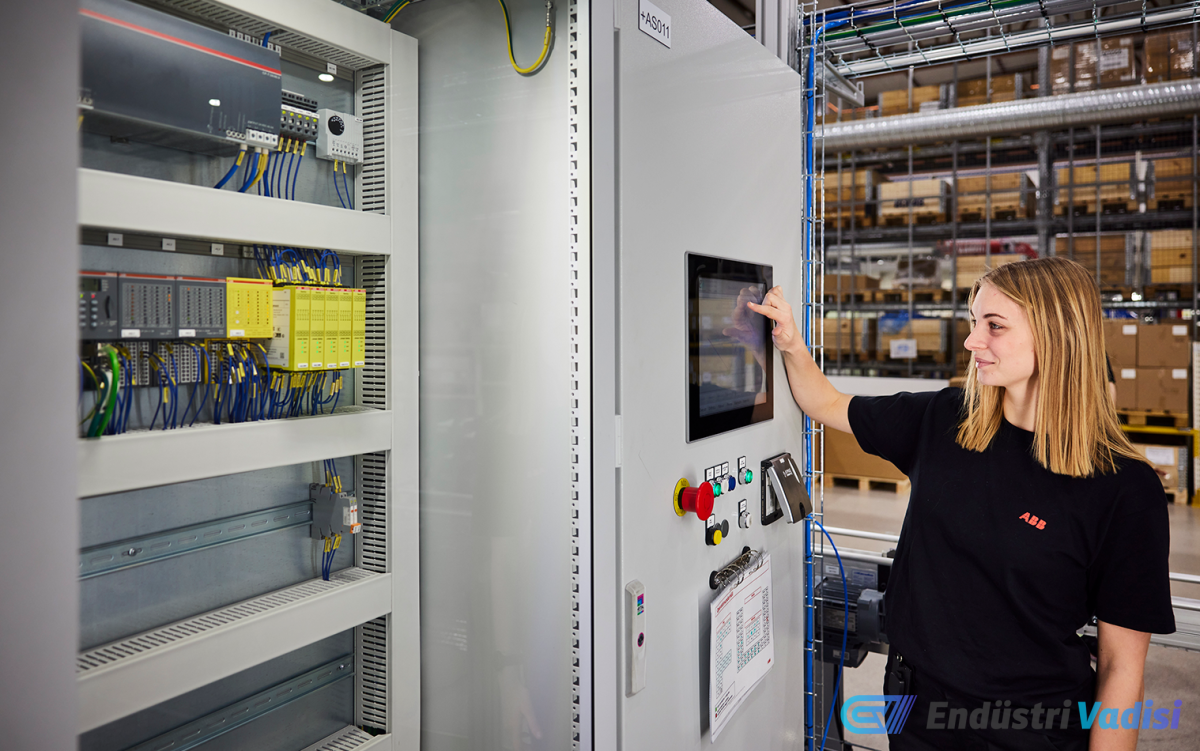
## Rethinking the Human-Machine Interface: The Importance of Intuitive Panel Control for Businesses
In industrial automation, the way users physically interact with machines has quietly changed over the last decade. Operators who traditionally knew control panels like the back of their hand are now managing many operations from centralized systems or even from their laptops at home.
In such an environment, a panel must operate seamlessly when needed. In emergencies, operators cannot afford to waste time with complex screens or mysterious alarm acknowledgments. Human-machine interfaces (HMIs) must not only look sleek; they must also provide speed and situational awareness.
### The Evolution of Human-Machine Interface
The first invention of HMI technology is debatable: was it the typewriter in the 1860s, the telegraph in the 1830s-40s, the Steam-Powered Mechanical Computer "Difference Engine" in 1822, or an even older technology? Whatever the history, HMI development has not stopped. Electrification, computerization, and innovations like touchscreens have set new standards. While the global HMI market revenue was $5.2 billion in 2023, it is expected to reach $10.7 billion by 2032.
### Changing Roles of Operators
However, operators' physical interaction with local panels continues to decrease. This is not due to a technology flaw, but rather to the rise of digital transformations such as SCADA, sensors, augmented reality, and digital twins; the virtual environment has become a hyperreal reflection of the real environment.
### ABB CP600 Control Panel: Old and New Approaches
As ABB, we have observed this change in our own technology. Classic CP600 panels were robust and scalable for engineers, but the experience was rough for operators who rarely used HMIs. The panels were often unused for weeks, and navigation became complex when needed.
This situation initiated a redesign process to simplify the HMI experience, making it flexible and aligned with contemporary expectations. With our user-first approach, both engineer and customer feedback, close collaboration with the ABB User Experience group, and external agency support, interactive prototypes were developed.
### CP600 Innovations and User Experience
- An interface that offers modern yet industrial tool behavior
- Clear navigation and visual hierarchy
- Button design that reduces erroneous operations
- Real-time and historical parameter filtering (trend viewer)
- Long and clear alarm messages
- Secure configuration file upload/download
- Direct screenshot capture from the panel
- Opening PDF manuals on the panel in future updates
These improvements enable operators to work faster and with more confidence on-site, even if they don't use the panels daily.
### Cybersecurity and Compliance
Cybersecurity is no longer just a technical issue but a boardroom agenda. As industrial equipment becomes more connected to the cloud and larger systems, risks increase. The EU Machinery Regulation, which will come into force in 2027, mandates that machines must be cyber-secure from the design stage.
The CP600 series offers high cybersecurity standards, including encrypted project files, secure authentication, protected data exchange, and user management. This not only protects against attacks but also helps demonstrate legal compliance.
### Conclusion
In the future, most machine operations will be performed remotely, but local panels will continue to provide reliable support in critical moments. The ABB CP600 combines performance and simplicity, enabling users to perform operations quickly, securely, and comfortably, even on rarely used panels. Additionally, upgrade kits for existing customers allow older panels to be easily brought up to new standards.
A user-friendly, secure, and intuitive HMI creates an important bridge between the operator and machine output, making it easier to understand and control the system.





















