








Cengiz Özemli
Academic
- Thread Author
- #1
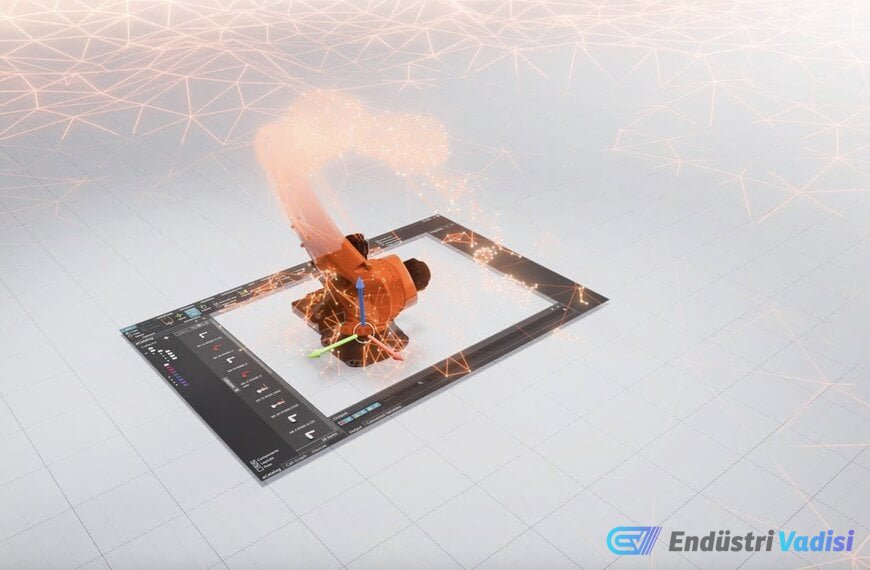
## AI Integration in Industrial Robots with KUKA AMP Software
At the NVIDIA GTC event, KUKA introduced KUKA AMP, an automation management platform that combines artificial intelligence (AI) with physical environments in industrial robotics, offering next-generation automation solutions. This platform extends classic rule-based automation systems with AI-powered systems capable of perception, decision-making, and autonomous movement.
### From Traditional Automation to Physical AI
Traditional industrial automation (Automation 1.0) operates with deterministic workflows based on pre-programmed logic. Such systems are suitable for high-volume and safety-critical processes but have limited flexibility.
KUKA AMP adopts intent-based automation approaches where the user defines the desired outcomes, and the AI model interprets these goals, allowing the system to respond dynamically to environmental conditions. This method parallels the concept of Physical AI, where artificial intelligence directly interacts with the physical world.
### KUKA AMP Software Platform
KUKA AMP is a software layer that manages robotic systems, integration, and digital tools together. It connects existing automation infrastructure with AI-powered capabilities, enabling faster setup and flexible operations.
Platform scope:
- Industrial and mobile robotics
- Warehouse and intralogistics systems
- Simulation and digital engineering environments
- Healthcare automation applications
The integration of these components allows for coordinated control and data sharing across automation layers.
### The Role of AI, Simulation, and Computing Infrastructure
High-capacity AI models, simulation technologies, and distributed computing architectures form the foundation of this system. Data is processed for real-time analysis and decision-making across the entire infrastructure, from edge devices to industrial PCs and data centers.
Simulation-based development ensures that automation scenarios are validated before deployment on-site, thereby reducing commissioning time and increasing system reliability.
### Collaboration of Automation 1.0 and 2.0
KUKA positions AI-powered automation as a complement to existing rule-based automation. Traditional automation provides stability and repeatability in structured environments.
The addition of AI capabilities brings the flexibility to adapt to variability in manufacturing, supply chain, and service processes. This hybrid approach offers a gradual transition without disrupting existing workflows.
### Application Areas in Industries
Physical AI integration expands the scope of automation in manufacturing, logistics, and industrial services. It enables robots to perform complex tasks, adapt to unstructured environments, and collaborate effectively with humans.
It offers significant advantages, especially in applications requiring real-time decision-making, such as adaptive assembly, dynamic material handling, and automated warehouse operations.
### Strategic Positioning and Global Growth
KUKA is accelerating AI-powered automation development by allocating 213 million euros to R&D investments for 2025. It is also strengthening its global presence with innovation centers in Asia, the USA, and Europe.
Growth in regions like the Chinese market, which accounts for a large portion of global robotics demand, increases the importance of flexible and scalable automation solutions.
### Towards AI-Powered Industrial Ecosystems
The emergence of platforms like KUKA AMP signifies a shift towards software-defined industrial systems. The integration of AI, simulation, and automation hardware under one roof provides manufacturers with higher adaptability and efficiency.
The development of Physical AI-powered systems will play a central role in the evolution of industrial automation, enabling more autonomous and data-driven operations.
---
www.kuka.com























