






Elif Özaksu
Corporate
- Thread Author
- #1
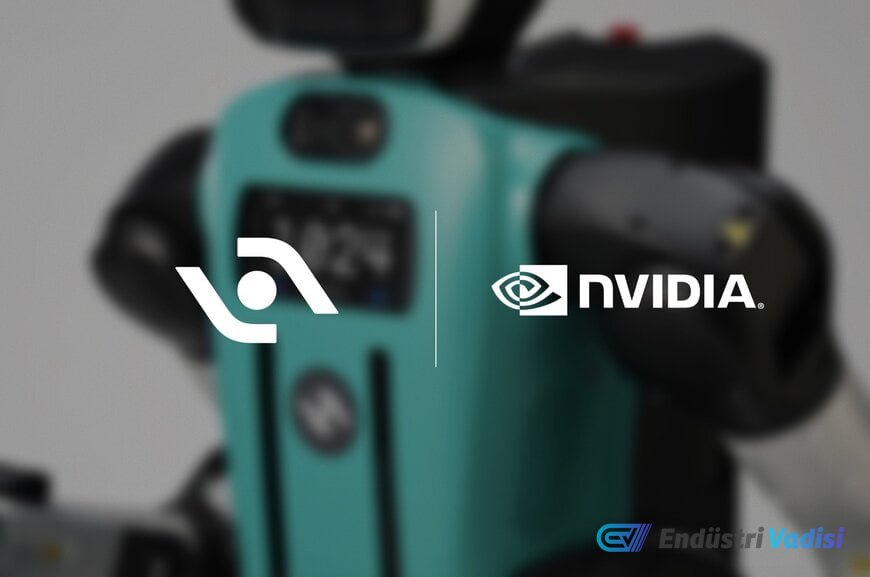
Agility Robotics and NVIDIA Shape the Future of Robots
Agility Robotics has expanded its collaboration with NVIDIA to standardize its humanoid robot, Digit 5. With this strategic move, NVIDIA IGX Thor modules will be used as the sole onboard processor provider in the general release version of Digit 5. This integration aims for scalable deployments of the robot in areas such as manufacturing, warehousing, and logistics.
Industrial Safety and Integrated Processing Power
For autonomous humanoid robots to operate alongside humans in intensive industrial facilities, high processing power and functional safety compliance are required. Previously, separate motion control, vision perception, and safety monitoring systems increased hardware weight, raised power consumption, and slowed communication between subsystems. To overcome these limitations, Agility Robotics and NVIDIA are combining real-time control routines, physical AI inference, and functional safety monitoring on a centralized, industrial-grade computing board.
Hardware Standardization and Safety Architecture
Under the new architectural agreement, all primary onboard processing power for Digit 5 will be consolidated on NVIDIA IGX Thor modules. This platform will locally execute complex vision-language-action models and spatial motion planning, without offloading critical processing power to external cloud networks.
Agility Robotics is also integrating elements of the NVIDIA Halos safety platform into its proprietary safe human perception architecture. This integration enhances person detection accuracy and collision avoidance response by directly combining advanced sensor processing with deterministic safety routines. Agility Robotics will support third-party safety certification requirements by validating its safety-critical software, machine learning inference modules, and hardware cybersecurity controls at the NVIDIA Halos AI Systems Audit Lab.
Phased Deployment and Commercial Release
Early access to Digit 5 will begin in the first half of 2027, with broader commercial deliveries planned within the subsequent six to nine months. Targeted deployments will focus on tasks such as repetitive material handling, palletizing, component transfer, and line replenishment in automotive and general manufacturing facilities.
Impact on Industrial Automation
Standardizing onboard processing power on an integrated, functionally safe computing platform eliminates hardware fragmentation in the robotic stack. This unified architecture, which combines deep learning perceptual processing pipelines with certified safety mechanisms, reduces system failure rates, enables deterministic human avoidance in shared workspaces, and facilitates compliance certification for scalable industrial robots.