


Alper Aktaş
Endüstri Vadisi
- Thread Author
- #1
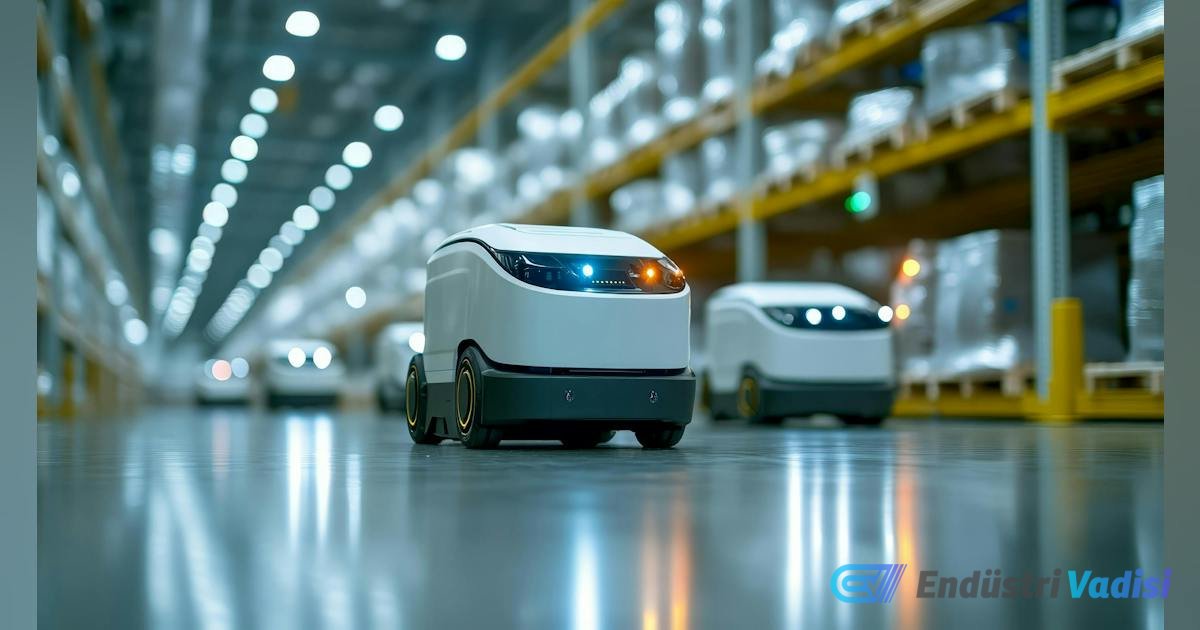
For the past decade, conversations about autonomous systems in industrial warehouses were fairly straightforward. Operations managers sought answers to these questions:
- How much will this save us?
- How quickly will we see a return?
- Is the performance worth the price?
The answers to these questions were usually enough to make a purchasing decision. But this is no longer the case.
🔄 Reasons Behind the Change
In recent years, facilities using autonomous mobile robots, sweepers, forklifts, and inspection systems are now facing a new set of less familiar questions. IT, security, and compliance teams are also getting involved in the purchasing process, asking questions that have little to do with cycle time or coverage rate:
- What data does this system collect?
- Where does the data go?
- Who can remotely access the machine?
- What happens to support services if the vendor is acquired or exits the market?
While performance and ROI are still important, evaluation criteria are shifting as facilities become more aware of these risks, and vendors need to provide buyers with more assurances to close the deal.
🌐 The Rise of Connected Systems
Robots have been around for over 50 years, but a fleet of connected machines behaves very differently from a single unit. Robots that once operated in isolation are now part of a larger system. They report to fleet management platforms, receive updates over the network, and in some cases, share data with the vendor's cloud infrastructure for diagnostics. This connectivity enables fleet management and remote troubleshooting, but it also means that each robot is now a node on the facility's network.
At the same time, machines have become more perceptive. Navigation and mapping rely heavily on onboard sensors (cameras, LiDAR, and depth sensors) that create a detailed picture of the physical environment to move safely. A facility's floor plan, staging areas, and traffic patterns reveal proprietary operational information, and a fleet of sensor-equipped robots continuously captures it. Understanding whether data is stored, transmitted, or reused is now a legitimate question before signing on the dotted line.
⚙️ You're No Longer Just Buying Hardware
Purchasing teams are still catching up to this shift: a robot is now a software and services purchase wrapped in a hardware shell. The physical machine is sometimes the least differentiated part of the deal. What distinguishes one system from another is the intelligence layer: the software that manages the fleet, the frequency of updates, and how well this layer integrates with existing systems—from WMS to AGV fleets to building infrastructure—and the vendor's ability to support the system throughout its lifespan. This reframing changes how buyers structure their evaluations.
A hardware-centric RFP asks questions about payload, uptime, and coverage rate. A more comprehensive RFP also asks how updates are distributed and tested, whether in-house operation is supported if needed, what the data retention policy is, and how security patches are handled over the expected life of the equipment. Buyers who skip this second set of questions are more likely to learn the hard way when a security review flags an undocumented cloud dependency or an update changes robot behavior without warning.
✅ A Framework for Evaluating Autonomous Systems
Facilities evaluating autonomous systems should focus on four key areas:
- Data and Privacy: What sensor data (video, LiDAR point clouds, location traces) does the system capture, and is it stored, transmitted outside the facility, or used beyond the robot's immediate task? Facilities with trade secret regimes, regulated environments, or low tolerance for unnecessary data exposure are increasingly asking for this to be explicitly documented rather than hidden in a privacy policy.
- Security and Connectivity: How does the robot connect to the facility network, and what does this expose? Buyers want to know what ports are open, how remote access is authenticated, and whether the system has undergone an independent security review.
- Governance and Control: Where is data processed and stored, and whose jurisdiction's rules apply? Who can push updates or change robot behavior, and is this access logged and auditable? For multinational operators, this also has a regulatory dimension, particularly concerning cross-border data flows.
- Vendor Trust and Durability: Beyond the product, can the buyer trust the company over the deployment's lifespan? This includes financial stability, spare parts, and service continuity. A perfect robot is a liability if the company behind it can't support it in three years.
🤝 What This Means for Buyers and Vendors
For Buyers: New criteria should be added to the RFP: security and compliance stakeholders should be involved earlier, not after operations have selected a preferred system. This may lengthen the sales cycle, but a six-week evaluation focused solely on throughput can miss risks that a comprehensive review would catch. Facilities that incorporate this into their purchasing processes now, rather than after an incident or audit, will move faster on future deployments.
For Vendors: Documentation and transparency become a competitive advantage alongside the hardware itself. Clear answers about data flows, retention, update policies, and long-term support increasingly need to be provided to technical and compliance reviewers who might otherwise block the deal.
None of this changes the fundamental rationale for automation. Productivity and safety remain the primary drivers of most purchases. What is changing is the list of questions buyers need answered before signing: it's longer because these systems have become permanent, connected parts of facility operations.