Süeda Asil
Corporate
- Thread Author
- #1
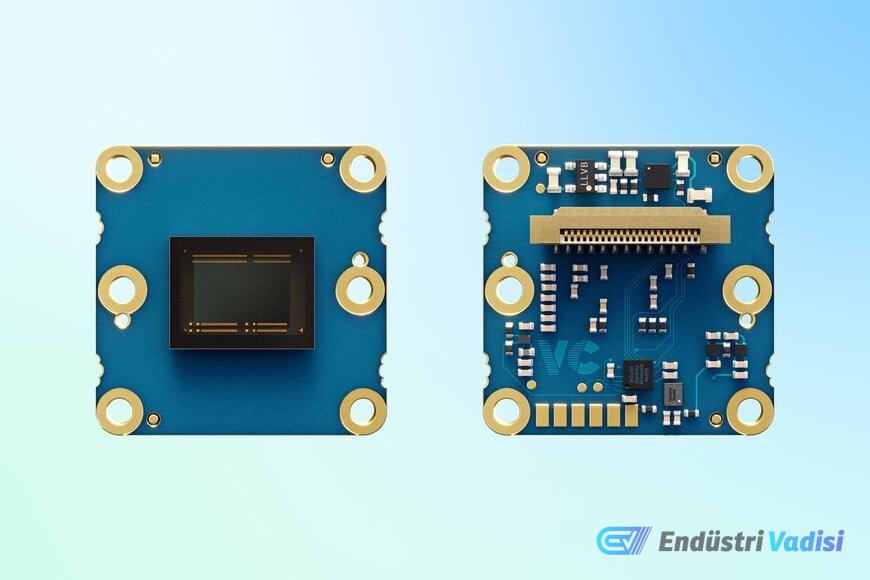
Strategic Move from VC Against Sony Sensor Discontinuation
Following Sony's discontinuation of popular image sensors like the IMX662, IMX462, IMX327, and IMX290, Vision Components (VC) is not only offering its existing stock at special prices but also launching next-generation alternatives.
🌟 VC MIPI Blueline IMX832: Direct Replacement
As a direct alternative to the discontinued sensors, VC has introduced the VC MIPI Blueline IMX832 camera module, based on the Sony Starvis 2 IMX832 sensor. This new module is compatible with older sensors, offering 2 MP resolution, a 2.9 µm pixel size, and a 1/2.8-inch optical format. Thanks to Starvis 2 technology, it provides higher light sensitivity and a wider dynamic range.
Additionally, the VC MIPI Blueline AR0246 module, a 2 MP module with a 1/4-inch onsemi sensor and 2.0 µm pixel size, has been added to the VC MIPI Blueline series. By offering a broad MIPI camera portfolio with sensors from various manufacturers such as Sony, onsemi, and OmniVision, VC provides flexible solutions against supply shortages and product discontinuations.
🏭 Industrial Quality and Competitive Pricing
The VC MIPI Blueline series (including IMX832 and AR0246 models), introduced at the VISION 2026 exhibition, is developed and manufactured in Germany in accordance with VC's industrial quality and long-term availability standards. Focusing on direct sales and competitive pricing, these modules are optionally offered in fixed packages with cables and lenses. All Blueline cameras are supported by main Linux drivers and provide plug-and-play compatibility with Linux processor boards featuring a MIPI CSI-2 interface.
✨ IMX832: Next-Generation Performance
The Sony Starvis 2 IMX832 image sensor is designed as the successor to the IMX662, IMX462, IMX327, and IMX290 sensors. Thanks to its enhanced light sensitivity and dynamic range, it can be integrated into existing embedded imaging systems without any changes to the optical setup. VC continues to offer its remaining cameras with the IMX662 sensor at further discounted prices.
🗺️ Broad Portfolio and 2027 Roadmap
Vision Components' MIPI camera portfolio covers over 50 image sensors from Sony, onsemi, and OmniVision. With resolutions ranging from 0.5 MP to 24 MP, monochrome and color options, and different features like global shutter, rolling shutter, and global reset shutter, it caters to a wide range of applications.
For 2027, VC has announced additional VC MIPI Blueline modules, including the Sony IMX335, IMX477, and IMX908 sensors. The standard VC MIPI family will expand with OmniVision OG05B and OG02C global shutter sensors, and onsemi AR0235 and AR0145 global shutter sensors.
🤝 Long-Term Reliability
Jan-Erik Schmitt, Vice President of Sales at Vision Components, emphasized that one of the core characteristics of the quality of all VC cameras and systems is long-term availability. Schmitt stated that in cases where image sensors or other components are discontinued, as is currently happening, their company provides replacement and alternative solutions. Customers using cameras with IMX662, IMX462, IMX327, or IMX290 image sensors can switch to the VC MIPI Blueline IMX832 without requiring any redesign.
💡 MIPI CSI-2 in Embedded Imaging Systems
In embedded machine vision systems, the MIPI Camera Serial Interface 2 (CSI-2) is a high-speed differential serial bus used to transmit raw image data from the camera sensor module to the host system-on-chip (SoC) or processor board. Because MIPI CSI-2 is based on standardized physical lanes and Linux Video4Linux2 (V4L2) kernel drivers, hardware engineers can often electrically swap sensor modules with minimal firmware changes, as long as the physical pinout and driver tree match.
Optical compatibility also requires that the sensor's optical format and pixel size are suitable for the existing lens. If a replacement sensor's optical format is larger than the original, the lens's image circle may not cover the sensor corners, leading to vignetting. Maintaining the same optical format and pixel size ensures the preservation of the existing lens and field of view.