








Semih Asil
Industry Valley
- Thread Author
- #1
📦 A New Era in Logistics: Automated Loading Documentation
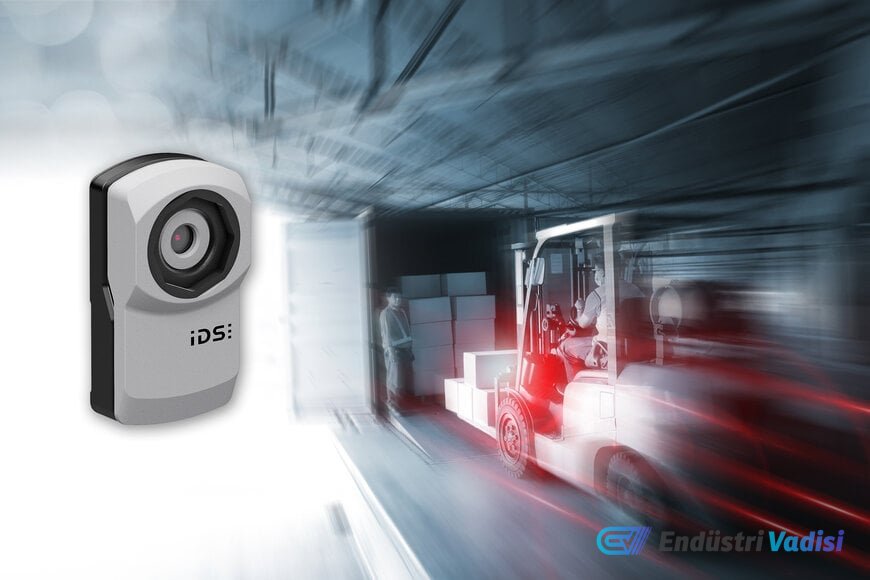
In the logistics sector, the importance of time and precise tracking of product movements must be ensured without slowing down processes. In response to this need, a camera-based system developed by CANCOM automatically records loading processes, significantly reducing the workload of drivers. At the heart of this system are IDS Imaging Development Systems GmbH's compact uEye XC autofocus camera and DENKweit's AI-powered image processing technologies.
📸 Seamless Recording in Live Operations
The application works with a camera mounted in the cabin of a forklift. While the vehicle is in motion, the camera continuously images the area in front of it. The process covers all loading steps, starting from recording the delivery note, to picking up and dropping off each pallet, and securing the load. This eliminates the need for drivers to stop for manual documentation, reduces their workload, and provides consistent and traceable image data throughout the entire process.
🧠 Real-Time Intelligent Image Analysis
One of the core components of the solution is the intelligent evaluation of captured image data. The camera transmits images directly to the in-vehicle terminal via a standard USB Video Class (UVC) interface. From there, the data is sent to a local AI server for real-time analysis. First, an AI-based image classification evaluates each frame for content and relevance. At this stage, over 99% of images are filtered out, and only truly relevant information is processed. For the remaining data, specific models from DENKweit's DENKnet system are used.
A combination of object recognition and optical character recognition (OCR) identifies delivery notes and pallet structures. The tour number is read and serves as the central reference for assigning images. This allows all relevant images to be linked to a specific tour and stored in a centrally structured manner. The system can also determine how many pallets are in an image and their dimensions.
🎯 High Image Quality at Varying Distances
The flexibility of the solution is demonstrated in its dynamic image capture capabilities. The uEye XC autofocus camera automatically adjusts between different focal distances. Thomas Fuchs, CANCOM AIoT Team Leader, states, "To capture a delivery note, the focus is set to approximately 35 centimeters, while for documenting the loading process, the field of view is between 2 and 3 meters." This ensures sharp and usable images in all situations, even under changing lighting conditions.
The camera used features a 13-megapixel sensor and offers functions such as automatic white balance, color correction, and individually adjustable parameters for brightness, contrast, and sharpness. Thanks to the UVC interface, it can be operated like a standard webcam without the need for additional drivers. Combined with Windows IoT on vehicle terminals, this significantly simplifies integration. Devices are automatically detected and can be managed via a central device management system.
🚀 AI Infrastructure: Scalability from Edge to Data Center
The power of the application lies in the interaction of the camera and AI. The solution implemented by CANCOM uses DENKweit's containerized AI models. These models can be flexibly scaled from the edge to the data center and run in Kubernetes environments, with GPU acceleration available if needed. Initial working models can be created using a relatively small number of training images, but their performance significantly improves as data quality and diversity increase.
Compared to traditional machine vision systems, this approach greatly reduces development effort. Complex rule-based vision pipelines are replaced by learning-based methods that can be implemented faster and adapted more easily to changing requirements. At the same time, users benefit from rapid advancements in available computing power, so even integrated GPU solutions are sufficient for many applications.
🔮 Future Outlook
Fuchs states, "AI image processing opens up a much wider range of applications for camera-based solutions and makes their use economically viable." What once required investments reaching six-figure sums and months of development can now be achieved in weeks and at significantly lower costs. CANCOM therefore plans to use the technology in other future projects as well. In addition to logistics applications, new areas of use can be considered in other industries. In short, the technology is suitable wherever processes need to become more efficient, transparent, and traceable.






















