








Erkan Teskancan
Corporate
- Thread Author
- #1
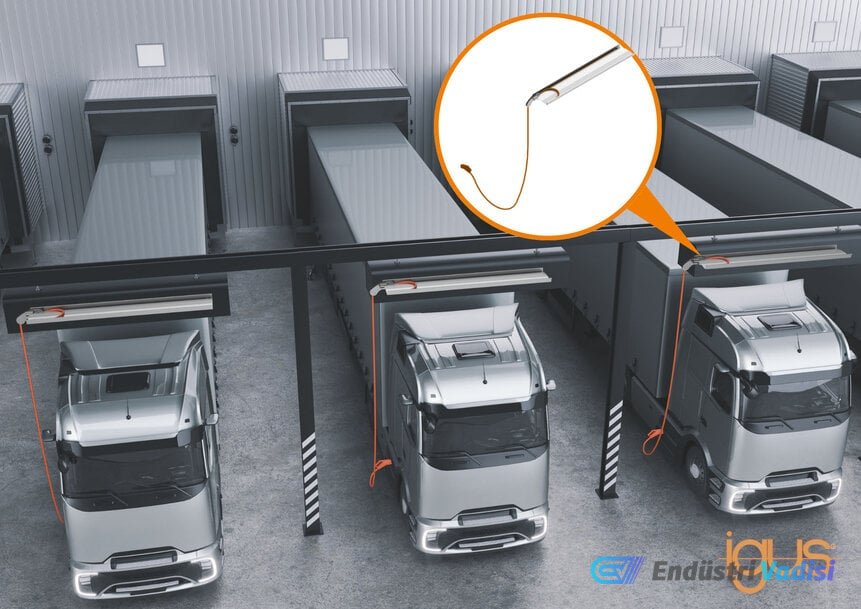
🔌 Heavy Cables Are No Longer on the Ground!
As a solution to the operational challenges of logistics centers, transshipment sites, and bus depots, igus has developed the horizontal e-tract DC system, which lifts the cables of high-power charging stations for electric trucks and heavy-duty vehicles off the ground. This innovative solution prevents cables from being run over by vehicles or colliding with charging infrastructure, making drivers' jobs easier and reducing the risk of damage, theft, and service interruptions. The system is also available as an alternating current (AC) version for electric cars in underground parking garages.
💪 High-Power Systems with Automation and Ergonomics
Cables for ultra-high-power charging systems, such as the Megawatt Charging System (MCS), require heavy copper conductors and robust insulation layers, which can weigh up to 4 kg per meter. Connecting and disconnecting these cables several times a day can require significant physical effort. The horizontal e-tract DC system consists of an independent unit above the driver's cab height or a guide channel fixed to supports/hall structures. When the operator activates the mechanism, an integrated belt pushes the cable forward and slowly lowers the charging plug to the height required for connection to the vehicle. According to Marcello Mandelli, Country Manager for igus Italy, the system is less prone to malfunctions than ground-mounted solutions and significantly reduces the physical effort required from the operator thanks to automatic lowering.
🔒 Compact AC Versions and Theft Protection
In multi-story or underground parking garages, where space for ground-mounted stations or wall boxes is limited, igus offers an AC version with more compact guide channels that can be installed directly above parking spaces. Thinner, lighter cables automatically descend towards the vehicle at the push of a button. In both versions, the cables automatically retract when not in use and are kept in an inaccessible location, making copper theft more difficult. This problem is quite significant: in 2025, EnBW, one of the main fast-charging network operators in Germany, recorded 15 to 20 theft incidents per day, with estimated costs ranging from 5,000 to 8,000 euros per incident.
💡 Additional Information: Fundamentals of Megawatt Charging
Charging heavy vehicles in the megawatt range requires very high direct currents. According to Joule's law, the power dissipated as heat in a conductor is equal to the square of the current multiplied by the resistance (P = I² × R): doubling the current quadruples the heat generated. To limit heating, cables must have very low resistance, which requires large cross-section copper conductors and robust insulation. Therefore, ultra-high-power charging cables are much thicker and heavier than those for electric cars. Their weight makes repeated manual handling difficult and increases their appeal to thieves due to the copper they contain. Systems that bring the cable to vehicle height and retract it when not in use address both of these issues.





















