








Cengiz Özemli
Academic
- Thread Author
- #1

🔌 Siemens and Kärnten Netz: Solving Distribution Capacity Issues 🔌
Siemens and the Austrian distribution system operator Kärnten Netz GmbH have signed a six-year software deployment contract to integrate advanced grid management tools across their low and medium voltage networks. This collaboration aims to address capacity bottlenecks in the Carinthian regional electricity grid and meet the needs for an advanced monitoring and dynamic control architecture arising from the rapid expansion of decentralized renewable energy sources.
📈 Grid Modernization and Regulatory Framework 📈
The continuous integration of decentralized photovoltaic installations, domestic heat pumps, and electric vehicle charging infrastructure has created multi-directional load flows in low-voltage distribution lines. In existing operational setups, low-voltage grid segments lack sufficient sensor density and real-time observability to accurately assess local transformer loads or voltage fluctuations. Furthermore, a regulatory transition under the Austrian Electricity Industry Act mandates distribution operators to actively mitigate grid congestion through market-based flexibility mechanisms, making systematic visibility over dynamic feeds a technical necessity.
💻 Software Architecture and Technical Implementation 💻
The implementation is centered around the modular Siemens Gridscale X software platform, which ingests operational telemetry to create a functional digital twin of the entire grid topology down to the lowest distribution levels. The platform is based on three core modules:
- Gridscale X LV Insights: Aggregates measurement points at decentralized endpoints to calculate real-time grid states and predict operational constraints.
- Gridscale X LV Management: Automates topology-aware operational tasks, supporting field operations during unplanned outages and standard switching routines.
- Gridscale X Flexibility Manager: Maps grid topology with projected generation and consumption profiles to identify thermal overloads and voltage limit violations before they occur. Through this analytical process, the platform plans and triggers flexibility resources at medium and high voltage connections to maintain physical line tolerances.
🎯 Strategic Objectives and Implementation Roles 🎯
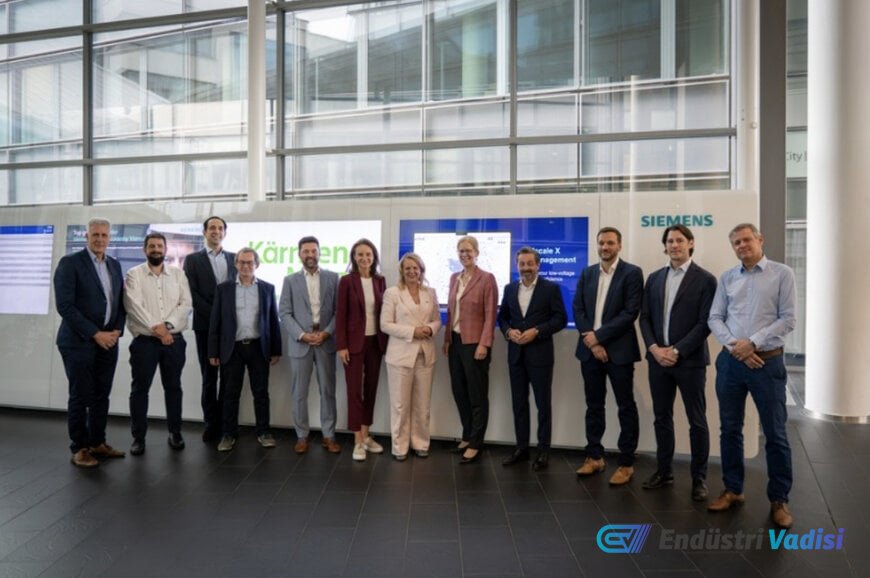
Siemens acts as the enterprise software and integration provider, supplying the cloud-based platform modules and analytical algorithms. Kärnten Netz GmbH, on the other hand, takes on the role of the implementing grid operator, connecting physical grid assets, local substations, and supervisory control systems to the software layer.
Sabine Erlinghagen, General Manager of Siemens Grid Software, stated that by using the platform, the grid gains visibility down to the low-voltage levels through a digital twin, utilizes existing flexibility, and resolves issues without impacting operational reliability.
Eva Tatschl-Unterberger, General Manager of KNG, expressed that the technical setup enables them to create a digital model that can identify grid constraints and implement structured outage and congestion management routines.
🚀 Operational Benefits and Asset Utilization 🚀
By providing algorithmic visibility over low-voltage grids, Kärnten Netz GmbH reduces the need for urgent, capital-intensive physical cable replacements. Predictive congestion models allow the distribution operator to maximize asset utilization in existing substations and feeder cables without exceeding safe thermal thresholds. Digital flexibility orchestration ensures the absorption of fluctuating feeds from renewable sources while maintaining voltage stability and overall process reliability across the regional power distribution infrastructure.





















