








Ahmet Ö.
Corporate
- Thread Author
- #1
🚗 Electric Vehicles and Acoustic Sensitivity
Vehicle electrification and industrial precision engineering have increased the acoustic scrutiny of electromechanical sub-assemblies. With the elimination of internal combustion engine noise, high-frequency tones, harmonic gear whine, and structural vibrations from electric power steering mechanisms, thermal management pumps, coolant compressors, and mechatronic actuators propagate directly into vehicle cabins and chassis.
⏳ Challenges of Traditional Methods
Historically, predicting how an auxiliary unit would behave in a vehicle required late-stage physical prototyping or highly specialized, manual transfer path analysis. Component characterization was slow, labor-intensive, and operator-dependent. Physical impact hammer tests or manual shaker excitation led to operator variability and measurement scatter. These inconsistencies prevented engineers from obtaining reliable component descriptors, jeopardizing virtual assembly and Digital Twin simulation accuracy.
💡 Innovative Solution from Siemens
Siemens has announced an integrated hardware and software solution for automated component model extraction to address the throughput and repeatability challenges of noise, vibration, and harshness (NVH) testing. Developed in technical collaboration with Bosch, this solution is based on Bosch's patented predictiveVIA technology, with Siemens serving as the sole industrialized and commercialized application partner.
⏱️ 93% Reduction in Test Times
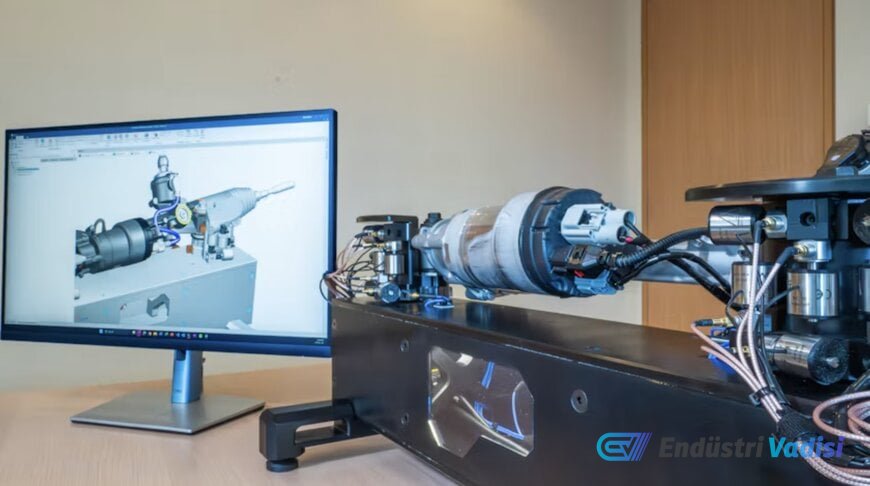
The system replaces manual acoustic excitation with automated sequential shaker configurations and robotic fixture management, performing frequency response function (FRF) measurements in hours or minutes instead of days or weeks. This results in a 93% reduction in measurement cycle times while offering 100% repeatability across component batches. This automated consistency eliminates experimental variance among test technicians, allowing original equipment manufacturers and Tier-1 suppliers to directly incorporate invariant source characterizations into their virtual system integration processes to catch defective or out-of-nominal components before physical vehicle integration.
💻 Simcenter Integration and Virtual Prototype Assembly
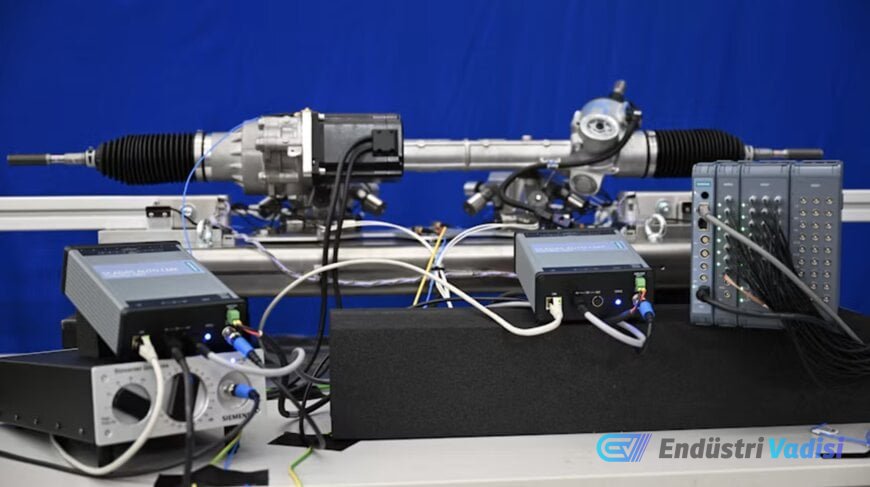
The automated component model extraction platform integrates naturally with Siemens' Simcenter physical testing portfolio. It combines Simcenter Testlab data acquisition and processing software, Simcenter SCADAS multi-channel measurement hardware, and Simcenter Qsources acoustic and structural excitation transducers.
The platform supports both empirical test-based characterization and hybrid computer-aided engineering (CAE) representations for components such as traction motors, electronic steering racks, brake actuators, fluid pumps, and air conditioning compressors. Once extracted, invariant blocked force models are fed directly into Simcenter Testlab Virtual Prototype Assembly workflows. Engineers can combine component models with the structural transfer functions of subframes and vehicle body structures. This enables accurate key performance indicator prediction and multi-attribute NVH auralization in the Simcenter Testlab NVH Simulator. Development teams can evaluate structural changes, such as comparing elastic mount stiffnesses or assessing structural ribs, without relying on drivable physical prototypes.
⚙️ Compliance with ISO 20270 Standard
In dynamic substructuring and component-based Transfer Path Analysis (TPA), characterizing an active vibration source independently of its receiving structure is governed by ISO 20270, which outlines the determination of invariant blocked forces and source descriptors. Blocked forces overcome this limitation by representing the theoretical forces an active component would exert if bolted to an infinitely rigid foundation, making them an intrinsic property of the component. Automated robotic excitation ensures high consistency across all interface degrees of freedom, eliminating the need for ill-conditioned regularization or subjective filtering.























