






Ahmet Ö.
Corporate
- Thread Author
- #1
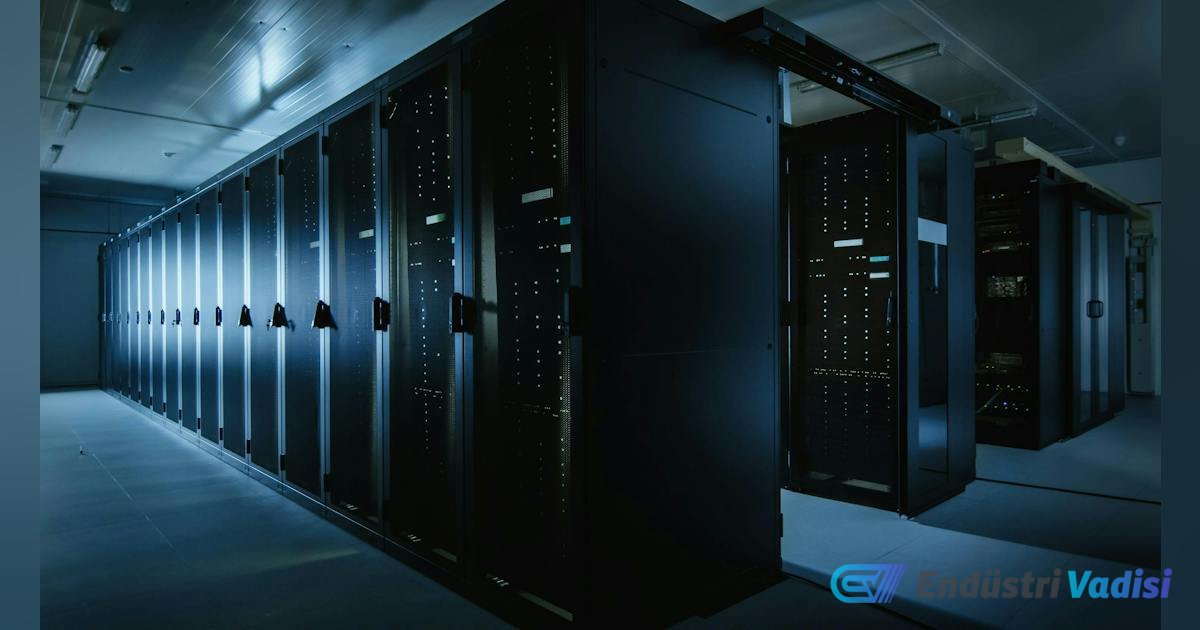
Power Density in Data Centers Breaks Records: A New Era for Manufacturers
In the early days of enterprise computing, a typical data center rack would draw about 1 kW of power, a load easily managed with minimal cooling infrastructure. Today, however, the situation has completely changed. Average rack density has increased by almost four and a half times compared to just five years ago, reaching 27 kW. This rapid rise is already impacting data center development planning, with operators aiming to deploy AI-powered infrastructure faster than their facilities' existing capacity.
The Hidden Obstacle of the AI Boom: Physical Infrastructure
This growth reveals a bottleneck that receives far less attention than chips or new software: the physical infrastructure required to deliver, convert, and effectively manage power. To close this gap, manufacturers need to redesign the physical systems necessary to safely support ever-increasing rack densities.
Transition from Computation to the Physical Layer
While much of the public discussion around scaling AI focuses on model performance, GPU availability, and total energy demand, the firms that produce the equipment within AI infrastructure—including power distribution systems, conductors, connectors, transformers, cooling, and control systems—face a more urgent constraint: fitting dramatically more power and heat management into a physical footprint that isn't growing at the same rate.
This pressure is further exacerbated by developments on the grid side. Electricity providers are already grappling with long interconnection queues and permitting delays, and much of their planned demand is still speculative. Some operators are turning to on-site energy generation to overcome these constraints, but this also increases pressure within facilities. All these dynamics mean that manufacturers cannot design to a single, fixed density target. Equipment that can flex as true demand becomes clear is needed.
Early responses in the industry reveal what this looks like in practice. Silicon photonics, which carries data between chips using light-based connections instead of electrical wires, is helping some network hardware manufacturers reduce power consumption by up to 3.5 times. Power architecture is evolving at the same pace, with manufacturers adapting next-generation transformers designed for higher rack density and higher-capacity conductors. These represent a new category of design challenges, and manufacturers who engineer for these challenges now will not have to retrofit their equipment when standards catch up.
Treating Power, Cooling, and Controls as a Single Design Problem
Traditionally, power distribution, cooling, and controls were designed, sourced, and optimized independently. This approach no longer works. At higher rack densities, all three systems draw on the same finite power and cooling capacity. A decision in one system quickly becomes a constraint on the others, turning previously manageable trade-offs into full deployment delays.
Manufacturers who manage this situation most effectively are integrating power distribution, cooling, and controls into a single system-level architecture, rather than treating them as separate components. A transformer designed without considering the cooling system, or a control system built without accounting for power distribution, simply shifts the strain elsewhere in the stack. This interdependence distinguishes this moment from past infrastructure upgrades, when individual components could be improved in isolation without too many consequences for the rest of the system.
The Competitive Risks of Inaction
AI-powered capacity increasingly determines what a manufacturer can promise customers regarding turnaround times, production volumes, and new product timelines. These promises depend on infrastructure decisions made months or years ago.
A transformer sized for yesterday's rack density or a cooling system with no headroom are limits set long before a refresh is planned. Manufacturers who treat physical infrastructure as secondary are setting these limits unknowingly, and their customers are the ones who find out when a deployment falters.
As AI-powered infrastructure continues to scale at unprecedented levels, capacity planning must account for the physical layer with the same rigor applied to computation. Manufacturers who position power, cooling, and controls as part of this planning process are the ones who will have room to grow in the future.