






Ahmet Ö.
Corporate
- Thread Author
- #1
🚀 A Revolutionary Step from ABB: OmniCore EyeMotion
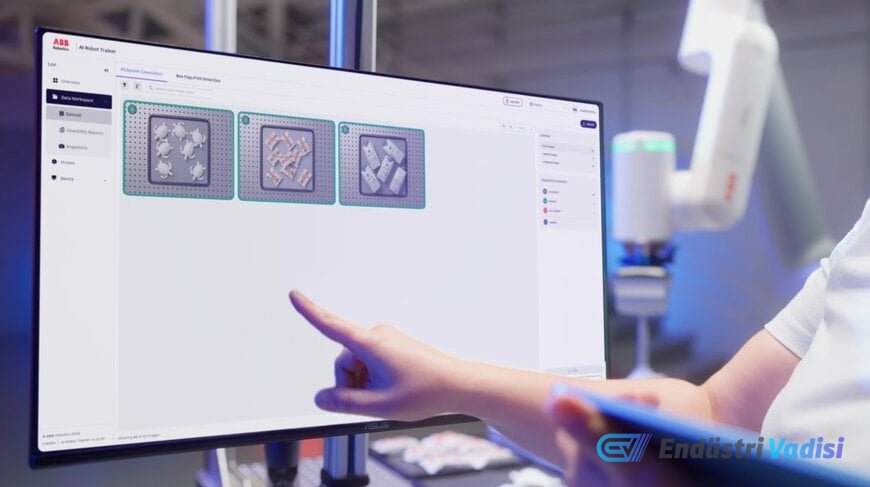
ABB Robotics has introduced OmniCore EyeMotion, a new software solution that enables industrial robots to process spatial data from third-party cameras and sensors, allowing for real-time environmental adaptation. This technology brings advanced machine vision capabilities to automated systems across various industries, from automotive to logistics, food, and packaging.
👁️ Hardware-Independent Sensing and Rapid Setup
Traditionally, industrial machine vision relied on specialized optical setups. However, OmniCore EyeMotion eliminates this limitation by allowing industrial control systems to process 2D and 3D image data from standard third-party sensors. Thanks to its web-based interface, engineers can easily configure cameras with drag-and-drop programming. With direct integration into the RobotStudio simulation environment, commissioning time is reduced by up to 90% compared to custom-coded integration protocols.
🛣️ Real-Time Path Planning and Operational Applications
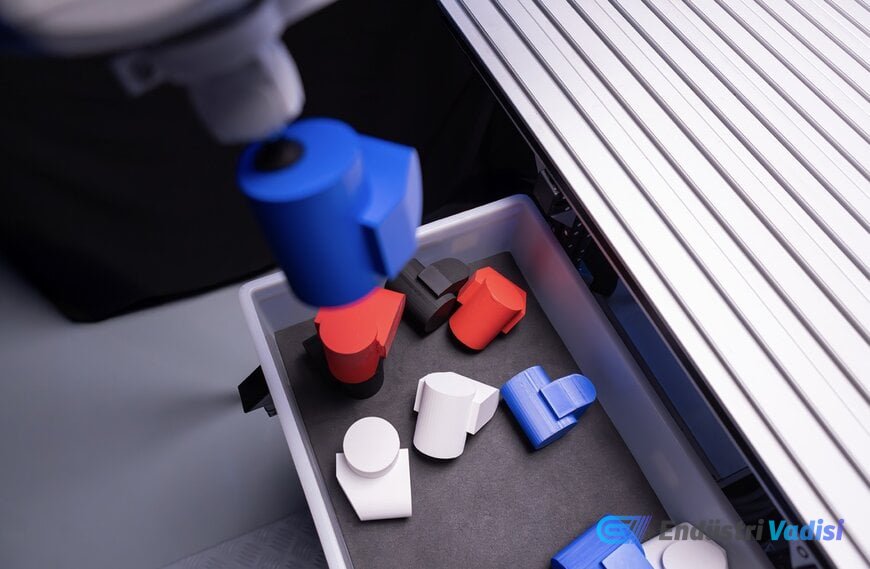
Targeting tasks such as automated quality control and product sorting, this software continuously captures and processes environmental data to adjust robot movements. In variable environments, the platform works in conjunction with continuous path planning algorithms. This allows the robot controller to dynamically calculate and implement collision-free trajectories around moving objects or sudden obstacles. By optimizing these spatial calculations during operation, the system can reduce operational cycle times by up to 50%.
💡 Advancements in Autonomous and Versatile Robotics
Marc Segura, President of ABB Robotics, states, "Over the last decade, we have developed AI-based vision to give robots 'eyes' that can perceive the world in 3D, but until now this required advanced camera hardware." The development of hardware-independent visual reasoning aligns with broader industrial shifts towards autonomous manufacturing systems. This software serves as a fundamental component for next-generation automated architectures where continuous sensor feedback and generative AI will manage complex tasks requiring precision, speed, and spatial mobility.
⚙️ Technical Details and Comparative Analysis
In the industrial machine vision sector, hardware-independent robotic sensing software falls into the same technical category as platforms developed by manufacturers like Fanuc and Universal Robots. Comparisons in this class of software are based on measurable parameters such as image processing latency, sensor compatibility range, and the reduction in programming hours required for deployment. The separation of vision processing software from proprietary camera hardware provides a specific operational standard for evaluating integration speed and system modularity.