








Süeda Asil
Corporate
- Thread Author
- #1
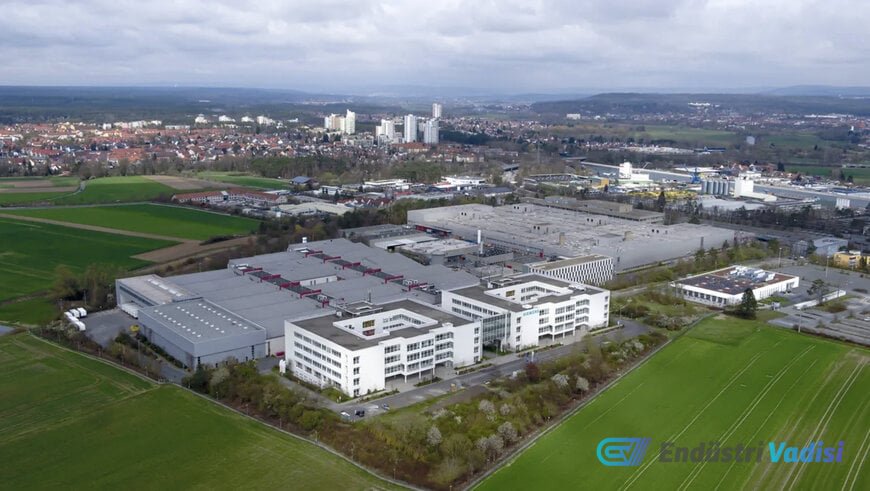
🤖 Revolutionary Collaboration from Siemens and NVIDIA
Siemens and NVIDIA are bringing a new dimension to autonomous manufacturing by utilizing industrial artificial intelligence (AI) and digital twin technologies. This project, implemented at the Siemens Electronics Factory in Germany, automates PCB quality control and production planning, elevating efficiency to its peak.
🎯 Smart Solutions for Manufacturing Challenges
Challenges in electronics manufacturing, such as fluctuating order volumes, material shortages, and design revisions, could not be overcome with traditional methods. Physical prototypes and manual calculations led to bottlenecks in production processes. Siemens and NVIDIA joined forces to overcome these obstacles.
- Siemens: Provides industrial software, automation hardware, and manufacturing expertise.
- NVIDIA: Offers accelerated computing infrastructure, physical AI simulation frameworks, and generative world models.
🔍 Technical Architecture: Inspection and Planning
This collaboration focuses on two core operational functions:
- Automated Optical Inspection for PCB Assemblies: Training machine vision algorithms, which previously required weeks of waiting for physical prototypes, is now done with photorealistic synthetic data generated from digital twins using NVIDIA Cosmos world models. This allows inspection systems to be configured before physical prototypes are produced.
- Agent-Based Production Planning: Instead of manual planning, an automated workflow supported by NVIDIA Factory Operations Blueprint is used. AI agents create multiple production scenarios when new orders arrive and evaluate them based on key performance indicators (KPIs). Each plan is validated on a digital twin created with NVIDIA Omniverse libraries.
🚀 Testing and Implementation in Live Production
Following the initial announcement at CES 2026, engineering teams developed and integrated the first operational software modules in less than ten months. The systems were successfully tested and implemented in live operations at the Erlangen facility. This facility, operational since 1971, already uses over 100 AI algorithms in logistics, quality control, and maintenance, and is undergoing a €500 million expansion until 2030.
📈 Measurable Operational Impact
These innovative approaches provide significant operational benefits:
- Engineering effort in virtual production preparation for PCB assemblies is reduced by up to 85% thanks to synthetic data generation.
- Time to market is shortened by up to 40%.
- Production planning costs are reduced by up to 20%.
- Operational adaptability increases during supply chain disruptions.
These implementations contribute to an annual 7% increase in productivity at the Erlangen facility.





















