Erkan Teskancan
Corporate
- Thread Author
- #1
🤔 The Changing Robotics Landscape
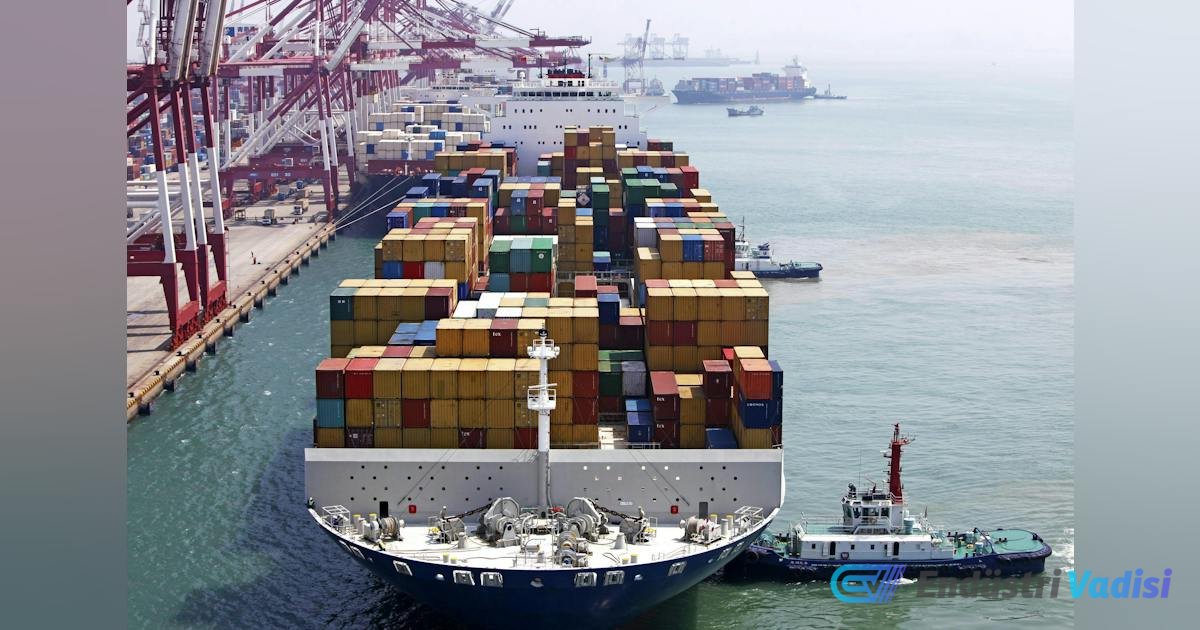
Fady Saad, co-founder of Cybernetix Ventures, evaluates how US regulations and trade policies regarding Chinese robotics imports are changing, and the impact of these changes on the industry. According to Saad, robotics is no longer just an industrial technology issue but is now being treated as a strategic technology and a matter of national security.
📈 Trump Era and Beyond
With the Trump administration, Chinese industrial robots became subject to Section 301 tariffs. Subsequently, the FCC's blocking of foreign-made mobile robot models (including humanoids and quadrupeds) from US authorization and the ongoing Section 232 national security review demonstrate the evolution of policies in this area.
💰 Investor Perspective
For investors, this situation requires looking beyond factors like price, performance, and availability when purchasing robots. Tariffs, supply chain risk, component sourcing, cybersecurity, and geopolitical risks are now also included in the evaluation process. While Saad finds the FCC's move necessary, he emphasizes that it is not a standalone strategy and that a national robotics strategy needs to be established.
🏭 Implications for Companies
For companies that use or sell robotics, these changes compel them to think more strategically about the future of their supply chains. Dependence on a foreign supplier creates a different kind of risk beyond traditional capital expenditure analyses. This situation can also present an opportunity for American robotics companies that can provide local sourcing at competitive costs.
🇨🇳 Recommendations for Companies Importing Robots from China
- Do not view the purchasing decision solely as a procurement matter.
- Examine the entire technology and supply chain stack.
- Understand the classification of the product you are importing, applicable tariffs, and restrictions.
- Evaluate where critical components come from, what data the system collects, and its network connectivity.
- Consider national security and cybersecurity concerns.
- Check if it is FCC approved, and whether it is a mobile or a fixed arm.
- Plan scenarios by considering potential restrictions on spare parts and software updates.

💡 Shift in Investment Strategies
Geopolitical and supply chain risks have become an integral part of investment theses. Investors are now questioning the source of critical components, a company's production capacity, geographical dependence, and potential changes in trade policies. This makes the robotics sector a more interesting investment area, both in terms of economic competitiveness and national security.
🚀 Humanoid Robots and Physical AI
Saad states that despite the popularity of humanoid robots, the real commercial traction lies in purpose-built robots that perform dangerous, repetitive, or difficult tasks for humans. These robots in sectors such as logistics, manufacturing, defense, and healthcare offer solutions that solve an expensive problem, are repurchased after pilot implementation, and provide a clear economic outcome.
🔮 Misconceptions About Robotics
Saad believes there are two opposing errors regarding robotics: on one hand, robots are underestimated as expensive and narrowly capable industrial machines, and on the other hand, the speed at which AI will transform into fully autonomous physical systems is exaggerated. He states that the real opportunity lies between these two, with advancements in AI, sensing, and computation enabling machines to operate in increasingly complex environments. However, commercialization requires solving challenging problems such as reliability, safety, security, manufacturing, and economic units.