


Hasan S. Cemkan
Corporate
- Thread Author
- #1
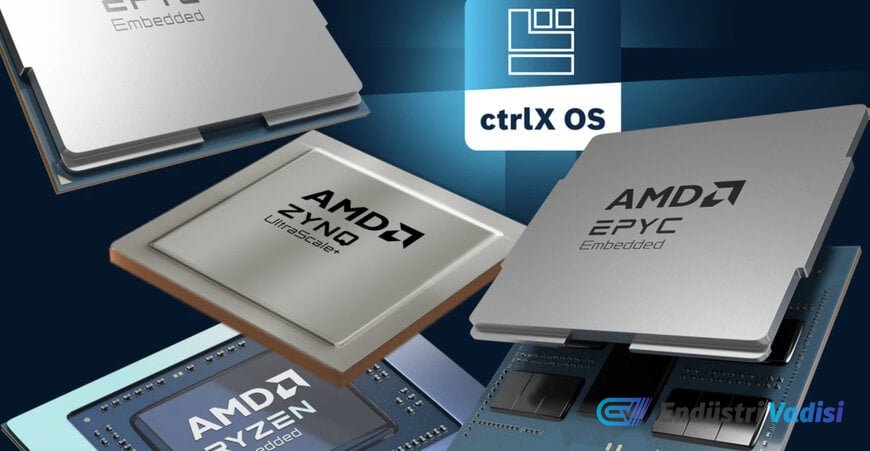
Bosch Rexroth and AMD have joined forces to run artificial intelligence directly on machines in industrial production. This collaboration aims to separate hardware and software, enabling the local use of machine learning and AI agents in facilities.
⚙️ Technical Architecture and System Integration
Bosch Rexroth's open, Linux-based ctrlX OS operating system supports a variety of AMD embedded processors. The AMD Ryzen hardware platform combines CPU, GPU, and NPU resources in a single system. This architecture provides the necessary processing power for classic automation tasks, graphics processing, and AI inference directly on the machine. This eliminates the need for additional accelerator cards or external cloud infrastructure.
🧠 Local Data Processing and AI Agents
AI applications run entirely locally, on edge hardware. Multiple AI agents and integrated large language models access engineering and current process data via the ctrlX Data Layer and a central Model Context Protocol (MCP) server. The MCP server running on ctrlX OS connects all relevant interfaces and provides the necessary industrial context to AI in real-time. This local approach ensures that critical machine data remains within the company's IT infrastructure, minimizes latency in data transmission, and eliminates continuous inference costs for cloud services.
💡 Software-Defined Automation and Hardware Selection
This collaboration follows the fundamental structural principle of software-defined automation, where software stacks and hardware components are consistently separated. Steffen Winkler, Sales Management for Bosch Rexroth's Automation and Electrification Solutions Business Unit, states that ctrlX OS "combines the world of automation with modern computing and AI resources." The standardization of the software foundation offers machine manufacturers and original equipment manufacturers (OEMs) the flexibility to adapt physical processing power to the respective automation task without having to develop a separate software environment for each hardware platform.