






Elif Özaksu
Corporate
- Thread Author
- #1
JUMO Offers Comprehensive Solutions for the Hydrogen Economy
JUMO will showcase its comprehensive system expertise developed for the global hydrogen economy at the Hydrogen Technology World Expo 2026 in Hamburg. The company focuses not just on offering components, but on the intelligent combination of sensors, automation, evaluation, and engineering. This holistic approach reduces interface complexity for plant operators, shortens project durations, and increases the scalability of future infrastructures.
Safety and Efficiency in the Foreground
From ultra-pure water treatment to electrolysis and use in fuel cells, precise monitoring of temperature, pressure, humidity, and flow is critical for economical operation. As hydrogen plants must meet the highest demands for explosion protection and plant safety, JUMO offers a broad portfolio of pressure and temperature sensors successfully tested according to the CSA ANSI HGV 3.1 standard for hydrogen fueling systems.
Integrated Safety Concepts
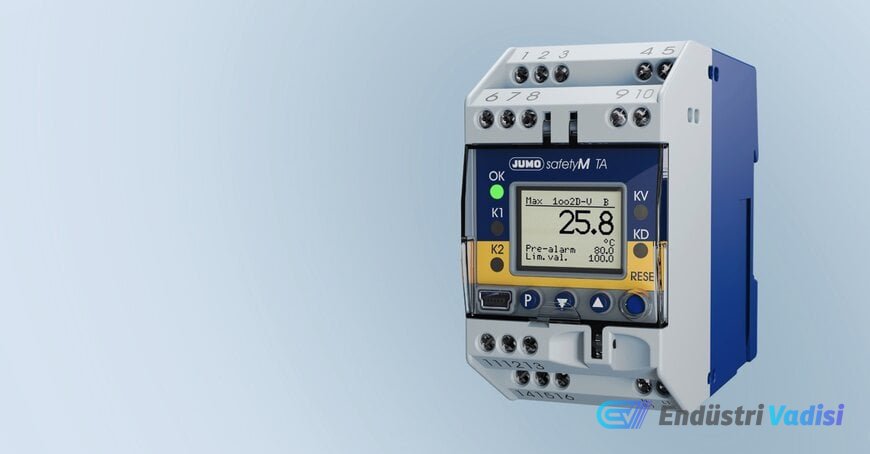
Combined with SIL and PL certified solutions from the JUMO Safety Performance brand (e.g., the multifunctional safety limiter JUMO safetyM TA), a flawless safety concept is created. Other important innovations at the fair include the new JUMO TAROS H48 Ex, the hydroTRANS H50 humidity and temperature sensor for harsh industrial environments, and the high-performance thyristor power controller TYA HL303.
Energy Management and Efficiency
Energy-intensive processes such as hydrogen electrolysis, compression, and cooling require precise measurement of energy flows. To reduce grid loads and lower operating costs, JUMO offers ISO 50001 compliant energy management systems specifically designed for large-scale hydrogen projects. According to Rainer Moritz, JUMO's Industry Manager for Renewable Energies, the market success of hydrogen depends not only on its availability but also on the perfect interaction of reliable measurement data and safe automation technology.
Solutions Against Hydrogen Embrittlement
In the hydrogen economy, especially during compression and fueling at pressures up to 700 bar, the extremely small H2 molecules pose a significant challenge in terms of material science. These molecules can penetrate traditional metallic sensor diaphragms, leading to hydrogen embrittlement and potentially causing complete mechanical failure of the sensor. Therefore, pressure sensors specifically certified according to the CSA ANSI HGV 3.1 standard use high-alloy austenitic stainless steels (such as 316L) or special gold coatings to prevent this permeability at a microscopic level.
Innovations in Electrolysis Power Control
Furthermore, high-performance electronic thyristor controllers are indispensable in PEM and alkaline electrolysis. These seamlessly and wear-free regulate the large direct currents required for electrolytic water splitting. This not only maximizes the electrical efficiency of the electrolyzer stack but also reduces harmonic distortions that could destabilize the local electrical grid.