



Ahmet Ö.
Corporate
- Thread Author
- #1
⚙️ Digital Transformation in Industrial Facilities
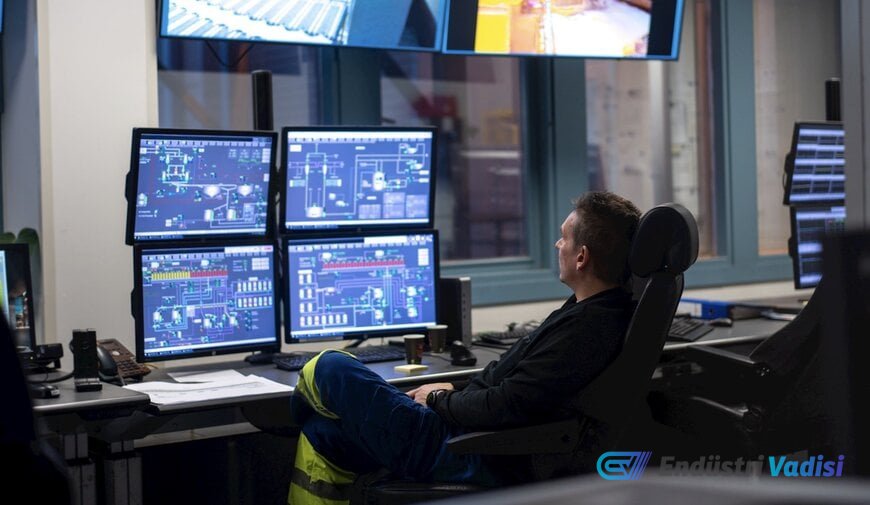
Process metallurgy and heavy industry facilities require real-time data for continuous production and efficiency. While traditional 4-20 mA HART or older fieldbus networks are reliable, bandwidth limitations restrict in-depth digital diagnostics and necessitate manual interventions. However, completely replacing existing infrastructure leads to unacceptable downtime and high costs. Therefore, modernization must offer a transitional path that brings high-speed digital connectivity to field devices without requiring a comprehensive overhaul.
🌐 Ethernet-APL Integration at Boliden Kokkola
Boliden Kokkola, a large zinc processing plant in Finland, integrated Ethernet Advanced Physical Layer (Ethernet-APL) field devices with its existing ABB Ability System 800xA distributed control system to overcome these challenges. This installation, carried out in partnership with Pepperl+Fuchs, represents one of the first industrial-scale applications of the technology in Finland.
This deployment combines Ethernet-APL hardware with existing Profibus PA field devices on the same automation platform. This allows high-bandwidth field devices to be gradually commissioned in alignment with standard maintenance windows, without the need for a complete infrastructure overhaul.
📊 Centralized Field Management and Device Telemetry
The Kokkola plant includes a pilot implementation of ABB Ability Field Information Manager to supervise both legacy and high-speed field devices. Directly integrated into the System 800xA architecture and the Ethernet-APL network, this manager unifies configuration, monitoring, and parameterization workflows across different communication protocols.
This unified view transmits real-time process data and detailed diagnostics directly from field devices to the main control room. Maintenance teams can remotely detect early signs of device degradation, sensor drift, and valve wear. This reduces manual technician checks in demanding production environments and paves the way for centralized remote operations.
📈 Long-Term Infrastructure Scalability
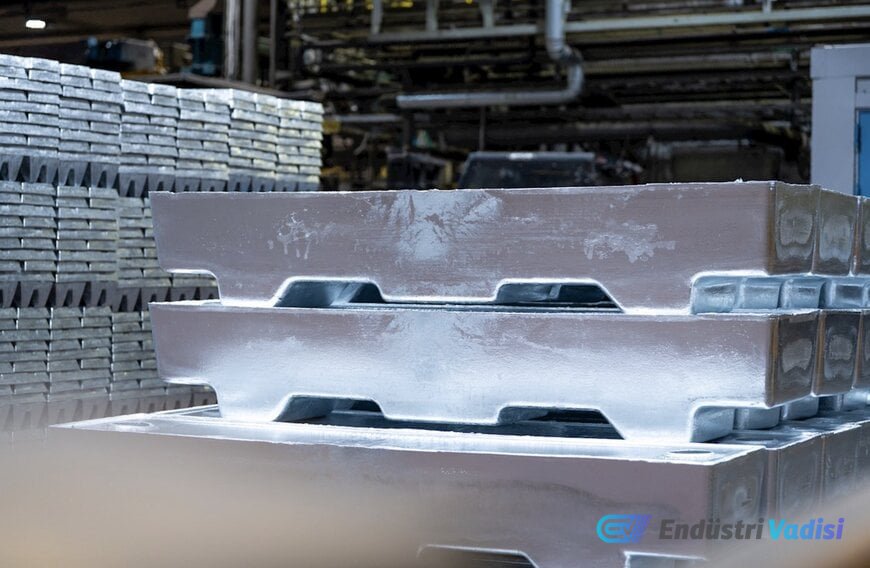
This implementation at Kokkola extends the automation partnership between ABB and Boliden, which began during the construction of the silver recovery plant in 2014. The System 800xA control backbone provides native protocol support for Profibus, Profinet, Ethernet-APL, and third-party systems, allowing next-generation digital standards to operate concurrently with installed field equipment over asset lifetimes spanning decades.
⚡ Ethernet-APL: Technical Details
- Speed and Bandwidth: Ethernet-APL defines an enhanced physical layer based on the IEEE 802.3cg (10BASE-T1L) single-pair Ethernet specification. It provides 10 Mbps full-duplex communication along with power distribution over a single twisted pair cable. Compared to older Profibus PA or Foundation Fieldbus H1 architectures (31.25 kbps), Ethernet-APL increases transmission bandwidth by more than 300 times. This speed increase enables continuous transmission of high-density diagnostics, device configuration parameters, and multi-variable sensor arrays without disrupting real-time control loops.
- Safety: The physical specification includes intrinsic safety through the 2-Wire Intrinsically Safe Ethernet (2-WISE) standard defined in IEC TS 60079-47. This allows deployment in Zone 0, Zone 1, and Division 1 explosive atmospheres.
- Topology and Distance: Ethernet-APL supports trunk topologies up to 1,000 meters in Zone 1 / Division 2 and spur segments extending up to 200 meters into Zone 0 / Division 1.
- Protocol Compatibility: Since the physical layer is compatible with standard IEEE 802.3 Ethernet, it directly carries native industrial Ethernet application protocols such as PROFINET, EtherNet/IP, and OPC UA to the field device. This flattens the classic automation pyramid and eliminates intermediate protocol converter gateways.