


Süeda Asil
Corporate
- Thread Author
- #1
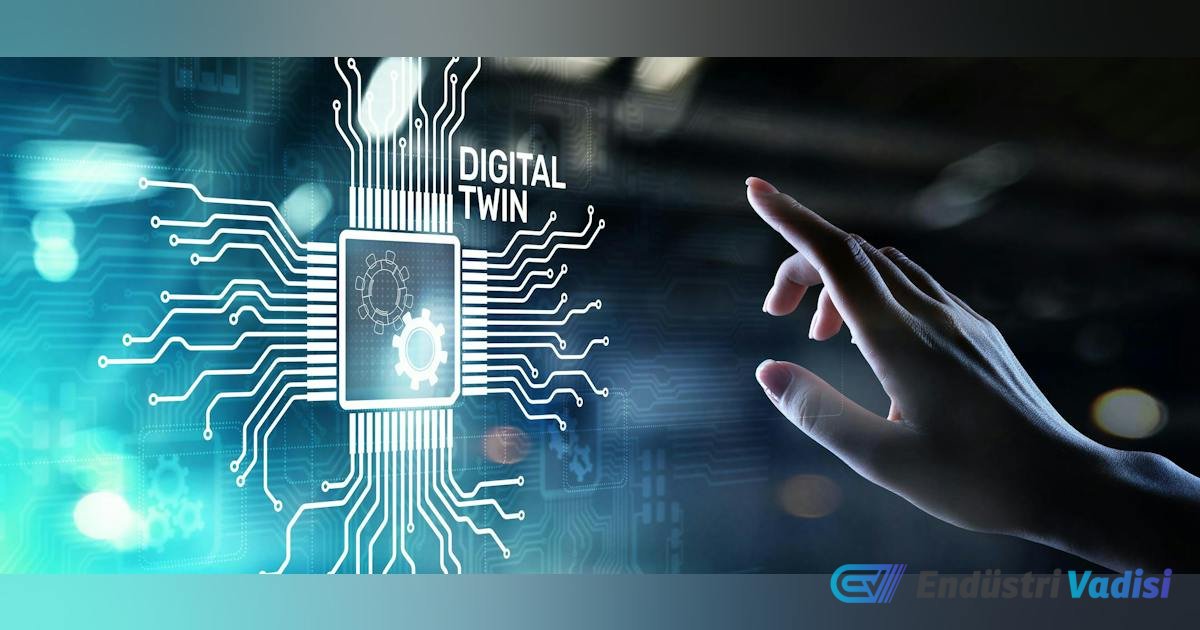
The Chasm Between Data Abundance and Decision Making
Data is everywhere in modern manufacturing plants. Dashboards glowing in control rooms, historians logging millions of tags, and reports piling up in email inboxes... Yet, when critical questions are asked like, "What happens if we change the filling sequence on line three?", "What's the real bottleneck limiting our production capacity?", or "Can we test this PLC change without risking an entire shift?", silence often follows.
This gap between data abundance and answering real operational questions is where most digital twin projects fail. Teams start by searching for software or building a complete virtual replica of the plant, then wonder why their efforts aren't paying off. A better starting point is far less glamorous but far more useful: pick a single decision worth improving, and build the twin to improve only that decision.
What is a Practical Digital Twin?
Digital twins in manufacturing are often defined in grand terms: photorealistic 3D worlds, factory-wide AI, complete virtual factories. This framework sells platforms, but rarely helps a plant.
A practical twin is a fit-for-purpose model of a physical process or asset, connected to live operational data, and built to support a specific decision. That's the entire definition. It's not a static CAD drawing. It's not a one-off simulation you ran during design and never touched again. And it's not just a prettier dashboard. The live data connection is what separates a twin from a simple model. It reflects how the process is behaving right now, so the answers it provides are based on reality, not assumptions.
The biggest misconception is that a digital twin must be a comprehensive 3D replica of the entire plant. It doesn't have to be. The most valuable twins we've helped build often look modest. They model a single process, at the level of detail required by a decision, and no more.
Focus on the Decision, Not the Model
Before you connect a single tag, identify the decision and its consequences. That's what's worth investing in.
Strong initial candidates share a common trait: they carry real operational or financial weight, and they are repeatable. Here are a few examples:
- Validating a control sequence change before startup, so you find logic errors in a model, not on a running line.
- Testing a new automated sub-system before connecting it to an active line and risking the entire process.
- Diagnosing a recurring problem: Is this batch deviation due to material variability, a drifting control loop, or degrading equipment condition? A twin connected to live data helps you isolate causes rather than guess.
- Evaluating production rate increases, so you can see where capacity bottlenecks before committing capital.
Each has a clear owner, a measurable baseline, and a cost to getting it wrong. That makes them worth modeling.
Build the Data Foundation for a Single Use Case
This is where discipline matters. PLC, SCADA, historian, MES, OEE, CMMS, quality, and recipe or batch data each play different roles. Control data tells you what the equipment is doing. Historian data shows how it behaved over time. MES and quality data provide context: what was being produced, to what specification, and with what result. Maintenance data tells you the asset's condition.
There's a temptation to connect everything on day one. Resist it. The goal is accurate, governed data for your chosen decision, not a heroic integration project that stalls for a year.
This is also where your existing investments show their value. Most plants already have capable control systems and years of historian data. You rarely need to start from scratch. You need to contextualize what you have and ensure it's reliable for the task at hand.
Virtual Commissioning is Not a Simulation
One high-value use of a twin deserves a separate note because it's easy to confuse with engineering simulation.
A traditional simulation runs on idealized models and simplified logic; it's useful during design, but it's not your real system. Virtual commissioning runs your actual PLC code against a model fed by live plant data. You test the same logic that will run the line, so you catch sequence errors and interlock issues before startup, without disrupting production.
This distinction is the difference between a rough sketch and a dress rehearsal with the actual script. It's also where control and process automation integration proves its value, because the twin only works if the code, model, and data speak the same language.
Don't Overlook Three Risks That Silently Erode Value
Even a well-scoped twin can lose its usefulness if you ignore how it can fail. A wrong twin is worse than no twin, because it gives confident answers built on shaky foundations. Three risks account for most of the problems, and each has a simple safeguard.
- Scope Creep: A project that starts with a single, focused decision can grow until the model becomes hard to maintain and difficult to trust (another asset here, a new metric there). Define the use case clearly. Before adding anything, ask if the extra detail changes the decision. If it doesn't, leave it out.
- Hidden Assumptions: Every twin contains assumptions about how the process behaves. The problem starts when the people using the output don't know those assumptions are there. Document them in plain language, show where the model is confident and where it's guessing, and ensure users understand what the twin is telling them (and what it isn't).
- Model Drift: Processes evolve. Equipment ages, control strategies change, and recipes are adjusted. A twin that was accurate on day one will slowly diverge from the real line unless it's kept current. Plan for recalibration, link model updates to your change management process, and routinely validate against live data.
The twin doesn't fail on day one. It fails six months later, when the line has changed and nobody updated the model. Treat it like a living asset with an owner, and it stays honest.
None of these safeguards require a large team. They require the same discipline that makes the initial use case worth building: clear boundaries, honest documentation, and a habit of checking the model against reality.
Design for People to Act On
A technically elegant twin that operators, maintenance teams, and process engineers don't trust delivers no return. Involve these teams early. Recommendations must be understandable and traceable; people need to see why the twin is pointing to that spot and how it connects to the work they already do.
The fastest way to kill a digital twin is to let it become just another screen nobody opens. You prevent this by connecting it to a specific decision, assigning a real owner to that decision, and ensuring the output tells someone not just what is, but what to do next.
Pilot, Prove, Then Expand
Keep the initial effort contained. Pick a single use case. Define a baseline metric. Assign a responsible owner. Define a timeframe to measure the action the twin should drive and the results. Then honestly check: did the twin change the decision, and did the decision change the outcome?
Only after you can answer yes should you expand: to an adjacent asset, a related process, or another plant. Scale comes after proof, not ambition.
The most valuable digital twin isn't the biggest or most visually impressive. It's the one that makes a single, important plant decision safer, faster, and more repeatable. Once you get that right, you have both a working model and a template you can trust to grow.