








Hasan S. Cemkan
Corporate
- Thread Author
- #1
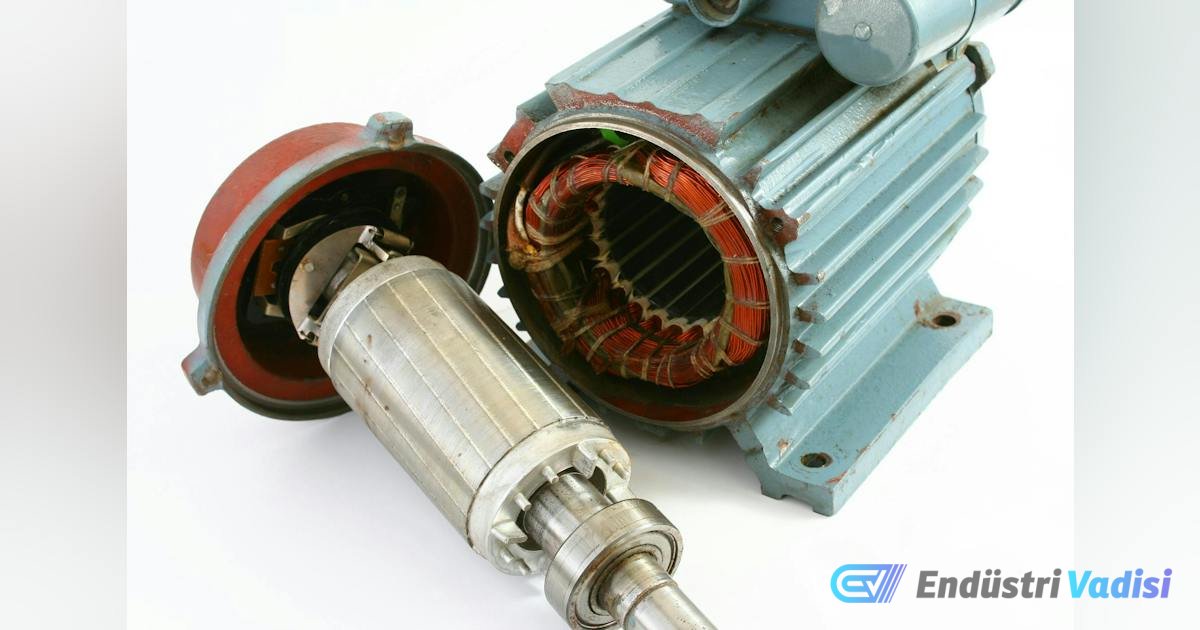
Silent Revolution in Manufacturing: Electric Motors Take Center Stage Again!
At the recent International Manufacturing Technology Show (IMTS), one fact stood out: Manufacturing is being reshaped by automation, electrification, and intelligence. While exciting developments like artificial intelligence and robotics may overshadow it, there's a key underlying technology driving this transformation: Electric motors.
Global Market Growth and Strategic Importance
The global electric motor market is expected to reach approximately $176.5 billion by 2026. This figure highlights the critical role motors play at the intersection of manufacturing, transportation, energy, and automation. The US robotics market reaching $11.4 billion also indicates the pursuit of efficiency, precision, and consistency.
These two trends are tightly linked. Every industrial robot, automated production line, conveyor, machine tool, or motion control system relies on the ability to convert electrical energy into precise mechanical motion. As automation advances, so do the expectations for motors.
Motors Reimagined for the Robotic Age
Today's manufacturers need compact, efficient, reliable, and controllable motors that can perform even in demanding conditions. This elevates the electric motor from an old technology to a fundamental technology reinvented for the robotic age.
According to the International Federation of Robotics, industrial robot installations in the US increased by 11% to 38,000 units in 2025. Installations in the automotive sector rose to 13,500, while robot usage in the food sector increased by 30%. This shows that automation is spreading beyond traditional manufacturing areas.
US Competitiveness and Motor Technology
The US ranks eighth globally with approximately 307 industrial robots per 10,000 manufacturing employees. China, on the other hand, has built a massive industrial automation ecosystem with about ten times more robot installations than the US in this field. This competition makes the engineering and manufacturing of critical motion components strategically important.
The motor inside a robot is not a simple component. It affects acceleration, precision, energy consumption, thermal management, load capacity, reliability, and ultimately the economics of the entire machine. As robotic systems become more compact and mobile, motors need to deliver higher performance in smaller sizes. As factories demand continuous operation, durability and thermal efficiency become equally important.
Future Factories with Human-Machine Collaboration
Modern motor technology can help American manufacturers compete. However, this will happen not by replacing workers, but by making them more productive. The most appealing vision of automation is not a factory without people, but one where machines handle repetitive, dangerous, or physically demanding tasks, while skilled workers focus on programming, quality control, maintenance, engineering, and higher-value decision-making processes.
Electric motors are at the heart of this equation. IMTS 2026 also raised a broader question facing American industry: How can we build a more productive, resilient, and technologically capable manufacturing base?
The answer is simple: We cannot ignore the fundamentals. AI can provide intelligence, robotics automation, and digital systems connectivity. But it is motors that provide motion. The next era of American manufacturing will depend on these four working together.
The electric motor deserves to be seen not as a technology of yesterday, but as an indispensable platform for tomorrow's industrial economy. As robotics, electrification, and advanced manufacturing accelerate, companies that can make motors more efficient, durable, precise, and adaptable will determine how successfully American industry competes.
The future of manufacturing may look radically different, but it will still need to move!






















