








Semih Asil
Industry Valley
- Thread Author
- #1
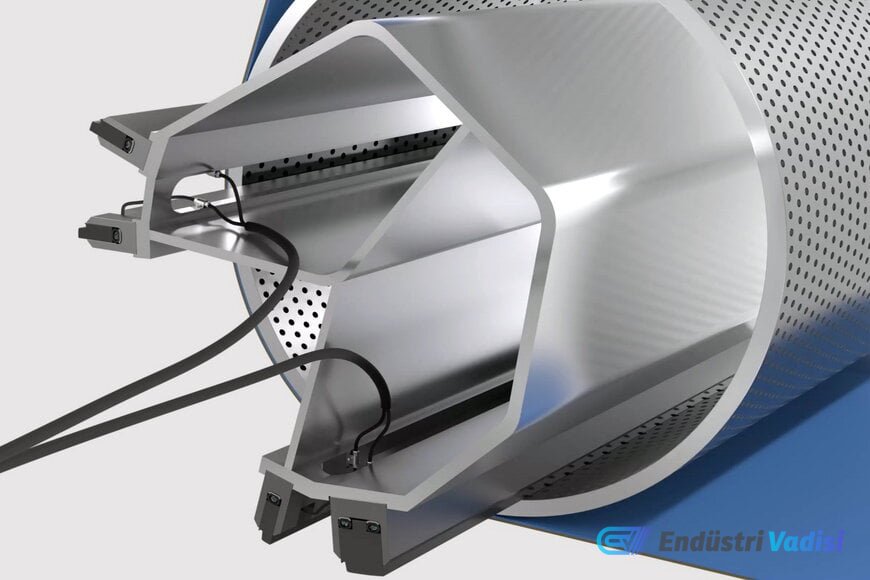
In paper machines, suction rolls, which are key to continuous production, are constantly exposed to moisture and friction, causing wear on their sealing strips. While traditional methods lead to either premature part replacement or sudden failures, Voith's new generation solution, SealView NG, puts an end to this problem with pneumatic monitoring.
🔍 Why is it Important?
Maintaining vacuum levels in paper production is critical. However, the sealing strips inside the roll wear out quickly due to the moist environment and friction. Visual inspection is not possible because these strips are internal. Wear leads to vacuum loss, production interruptions, and costly downtime. Premature replacement, on the other hand, is an unnecessary expense.
💨 Pneumatic Sensor Technology
SealView NG uses a pneumatic measurement system specifically designed for this challenge. While electrical sensors can fail in moist paper mill environments, the pneumatic system is unaffected by liquid ingress and continuously tracks wear. This allows for monitoring wear across the entire width of the strip and detecting local air leaks in advance.
📊 Calculating Remaining Life
The system accurately calculates real-time wear progression, determining the remaining life of the sealing strip. This facilitates planning spare parts procurement and scheduling roll replacements.
🖥️ Independent and Secure Operation
SealView NG operates as an independent system. A local LED display instantly shows the strip wear status. Configuration and diagnosis are possible via an offline web-based application that does not require an external cloud or internet connection. This eliminates cybersecurity risks and simplifies IT integration.
🛠️ Easy Integration
The system can be integrated with all major suction roll brands through Voith Mechanical Roll Service Centers.
💡 Additional Information
- While traditional methods (vibration analysis, motor load monitoring) detect failure after vacuum loss has begun, SealView NG measures physical wear in advance.
- Previous mechanical monitoring systems (microswitches, resistance wires) or manual controls experienced problems in moist environments, whereas pneumatic methods do not carry the risk of electrical short circuits and are unaffected by water, fiber accumulation, or chemicals.





















