







Cengiz Özemli
Academic
- Thread Author
- #1
💡 NVIDIA Used Digital Twin in AI Facility with Jacobs
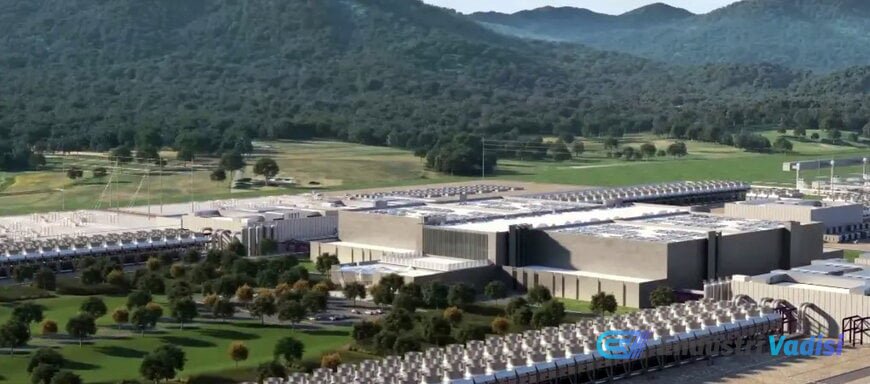
NVIDIA deployed Jacobs' data center digital twin at a large-scale artificial intelligence research and development facility in the United States. Through this three-year software services agreement, the facility's power, thermal, and mechanical performance was modeled in real-time. The system models the behavior of high-density infrastructure, supporting operational planning, cooling efficiency, and power distribution.
🔥 Challenges in Accelerated Computing Infrastructure
High-performance computing and machine learning workloads create non-linear power fluctuations and extreme thermal dissipation requirements. Managing these facilities requires real-time coordination between dynamic computing loads and mechanical cooling cycles. Static engineering models create operational risks in critical digital infrastructure as they cannot account for live variations in power draw, liquid cooling distribution, and equipment stress.
⚙️ Technical Architecture and Operational Responsibilities
The Jacobs Data Center Digital Twin operates on NVIDIA Omniverse software libraries, creating a synchronized virtual representation of the physical facility. Jacobs integrates static computational engineering models, operational technology telemetry, and streaming building management data into a single platform.
The software continuously collects live operational data from electrical, mechanical, and IT subsystems. By combining physical telemetry with physics-based simulation models, the platform calculates transient thermal loads and electrical demands across different computing clusters. NVIDIA provides the core simulation libraries and facility environment, while Jacobs delivers software integration, system engineering, and model deployment within the framework of software services.
📊 Engineering Use Cases and Facility Integration
The platform provides operators with computational simulation tools to assess mechanical and electrical limits under varying computing loads. Key functional capabilities include:
- Dynamic Power Load Balancing: Simulating computing distribution against electrical feeder capacities and substation constraints.
- Thermal and Leakage Monitoring: Monitoring liquid cooling loops and sensor arrays to identify pressure drops and liquid leakage risks.
- Energy Forecasting: Predicting facility power usage effectiveness based on planned training workloads and external ambient temperatures.
- Predictive Maintenance: Identifying anomalous vibration, heat generation, or pressure signatures in critical pump and chiller infrastructure before component degradation occurs.
- Operational Simulation: Enabling personnel to run offline failure scenarios and system changes without disrupting physical hardware.
🤖 Autonomous Infrastructure Optimization
This integration lays the foundation for predictive building management systems. By processing streaming operational telemetry, the platform supports software agents that model automated responses to sudden workload fluctuations, dynamically shifting cooling resources to match server rack heat dissipation.
Amer Battikhi, Jacobs Vice President, stated, "Jacobs is integrating real-time data and simulation technologies to help NVIDIA advance next-generation AI infrastructure management. Operators need smarter, more connected ways to optimize performance and manage energy demand, while also increasing resilience."
This application demonstrates the use of real-time simulation platforms for complex industrial automation, shifting facility maintenance from scheduled physical inspections to parameter-driven algorithmic monitoring.