



Mucitler Elektrik
Corporate
- Thread Author
- #1
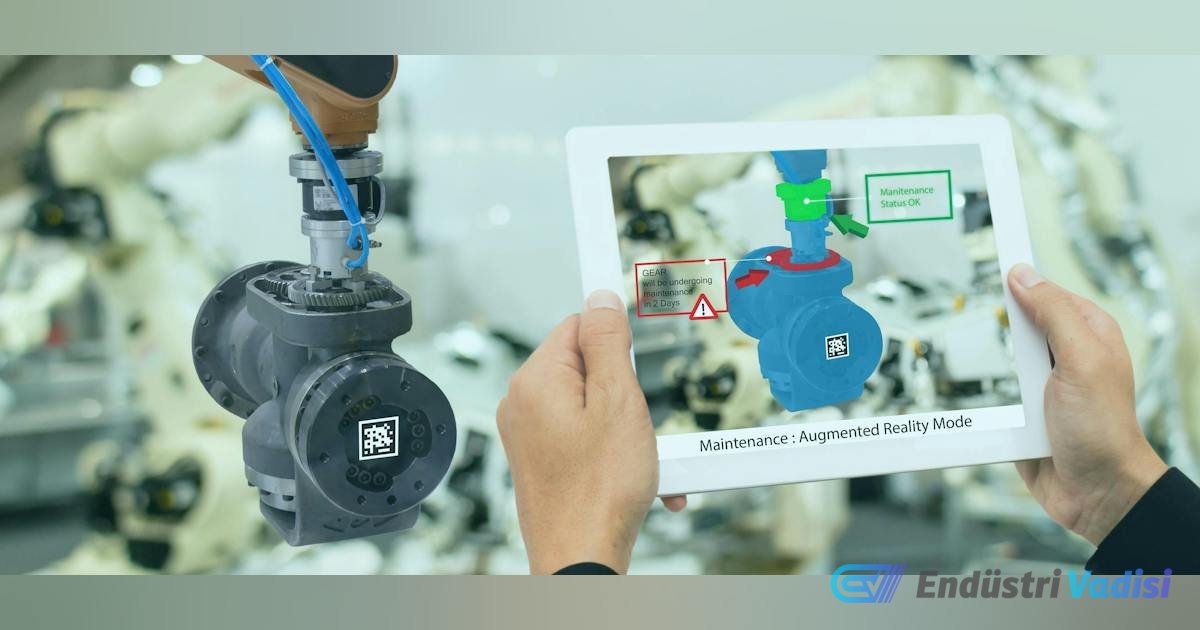
A few years ago, I led an augmented reality (AR) exploration in the family of industrial process instruments. We converted equipment CAD into interactive 3D, ran it on wearables and ordinary phones/tablets, and streamed live measurements from the cloud to the hardware. It went the way most similar projects go.
🤔 Why Didn't Pilots Scale?
The demos worked, technicians liked it. The value for training and troubleshooting was evident within five minutes. This was surprisingly consistent across the industry: pick a high-value asset, build an experience around it, show it to executives, gather enthusiasm. Then start on the second asset and learn the true cost of the first.
The pilots didn't fail. The technology delivered on its promise. But the problem arose at the step of going from one machine to two hundred.
🚧 The Author's Cliff: Why Did Costs Soar?
Over the last decade, creating an experience for a single piece of equipment required:
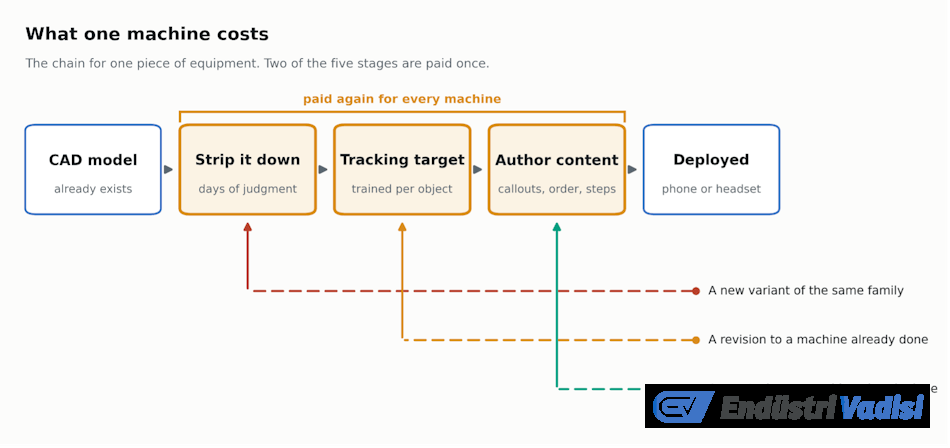
- CAD Conversion: While CAD models existed for industrial equipment, processing thousands of parts, tolerances, and internal routing on a real-time handheld device was difficult. So models had to be converted and simplified.
- Tracking Target Preparation: Tracking targets were needed for the application to recognize the hardware and lock graphics onto it. This was a painstaking process with specific demands in terms of scale, geometry, and uniqueness.
- Content Creation: Content creation, such as which description goes with which component, the order of steps, and triggers, was also a crucial step.
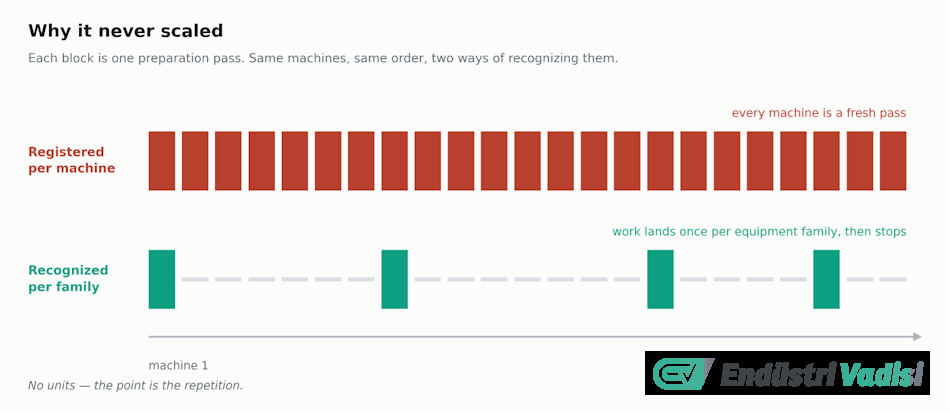
But the problem didn't end there. When the machine in the field differed from the revision the model was built on, some of the work had to be redone from scratch. A fleet is not made up of identical machines; it contains different variants and revisions accumulated over the years. Much of this preparation was not transferable across these boundaries, because what was prepared was a single, specific machine.
While the first asset took weeks, a fleet could take months. This arithmetic stopped more industrial AR programs than any headset.
✨ What Has Changed?
Two developments have begun to eliminate the per-asset registration step:
- Recognition Instead of Registration: Image models that identify equipment directly from the camera feed change the question. Instead of "Has this specific asset been registered?", it becomes "Can the model tell what it's looking at?".
- Capture Instead of Modeling: Photogrammetry and new radiance field methods allow for obtaining a usable spatial representation by traversing an area with a camera. This is a big advantage for brownfield sites that don't require clean CAD.
While these developments are still new and open to improvement, they hold promise for the future of industrial AR.
📱 The Device Problem: Headset or Handheld?
While headsets grab attention, handheld devices are winning for most maintenance tasks. The reasons have little to do with optics:
- Cost: Handheld devices are more affordable and often already available.
- Hazardous Area Approval: The list of approved products for devices to be used in hazardous areas is more extensive for handheld devices.
- Product Continuity: While headset models can change rapidly, handheld devices have a longer lifespan and are easily replaceable.
However, headsets still have an advantage in situations where the job requires both hands to be free and the technician's gaze to guide the system.