




Cengiz Özemli
Academic
- Thread Author
- #1
🚀 EUTECT Introduces Automated Quality Assurance for Selective Soldering Systems!
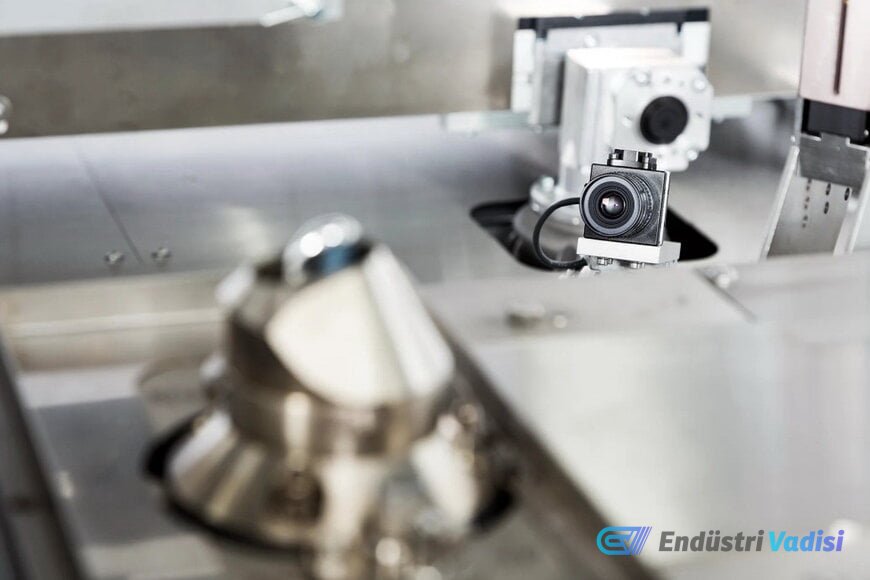
EUTECT has introduced Solder Guard, a next-generation in-line monitoring platform that integrates coaxial machine vision and sensor telemetry to verify solder joint formation during production. This system is designed for high-reliability electronic assemblies, from automotive to aerospace, medical technology to defense.
🔍 Predictable Quality on the Production Line
Traditional manufacturing processes often rely on end-of-line automated optical inspection (AOI) to assess solder joint integrity after thermal processing. Solder Guard, however, moves the assessment directly into the ongoing soldering cycle, establishing a predictable quality framework. The system monitors critical parameters within defined tolerance bands during operation. This includes metrics such as force and displacement-controlled wire feed data, closed-loop temperature profiles, optical feeds, and additional sensor inputs. Synchronized data streams create a digital process record for each joint, verifying that formation occurs under controlled conditions.
👁️ Integration of Image Processing and Parameter Analysis
The system is structured around two synchronized software modules: ILSE and EDA:
- ILSE: For laser soldering applications, it uses a camera integrated coaxially into the laser processing optics. By comparing target with actual images, it performs visual defect detection without the need for secondary external inspection stations. It can be directly integrated into existing laser systems.
- EDA: Processes physical machine variables captured during joint execution. It compares operational measurements with defined process limits and qualified baseline parameters.
The combination of ILSE and EDA cross-references visual anomalies with synchronized physical telemetry. When an optical defect is flagged, engineering teams can correlate the anomaly with thermal curves, wire feed resistance, or movement speeds. This combined approach reduces false defect classifications while accelerating root cause analysis time.
🤖 Autonomous Process Control and Traceability
Real-time recording of sensor and optical data forms a foundation for adaptive manufacturing. The continuous evaluation architecture provides the necessary framework for dynamic closed-loop parameter adjustments. This allows the system to compensate for minor process variations before improper joints are formed. For critical electronics operating under strict regulatory standards, the platform offers complete traceability for every joint, maintaining long-term historical records to demonstrate process stability and compliance.
💡 EUTECT Solder Guard vs. Traditional Methods
Traditional selective and laser soldering inspection typically relies on post-process, offline automated optical inspection (AOI) or automated X-ray inspection (AXI) platforms. These systems evaluate elements such as geometry, fillet shape, and bridging after the board has completely cooled. In contrast, in-line coaxial optical systems like EUTECT Solder Guard directly monitor the molten solder pool and the wetting process in real-time. This allows for immediate correlation between visual wetting phenomena and internal machine variables. Although Solder Guard limits its inspection scope to the active joint location, it offers localized process verification, eliminating end-of-line inspection bottlenecks and enabling immediate rejection of defective parts or parameter correction.