Alper Aktaş
Endüstri Vadisi
- Thread Author
- #1

⚙️ Actuator Selection: From Past to Present
In industrial applications, especially in heavy-duty tasks like material handling, actuator selection used to be very simple. Hydraulic and pneumatic systems dominated and were left until the end of the design process. However, everything changed with the advent of electric linear actuators!
💡 The Rise of Electric Actuators
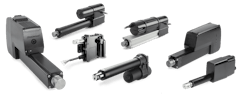
Electric actuators offer advantages that hydraulic/pneumatic systems cannot match, such as high load capacity, integrated intelligence, programmability, and modularity. They are now rewriting the world of automation with cleaner, more compact, and more efficient solutions.
This change plays a critical role in today's market, which requires OEMs to be more agile in their business processes. Here are 5 key trends that ensure electric actuators have a place at the planning table:
- Performance improvements brought by electrification
- Robots and cobots
- Modular system architectures
- Workplace safety and regulations
- Strategic actuation
In each of these trends, linear motion plays a significant role, considering many balances such as stepper/servo motors, ball/lead screws. Design engineers now make these decisions within the context of an integrated, electric platform.
⚡ How Does Electrification Increase Performance?
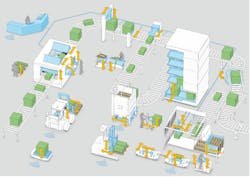
Electric actuators are no longer just components; they are integrated systems combining mechanical elements, motors, drives, sensors, controllers, and communication interfaces. This integration gives machine manufacturers the ability to deliver the high performance demanded by today's market.
Benefits such as flexibility in machine design, plug-and-play capability, advanced control capabilities, low energy consumption, reduced maintenance and downtime, increased safety, and ergonomics are immediately apparent. This also leads to a reduction in overall costs.
Modern electric actuators offer capabilities that directly influence system architecture. Features such as sub-micron level positional accuracy, programmable multi-position control, and synchronized multi-axis motion require a strategic engineering approach that must be considered much earlier in the design process.
For example, an OEM replacing a hydraulic pick-and-place operation with an electric modular packaging cell must account for different product sizes, speeds, and duty cycles from the outset. Actuator selection impacts the broader system architecture, including PLC requirements, communication protocols, and synchronization between multiple axes. Knowing actuator characteristics at the system design stage prevents complex changes later on.
🤖 The Rise of Robots and Cobots
Robots and cobots are mechatronic systems that require early selection of actuators to ensure built-in safety features and regulatory compliance. Correct actuator selection prevents costly redesigns and supports intelligent subsystem integration.
Robotic vision systems consist of collaborative modules, such as robotic arms on mobile platforms. Early motion solution decisions affect joint sizing, payload capacity, power density, control architecture, structural integrity, and safety requirements.
Cobots rely on actuators with integrated force/torque sensing for safe human interaction and collision avoidance. In regulated industries like pharmaceuticals and medical devices, delayed actuator selection can lead to expensive revalidation processes.
🧩 The Need for Modularity and Flexibility
Modularization offers OEMs agility in today's markets by enabling them to build systems from pre-designed components such as electric actuators with integrated intelligence and communication features, robots, and valves. The timing of actuator selection is critical for system effectiveness.
For example, an OEM uses a standard linear axis module in machines within a production cell. When higher speed demands arise, the lead screw actuator cannot meet performance requirements due to heat, energy loss, and wear. Switching to a ball screw is not possible due to mounting incompatibilities.
This change disrupts electrical and control systems, requiring new motor sizing, feedback, and tuning, potentially affecting the entire machine platform. Designers may also have to spend additional time updating documentation, bills of materials, and controls. The module that was previously standard becomes fragmented. To prevent such complications, actuator selection should be made at an early stage in the design of modular systems.