








Semih Asil
Industry Valley
- Thread Author
- #1
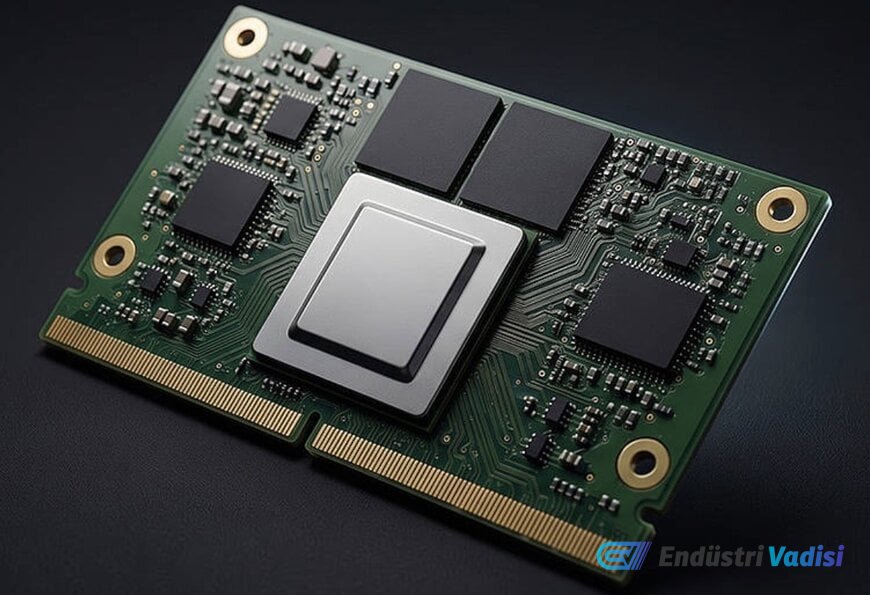
💡 A Solution Bridging Prototyping to Production
SECO is paving the way for industrial Edge AI applications with its SOM-SMARC-Dragonwing-IQ8 module, developed in collaboration with Arduino and Qualcomm Technologies. This standardized system-on-module (SoM) enables developers to seamlessly transition their rapid prototyping processes to full-scale industrial integration in areas such as robotics and machine vision.
🛠️ Integration Accelerating the Development Process
The integration between the Arduino VENTUNO Q development platform and the new industrial module fills a significant gap in hardware engineering. Engineers can transfer applications developed in the prototyping environment directly to the industrial SoM using software tools like Arduino App Lab. This preserves the software codebase and ensures rapid integration into production-oriented architectures. This common hardware and software foundation reduces development effort and shortens time-to-market.
⚙️ High Performance and Industrial Durability
Designed in accordance with the SMARC Release 2.1.1 standard, the module offers up to 40 TOPS of AI acceleration capacity thanks to its Qualcomm Dragonwing IQ-8275 processor. It supports high-performance operations with up to 32GB of LPDDR5/LPDDR5X memory and up to 1TB of UFS 3.1 storage options.
Comprehensive connectivity options for industrial environments include Gigabit and 2.5 Gigabit Ethernet, PCIe Gen4, MIPI-CSI, and CAN-FD. The Clea OS operating system ensures the scalability of devices in distributed networks with features such as secure OTA updates, container orchestration, fleet management, and remote troubleshooting.
🎯 Competitive Analysis: Versus NVIDIA Jetson Orin Nano
The 40 TOPS processing power of the Qualcomm IQ-8275 processor puts it in direct competition with the NVIDIA Jetson Orin Nano module. While the Jetson Orin Nano is powered by an integrated Ampere architecture GPU, the Snapdragon-based Dragonwing architecture uses a dedicated NPU to manage AI workloads with optimized power efficiency.
Furthermore, SECO's module adheres to the vendor-agnostic SMARC 2.1.1 physical footprint standard. This compliance allows hardware engineers to swap processor modules on standard carrier boards without redesigning the underlying printed circuit board infrastructure. In contrast, the Jetson ecosystem uses a proprietary 260-pin SO-DIMM physical form factor, which limits engineers to custom carrier board designs dedicated solely to NVIDIA silicon architectures.























