






Ahmet Ö.
Corporate
- Thread Author
- #1

✈️ A New Era in Aviation: Portescap Aero COTS Motors
Dozens of motion systems in commercial aircraft manage everything from environmental control to cockpit inputs. Portescap has introduced its Aero commercial off-the-shelf (COTS) series of precision miniature motors, specifically designed for these critical applications.
⚙️ SWaP Optimization and DO-160G Compliance
- Diameters: Ranging from 22 mm to 30 mm.
- Optimization: Meticulously optimized for size, weight, and power (SWaP).
- Durability: Resilient to temperatures from -55°C to +125°C, continuous vibration, shock, humidity, and corrosive conditions.
- Certification: Meets DO-160G environmental standards at the component level, offering OEMs a pre-validated foundation for commercial, defense, and eVTOL platforms. This reduces the risk of late-stage failures and costly redesigns.
💡 Distributed Actuation and Integrated Ecosystems
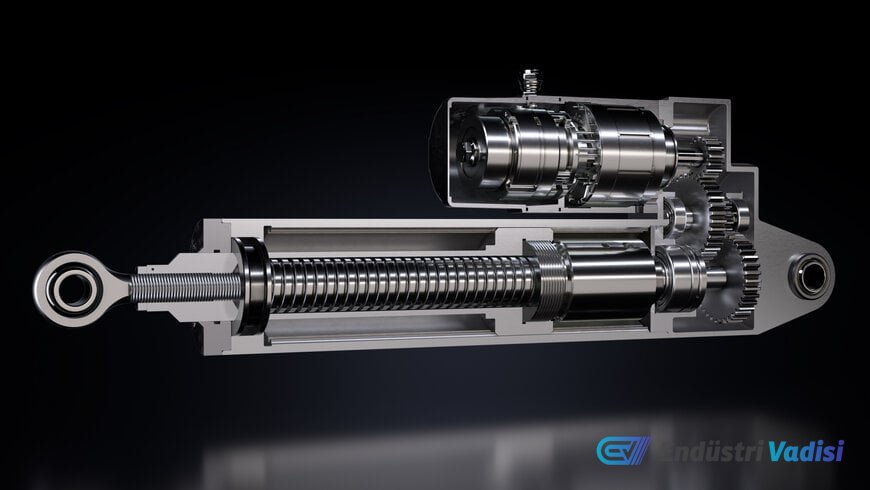
Electrification in aviation is accelerating the shift from traditional hydraulic systems to distributed electromechanical actuation. These motors are vital for systems such as environmental control, cabin airflow, cockpit inputs, and passenger seat actuation.
Adrien Mettraux, Aerospace & Defense Industry Manager, states that these specialized COTS motors fill a critical market gap by offering a proven supply chain and short lead times compared to fully custom or adapted industrial solutions.
Furthermore, as part of the Regal Rexnord ecosystem, Aero motors can be seamlessly integrated with resolvers, brakes, ball screws, and gears to provide complete, coordinated electromechanical assemblies. This simplifies OEM supply chains.
🌍 More Electric Aircraft and Advanced Air Mobility
The transition to More Electric Aircraft (MEA) and all-electric Advanced Air Mobility (AAM) platforms heavily relies on distributed architectures to replace heavy, maintenance-intensive centralized hydraulic systems.
Rigorous environmental certification is a known bottleneck in the industry. If a motor fails during system-level actuator testing, the entire assembly must return to the design phase. By pre-qualifying the motor (the core of the motion system) against these demanding parameters, component manufacturers enable a "shift left" approach to validation. This allows aerospace engineers to freeze designs earlier, rapidly prototype, and scale production volumes necessary for emerging high-volume markets like eVTOLs without incurring significant certification risks.