







Semih Asil
Industry Valley
- Thread Author
- #1
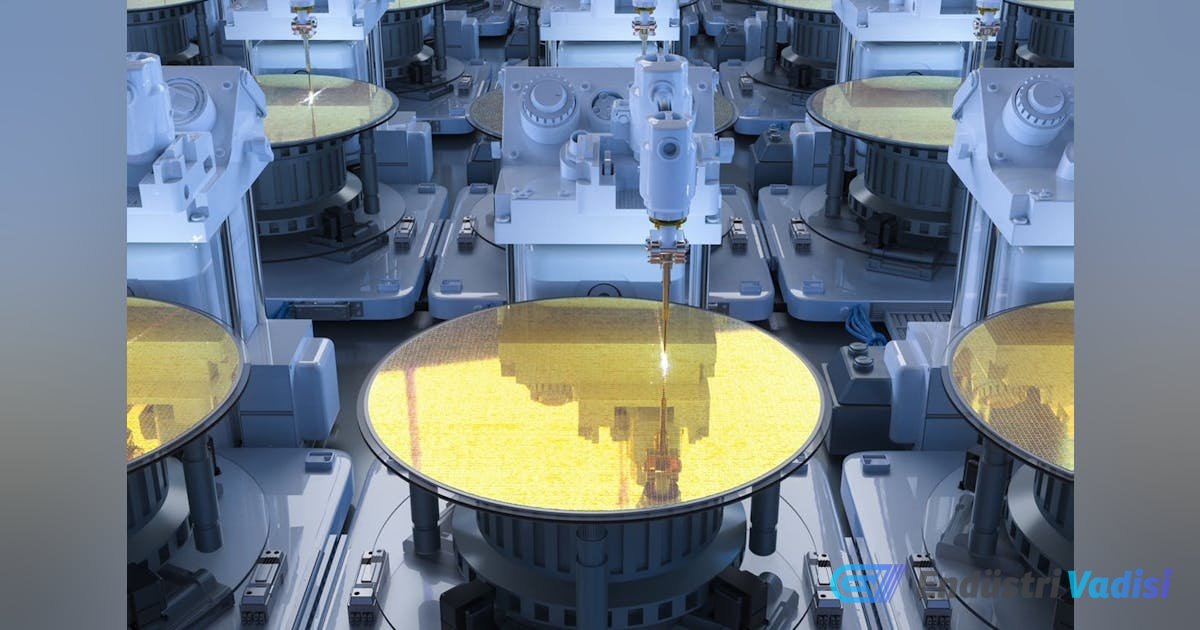
A New Era in Semiconductor Manufacturing: Digital Twin Technology
Semiconductor manufacturers face conflicting pressures in developing next-generation devices. Pushing the boundaries of power consumption and performance increases the complexity of chip designs, leading to an exponential rise in engineering effort during development and production processes.
Artificial intelligence (AI) and machine learning (ML), while further accelerating the pace of innovation in the semiconductor industry, are also intensifying competition for fundamental inputs like local electrical capacity.
Digital Twin: A Vision Beyond Design
While industrial AI brings gains in development processes, siloed approaches to design, manufacturing, and factory operations hinder semiconductor manufacturers. A comprehensive digital twin strategy spanning the entire semiconductor value chain, from initial design to factory operations, forms a strong foundation for a software-defined, silicon-enabled, and AI-powered future.
Design engineers in the semiconductor industry have been working with digital models of chips for decades due to the inherent complexity of semiconductor designs. Now, the digital twin concept is being extended beyond design, into manufacturing and operations. This creates a closed-loop connection between the virtual and physical worlds throughout the semiconductor product lifecycle.
Deeper connections between design, manufacturing, and operations will help semiconductor companies more efficiently manage the increasing complexity and engineering effort required to develop and produce next-generation chips. Shrinking process nodes are only part of the challenge; advanced packaging techniques like 3D IC introduce manufacturing difficulties that traditional processes struggle to address. Meanwhile, requirements for new chips are increasingly driven by the software loads and applications that will run on the chip, necessitating tighter connections throughout the lifecycle to match software demands with silicon performance.
Critically, decisions made during the design phase determine the final production outcomes. Design engineers must consider system performance, energy efficiency, chip reuse, and circularity upfront. A comprehensive digital twin approach fundamentally changes how semiconductor companies approach development by enabling optimization across the entire product lifecycle.
For example, in semiconductor factory construction, a digital twin can be used to create complete virtual models before breaking ground or committing billions of dollars in capital expenditure. Engineers can simulate entire facilities, testing material flows, equipment placement, personnel requirements, and environmental controls to identify bottlenecks or even virtually validate monitoring and control systems.
The result is a faster ramp-up from construction completion to high-volume production. Digital twin models also persist throughout the facility's lifecycle, continuing to drive optimizations and deliver value over time.
🔒 Cybersecurity: The Foundation of Digital Transformation 🔒
Every successful digital transformation and digital twin implementation needs to incorporate a robust and multi-layered cybersecurity strategy from the outset. Semiconductor manufacturers are under constant threat of cyberattacks.
For instance, defense-in-depth approaches build several layers of defense across information systems, operational technologies, and physical access to facilities or company resources. New technologies, especially AI-powered threat detection, can further enhance these security approaches with faster and more agile responses to emerging threats.
Meanwhile, data sharing and collaboration with ecosystem partners are increasingly important aspects of software-defined system development. Secure collaboration and data-sharing frameworks that protect intellectual property while providing openness to partners will be crucial to meeting customer requirements.
📈 Digitizing the Semiconductor Lifecycle 📈
A comprehensive digital twin strategy can transform how semiconductor companies design, manufacture, and operate in an increasingly complex environment. Success requires investment in data integration, cybersecurity, and secure ecosystem collaboration.
As the industry grapples with unprecedented complexity in chip design, energy constraints, and talent shortages, the digital twin offers a path to build a competitive advantage while managing risk. Companies that successfully integrate the digital twin across their operations will be leaders in tomorrow's AI-driven semiconductor landscape.