







Elif Özaksu
Corporate
- Thread Author
- #1
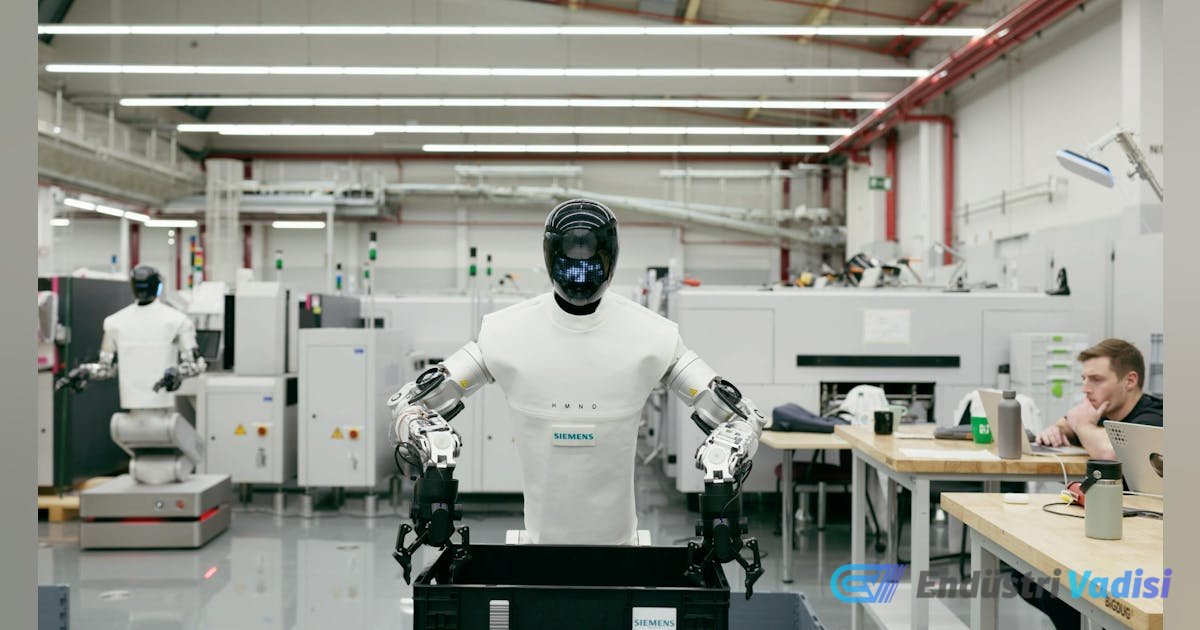
Once the subject of science fiction movies, humanoid robots are rapidly becoming a reality today. Thanks to advances in sensing technologies such as computer vision, LiDAR cameras, and tactile sensors, these robots are becoming increasingly capable in human environments. These technological developments enable humanoid robots to integrate seamlessly into industrial production processes.
🏭 Why Humanoid Robots for Brownfield Factories?
Humanoid robots are uniquely positioned to complement and augment human labor compared to other autonomous systems, because these robots can operate in environments designed for humans. For centuries, all workplaces, from assembly lines to storage systems, have been built to human dimensions and movements. Therefore, the integration of humanoid robots requires far fewer modifications than other robotic solutions. With the right technologies, humanoid robots can be easily incorporated into existing operations, accelerating adoption even in older factory environments.
✨ The Importance of Form
Two of the most distinctive features of humanoid robots are their human-like designs and adaptable functionalities. These characteristics make them particularly suitable for brownfield manufacturing environments. Adapting existing facilities to new automation technologies can require significant capital investment and operational disruptions. While digital transformation often yields strong returns in the long run, large-scale factory redesigns may not always be practical or economically viable. Humanoid robots offer an alternative approach by operating within existing human-centric workflows, equipment layouts, and infrastructure. As a result, manufacturers can introduce advanced automation with minimal changes to the production environment, thereby extending the benefits of automation to facilities that might otherwise be difficult to modernize.
The human form factor and adaptability set humanoid robots apart from other autonomous robots, as they can perform a wide variety of tasks. Automated guided vehicles (AGVs) and autonomous mobile robots (AMRs) typically operate along predetermined routes and are designed for a limited number of specialized functions. Full-form humanoid robots, however, are built to emphasize flexibility and, in some cases, advanced intelligence. Their humanoid form allows for a greater range of motion and operational versatility, making them suitable for traditional environments where people work. Not limited by fixed infrastructure, humanoid robots can navigate dynamic environments, adapt to changing conditions, and perform diverse tasks rather than repeatedly executing a single predefined action.
🛠️ Preparing Brownfield
Humanoid robots also offer significant potential for cost savings and operational efficiencies to machine manufacturers. Successful adoption requires more than just placing them in an existing work environment. Organizations must invest in workforce training, re-evaluate established processes, and adapt their safety cultures to support effective human-robot collaboration. Underlying these efforts is a robust digital workflow that enables simulation, training, calibration, and modeling of human-robot interactions. This helps ensure safe, efficient, and seamless integration into daily operations.
When an organization undertakes a digital transformation initiative, it can establish a continuous and strategic flow of data across the enterprise, strengthen the digital workflow, and create a digital twin. This digital twin provides an accurate, real-time virtual representation of the factory, allowing businesses to simulate how humanoid robots will interact and collaborate with human workers, validate safety and ergonomic requirements, and test workflows before deploying humanoid robots into live production environments.
By connecting operations through a continuous feedback loop, the digital twin helps organizations identify potential challenges associated with humanoid integration and proactively address them. As humans and humanoid robots increasingly work side-by-side, maintaining safety becomes paramount, while processes and workforce skills must evolve in parallel with automation. By becoming a digital enterprise, organizations can ensure their factories are equipped to support a hybrid workforce efficiently, safely, and at scale.
🚀 Retooling for the Future
Humanoid robots are not a panacea; while they offer a highly adaptable form of automation, they are not a universal solution for every challenge. Because they can operate in environments designed for humans, they are particularly well-suited for brownfield facilities and other human-centric workplaces. This flexibility makes them an attractive option for organizations facing persistent labor shortages, rising operational costs, and the need to increase productivity without extensive infrastructure changes.
The convergence of multiple advanced technologies is accelerating the development of humanoid robots; digital twins and digital workflow serve as critical enablers of this integration. The digital workflow acts as a roadmap for beginning to produce humanoid robots at scale. However, organizations can move beyond pilot programs and leverage the digital twin simulation capabilities to enable this convergence of technologies, accelerate deployment, and unlock greater value at scale.