








Alper Aktaş
Endüstri Vadisi
- Thread Author
- #1
🤖 What is Physical AI and Why is it Important?
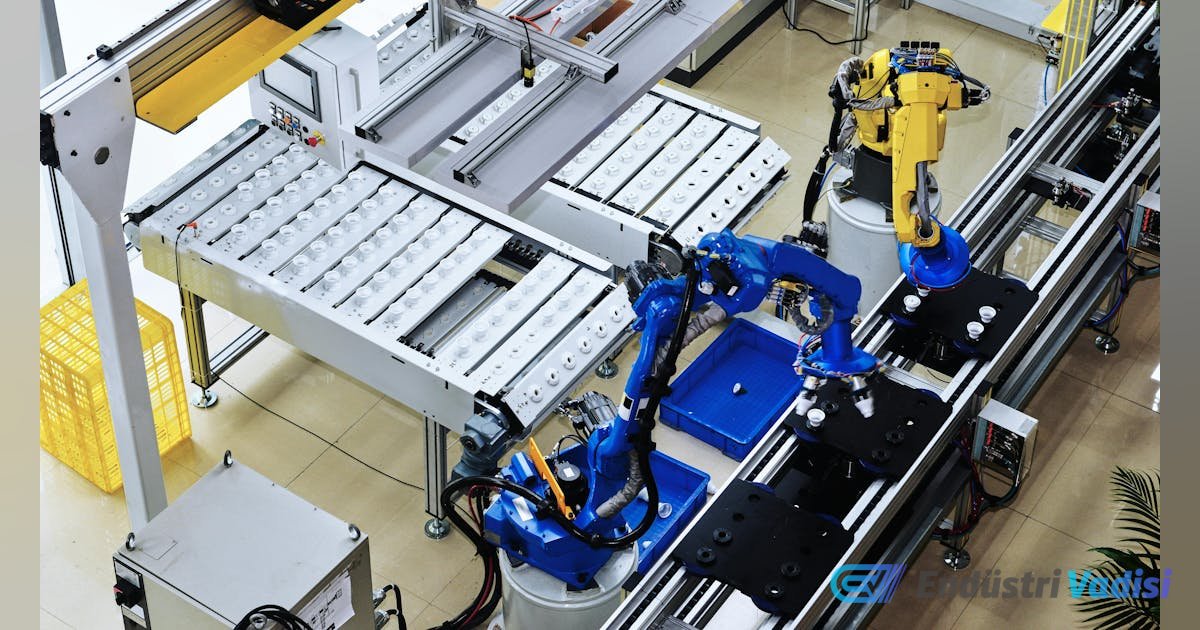
For the past decade, AI in factories has typically been limited to things like an image system detecting a scratched panel or a predictive model flagging a bearing before failure. Useful, but confined to screens and dashboards, not systems that do, but merely observe.
That's changing now! Physical AI refers to the combination of large-scale machine learning with robots, machines, and sensors to take direct action in the physical world. Manufacturers, investors, and automation providers are now using this term to describe systems that don't just suggest decisions, but execute those decisions on conveyors, in assembly cells, or in warehouses.
📈 Market Size and Future Forecasts
This transformation is also reflected in the numbers. According to Acumen Research and Consulting, the global physical AI market size, which was over $5 billion in 2025, is expected to reach $82.8 billion by 2035. This represents a compound annual growth rate (CAGR) of 32.8%!
This is not just an increase in automation spending; it's a market built almost from scratch around a new category of machine intelligence, directly linked to topics like digital transformation, IIoT platforms, industrial cybersecurity, and the automation stack that brings them all together.
💡 Recent Developments and Key Players
Announcements from robotics and chip manufacturers have been quite intense in the last year. Nvidia's Isaac GR00T N models and Cosmos world models, introduced at its GTC event, aim to give robots a general understanding of physics and cause-and-effect, rather than just task-specific scenarios. Industry giants like ABB Robotics, FANUC, KUKA, Yaskawa, Universal Robots, and Agility Robotics are also using this simulation-to-deployment process.
Some Key Physical AI Ecosystem Partners:
- FANUC, KUKA, Yaskawa, ABB Robotics: Industrial arms and factory automation improvements.
- Figure AI, Agility Robotics, Boston Dynamics: Humanoid and bipedal robots for logistics and assembly.
- Universal Robots: Collaborative robots (cobots) for small and medium-sized manufacturers.
- Skild AI, World Labs: Foundation models for robot reasoning and perception.
- Techman Robot: Industrial humanoid systems.
💰 Investors and Governments: A Shared Bet
What's unusual about this cycle is that both venture capital investors and governments are simultaneously pouring capital into the same category, often into the same companies.
Private Sector Investments:
- Skild AI: The company developing a "general-purpose brain" that can operate robot bodies without retraining, completed a $1.4 billion funding round in January, raising its valuation to $14 billion.
- NEURA Robotics: The German humanoid robot manufacturer, which produces platforms used in Volkswagen and Deutsche Post facilities, received $1.2 billion in Series C investment.
- Figure AI: Having received a total of approximately $1.9 billion in investment, the company has a valuation of $39 billion and is reportedly producing a humanoid robot every 90 minutes at its BotQ facility.
Government Support:
- South Korea: Announced approximately $10.3 billion in policy funding for 2026. The goal is to integrate physical AI into factories, vehicles, and defense manufacturing, and to make the country a leading producer of industrial and humanoid robots by 2030.
- Japan: Committed to investing approximately $70 billion in the physical AI sector by 2040.
- China: Its 15th Five-Year Plan places robotics at the center of its industrial policy.
🇯🇵 Japan: Physical AI as a Matter of Survival
The growth rate of Japan's physical AI market significantly outpaces the global average. The market, valued at $307 million in 2025, is expected to reach $6.8 billion by 2035 (36.2% CAGR). This trajectory is no coincidence. Japan's demographic reality (a declining working-age population and one of the highest ratios of industrial robots per manufacturing worker) makes physical AI a structural necessity rather than an experiment.
The robotics divisions of Japanese industrial giants like Fanuc, Yaskawa Electric, Kawasaki Heavy Industries, and Toyota are among the most active global partners in humanoid and foundation model robotics programs.
🇺🇸 US Market: Scale and Sustainable Growth
The growth of the US physical AI market tells a different story than Japan's. Valued at approximately $2.3 billion in 2025, the market is expected to reach $27.3 billion by 2035 (31.7% CAGR). The US figures demonstrate scale. In 2025, the American market accounted for a significant portion of global physical AI spending. By 2035, the US will grow at a normal, sustainable pace as younger markets catch up.
This scale is evident not only in forecasts but also in actual deployments. Figure AI's humanoid robots spent 11 months on BMW's production line in Spartanburg, South Carolina, performing over 90,000 lifts during approximately 1,250 hours of operation.























