








Semih Asil
Industry Valley
- Thread Author
- #1
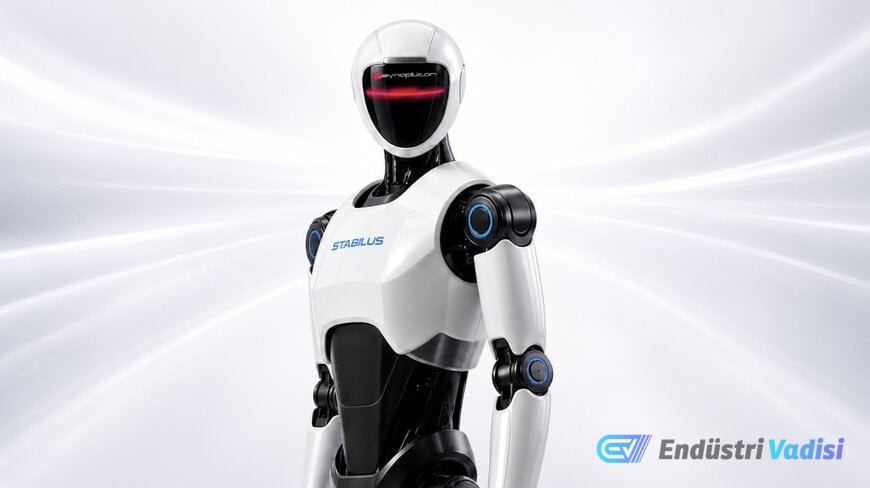
Synapticon and Stabilus Partner to Power Industrial Robots!
Synapticon and Stabilus have joined forces to develop scalable, integrated drive systems for industrial automation and humanoid robots. This strategic partnership aims to deliver production-ready drive joints that will enable humanoid robots to operate reliably and precisely in industrial environments.
Why is This Partnership Important? 🤔
The transition of humanoid robots from laboratory settings to mass production presents challenges such as high quality standards, process stability, and low maintenance requirements. Given the complexity of electromechanical components, the combination of Synapticon's and Stabilus' engineering capabilities is a critical step to overcome these challenges. The joint venture aims to develop scalable drive systems that can be used in all mechanical limbs of humanoid robots, including the head, wrists, hips, and knees.
Technical Solution and Division of Labor 🛠️
The technical architecture of this partnership brings together software intelligence and precise mechanics:
- Synapticon: Responsible for the internal control logic of the actuators. Software development, functional safety protocols, electronics, sensor design, and core drive technology are Synapticon's areas of expertise.
- Stabilus: Undertakes the physical implementation. Mechanical design, material procurement, industrialization, and the production framework are managed by Stabilus.
Through this collaboration, synchronized actuator joints that meet industrial safety standards are being produced.
Production and Scaling 🏭
The distribution of the developed actuators focuses on mass production environments, utilizing proven manufacturing methodologies from the automotive sector. Stabilus enables high-volume production by leveraging its logistics and assembly infrastructure, which has previously supplied electromechanical actuators to the automotive industry. This integration aligns the digital infrastructure of motion control software with the physical constraints of robotic joints, facilitating scalable mass production and standardized component testing.
Expected Impact and Results ✨
This collaboration aims to eliminate hardware bottlenecks in scaling humanoid robots for commercial use. By applying automotive quality control standards to robotic actuator production, significant improvements in production volume capacity and structural reliability are expected. Integrated safety and motion control mechanisms reduce the mechanical failure rates of drive joints, lowering long-term maintenance requirements and increasing the operational safety of human-robot interactions in automated facilities.






















