





Erkan Teskancan
Corporate
- Thread Author
- #1
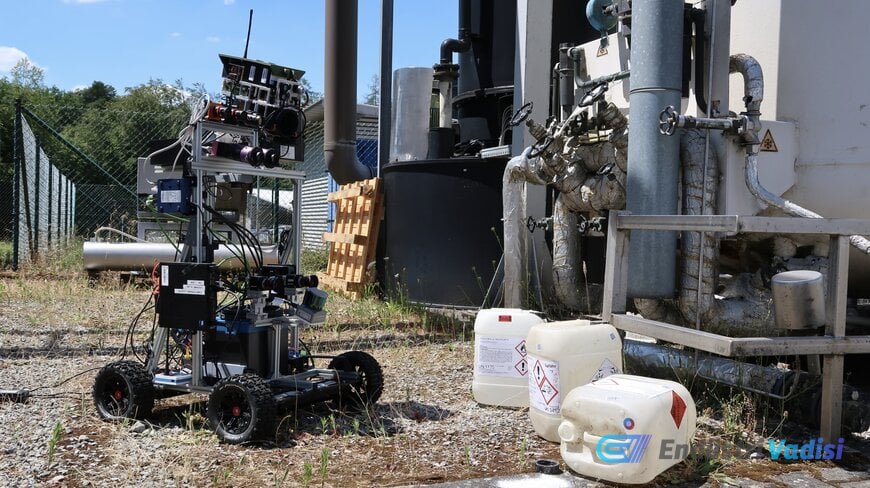
The German Aerospace Center (DLR) has developed and tested autonomous robotic systems that enable emergency teams to remotely detect hazardous chemical and biological substances. These innovative platforms use laser spectroscopy and artificial intelligence to quickly and safely assess situations.
🤖 Autonomous Reconnaissance and Mapping
To minimize physical risk in emergency responses, DLR is automating hazard reconnaissance with multi-sensor integration. The system autonomously identifies liquid and powdered threats through multispectral cameras, laser measurement techniques, and AI-supported data processing. Mounted on unmanned ground platforms like SHERP, these systems navigate target areas and detect anomalies without the need for manual intervention.
In initial tests, the system successfully identified suspicious containers, barrels, and powder/liquid spills on road surfaces or in open terrain. Following visual identification, integrated laser spectroscopy devices evaluate targets from several meters away without direct physical contact. This optical system measures the interaction between laser light and the target substance, enabling direct, in-situ detection, classification, and identification of chemical and biological hazards.
🌬️ Airborne Threats and Environmental Simulation
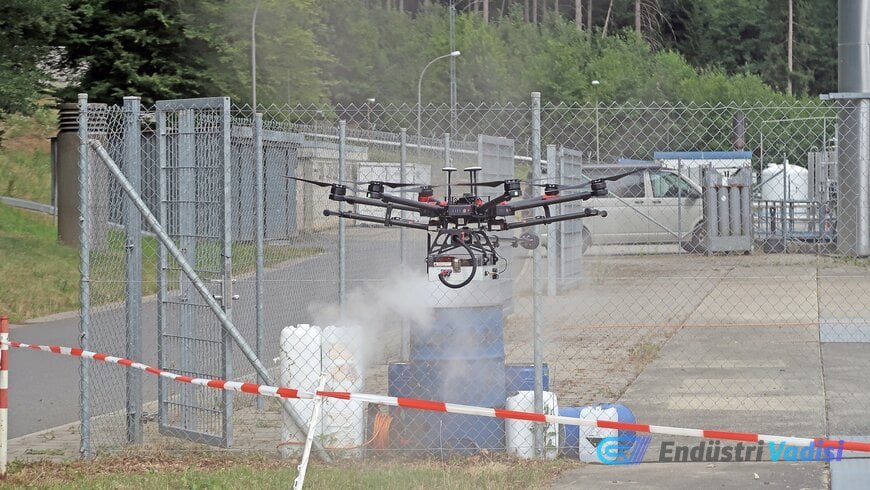
DLR has also developed a solution for airborne threats released by fires, industrial accidents, or intentional acts. This air sampling platform, developed on behalf of the BBK, is mounted on drones or mobile platforms to remotely collect ambient gas and aerosol samples. This replaces manual sampling methods that require entering hazardous areas in protective suits.
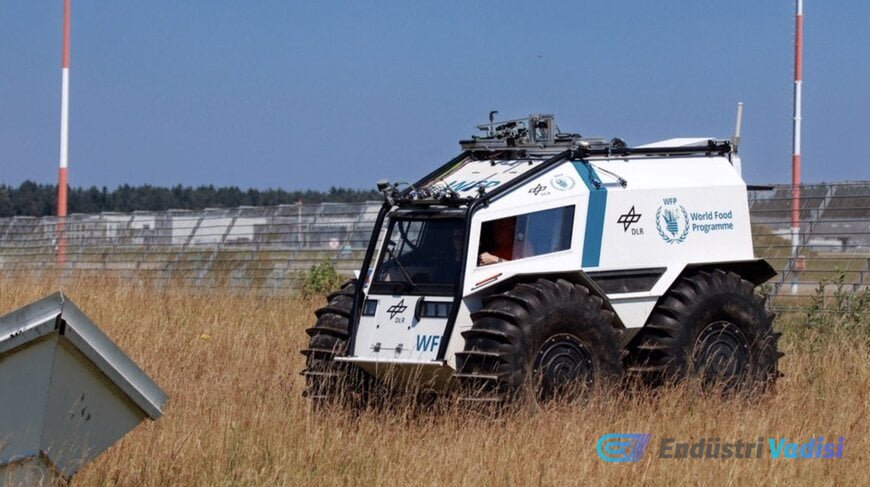
According to Thomas Dekorsy, Director of the DLR Institute of Technical Physics, different detection and identification methods are required for each hazardous substance based on its unique properties. Therefore, automatic multi-sensor integration is essential for systems to navigate target areas, locate objects, and independently determine substance categories.
🔬 Technical Details: Laser Spectroscopy
- Laser-Induced Breakdown Spectroscopy (LIBS): High-energy laser pulses create microplasma in the target sample. Cooling ions emit element-specific atomic spectra, allowing quantitative elemental identification without sample preparation.
- Raman Spectroscopy: Used for molecular identification of organic compounds. It measures inelastic photon scattering shifts caused by molecular vibrational modes. High-aperture telescopes and high-efficiency diffraction spectrometers focus the scattered signal onto cooled CCD detectors.
These technologies provide emergency response teams with a significant advantage in combating hazardous materials, increasing both speed and safety.