







Elif Özaksu
Corporate
- Thread Author
- #1
For over 43 years, Advantech has been designing and manufacturing embedded and robust computing systems, positioning itself as a global leader across many technology verticals such as healthcare, retail, and industrial manufacturing. Now, the company finds itself at the heart of rapid innovations in artificial intelligence and the transition of this technology from cloud-based large language models to the physical world of robots and locally controlled machines.
─────────────────────────
🌍 AI Summit in Taipei: Advantech's New Vision
As a reflection of this transformation, Advantech added an Edge AI Conference to its annual World Partner Conference. Held at its headquarters in Taipei, the event brought together the company's technology partners, OEMs, customers, and journalists to learn about the latest developments shaping these new frontiers and Advantech's plans to turn this vision into reality.
─────────────────────────
⚙️ WISE and WEDA: Advantech's AI Toolbox
While Advantech does not design the silicon chips that enable computing and edge AI, it has developed a suite of software tools to build and manage the applications and models that run on these chips. The company's industrial AI platform and solution portfolio, Advantech WISE, enables edge AI across machines, systems, and sites, transforming real-time data into intelligent actions across diverse hardware environments.
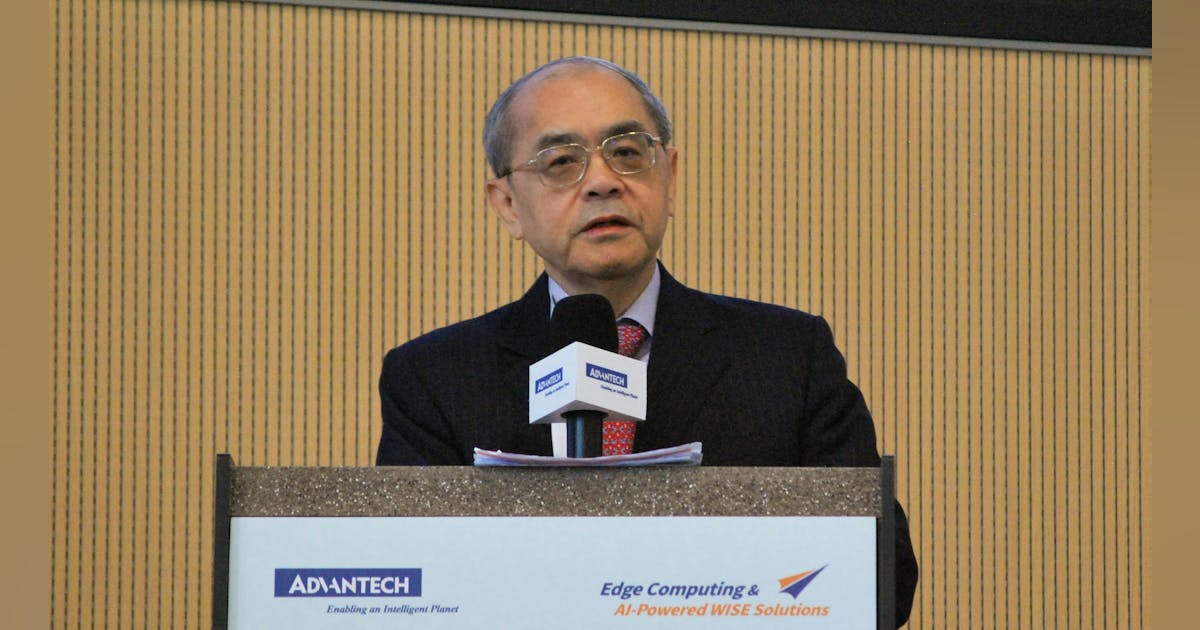
In March 2026, Advantech added WEDA (WISE-Edge Developer Architecture) to its portfolio. As Advantech CEO KC Liu stated in his opening remarks, this framework is offered free of charge to the company's customers and developers. It helps solve various challenges, such as the deployment of software models on different chip manufacturers' platforms. It also allows for the scaled management of dozens, hundreds, or even thousands of devices. This framework combines data from different sources, simplifies hardware integration, and ensures proactive monitoring and continuous improvement.
─────────────────────────
📈 Edge AI: The Future Growth Area
While data centers continue their explosive growth, the edge AI market is also expected to grow strongly. Miller Chang, Advantech's Head of Embedded IoT, stated, "In the US alone, the edge AI market is expected to reach $197 billion by 2034."
Chang explained that the edge has significant advantages over the cloud and enables physical AI. He referred to the rapidly proliferating variety of robotic solutions in the market and the more than 50 global robot, microprocessor, application, and related solution providers that Advantech already counts as partners.
Deepu Talla, Vice President of Robotics and Edge Computing at Advantech partner Nvidia, added, "As AI enters the physical world, the business opportunity will be several times larger." These systems are based not on possible word order, but on the physics and molecules that surround us, and are ready to proliferate, but some problems persist.
Of central importance are functional models of the real world, such as those used to simulate the performance of semiconductor chips, each of which can contain more than 100 billion transistors. Nvidia's simulations ensure that a new GPU design's performance is guaranteed before it is manufactured. Talla said, "AI models need this kind of accuracy, but we haven't fully cracked that code [for physical AI] yet." Furthermore, they need to integrate with existing real-world workflows. "Robots need to get along well with all these pre-existing systems," he said.
Talla predicted, "Physical AI won't take off until these problems are solved." "Deploying robots is just the beginning of the journey, a continuous lifecycle journey."
Another significant constraint in the industrial space is the persistent disconnect between operational and information technology architectures. Praveen Tamang, Global Head of Automation Software at Bosch Rexroth, called this "a big gap" and added that "many pilot projects never scale due to monolithic, legacy architecture."
─────────────────────────
🧠 Data Center Intelligence for the Real World
System-level expertise is also bringing the next generation of robotics to life. Nakul Duggai, Vice President and Group General Manager of Automation, Industrial & Embedded IoT, and Robotics at Qualcomm, said, "While the pace of change varies across industries, we are seeing tremendous change in all of them." He added, "We serve industries with a relatively general approach by putting key component systems in the hands of developers." "Use cases will become increasingly complex, and robotics will continue to advance."
Ed Doran, PhD, Vice President of Strategy at the Edge AI Foundation, added, "We are talking about extending intelligence to the real world." This California-based community consists of edge AI developers, technology manufacturers, and academics who serve as a global hub for energy-efficient AI technologies. Doran said, "Edge AI has a broad ecosystem ready to bring data center intelligence to the real world." "However, edge AI systems need to use energy efficiently, communicate over very low bandwidth, and deliver value with low cybersecurity vulnerability."
Richard Huang, Advantech's Chief Software Architect, said, "WEDA is both a tool and an architecture for the AI lifecycle across a range of industries, including data and device management." "While 800 million people – 10% of the planet – are already using AI, 40% of AI projects will fail because the technology is being applied to pre-existing processes."
Despite these obstacles, edge AI technologies remain the focus of leading minds in technology and significant investments. KC Liu of Advantech added, "I believe everyone understands that AI is changing the world." "Together, we can create a boundless future.