



Süeda Asil
Corporate
- Thread Author
- #1
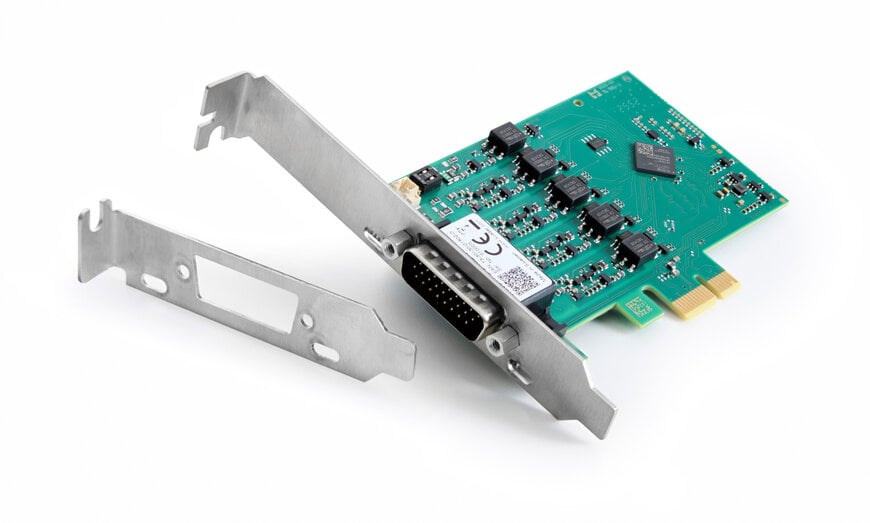
In the world of automotive electronics, data communication is like the heart of the systems. Especially LIN (Local Interconnect Network) plays an indispensable role in low-speed in-vehicle communication. So, how can we make the testing and validation processes of these critical networks more efficient? This is precisely where Kvaser steps in with its next-generation solution: Kvaser PCIe 4xLIN.
─────────────────────────
💡 Compact Design, High Performance
The Kvaser PCIe 4xLIN is a four-channel, compact LIN interface card specifically designed for desktop, industrial, and HIL (Hardware-in-the-Loop) environments. The low-profile PCIe card, with galvanic isolation and synchronized timestamping features, enables engineers to gain reliable system-level visibility when testing and debugging LIN networks.
─────────────────────────
⚙️ Precise Timing and Scalability
This card offers four separate galvanically isolated LIN channels through a single PCIe slot. Thanks to the FPGA-based Kvaser LIN-IP technology, communication speeds of up to 20 kbaud and a 1 µs timestamp resolution are achieved. This allows time-sensitive events to be captured with high precision. Furthermore, with support for simultaneous operation with multiple Kvaser interfaces, test setups can be easily scaled as system complexity increases.
─────────────────────────
💬 Statement from Kvaser CCO
Kvaser CCO Thomas Roberts commented, "LIN continues to play a critical role in modern vehicle architectures, especially as the number of distributed electronic functions increases. As systems scale, the challenge is not just accessing LIN data, but reliably capturing and correlating that data across channels and interfaces. The PCIe 4xLIN is designed to solve exactly this problem."
─────────────────────────
🛠️ Rapid Integration with Existing Tools
The Kvaser PCIe 4xLIN is fully compatible with applications built on the standardized Kvaser LINlib API. This means it can be integrated into existing setups without requiring software changes. Applications developed for other Kvaser LIN hardware can run without any modifications, allowing teams to quickly switch between projects and interfaces.
Supporting both Windows and Linux platforms, this interface works with the Kvaser CANlib SDK. The CANlib SDK includes examples for C, C++, C#, Python, Delphi, and Visual Basic, in addition to LINlib and other APIs. It plugs directly into a PCI Express slot and draws power from the host system, reducing cabling and simplifying integration in compact systems.
─────────────────────────
⏰ System-Wide Synchronization
The Kvaser PCIe 4xLIN supports Kvaser's software-based TimeSync feature, helping engineers maintain synchronized timestamps across multiple devices and systems. In distributed test environments, this feature improves event correlation between LIN and CAN networks while reducing manual log analysis.
On Linux platforms, the interface provides a PHC device for time synchronization to a host-referenced clock source. This provides a robust foundation for synchronized logging, automated testing, and accurate event analysis across connected systems.
─────────────────────────
🌡️ Designed for Demanding Environments
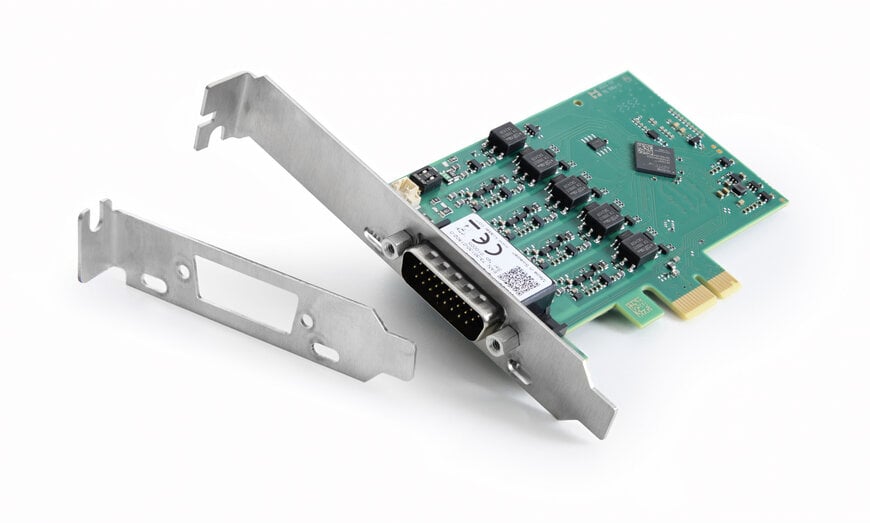
The Kvaser PCIe 4xLIN is designed for industrial and embedded systems and can operate in temperatures ranging from –40 °C to +85 °C. The low-profile PCIe design includes both short and long mounting brackets for flexible installation.
A single 26-pin high-density D-SUB connector provides access to all four LIN channels, enabling compact system design. Typical applications include ECU development, automotive body electronics, HIL testing, multi-channel logging, and industrial LIN communication systems.
─────────────────────────
The Kvaser PCIe 4xLIN offers a reliable and high-performance solution that simplifies testing and validation processes in the complex world of LIN networks. It is poised to become an indispensable tool for engineers in the automotive and industrial sectors.