

Elif Özaksu
Corporate
- Thread Author
- #1
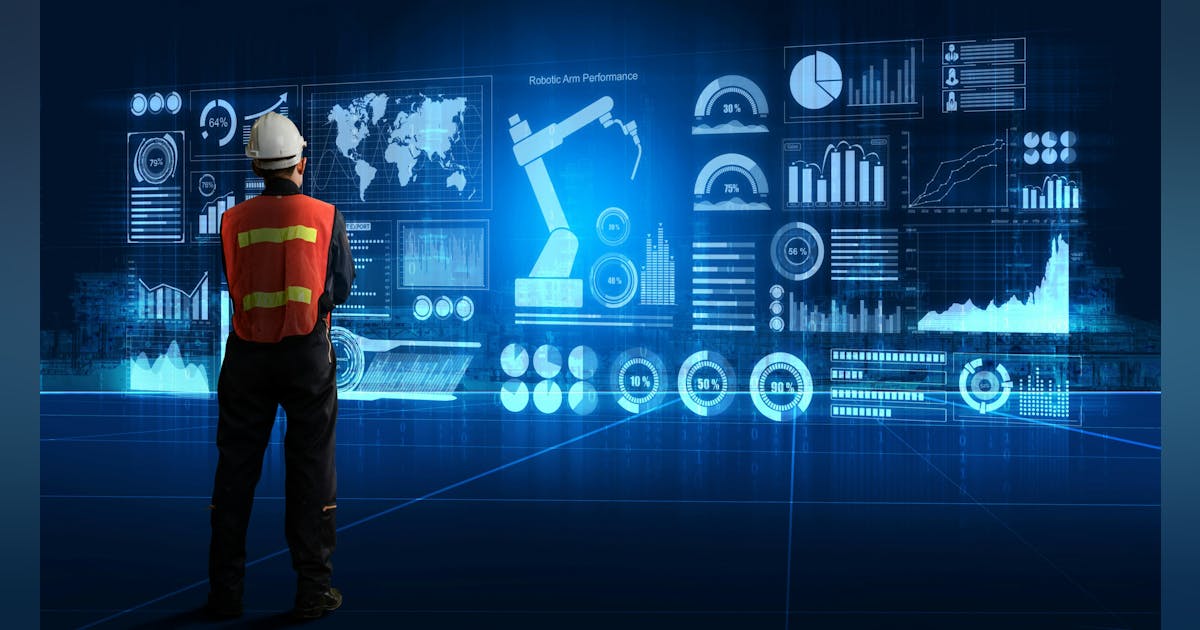
In the world of industrial automation, the word "autonomy" has become one of the most talked-about topics in recent years. But is this concept truly new, or is it simply the current name for an ongoing evolution that has been happening for years? Let's explore the answer to this question from a historical perspective, from the past to the present.
─────────────────────────
💡 A Vision from the Past: The Dream of an Unmanned Facility
Early in my career, I was involved in a project with a major industrial operator that was considered quite ambitious at the time: a facility with no permanent workforce. The idea was quite simple: if you wanted to operate a facility like an offshore platform without people on site, you had to rethink everything from scratch.
In practice, this meant innovations such as modular equipment that could be transported by helicopter and replaced without a maintenance crew, or hardware designed to be replaced directly rather than repaired. Layered on top of all this were systems that could monitor, diagnose, and respond to operational events without human intervention.
Does this sound familiar to you? This was back in 2012-2013. We weren't using the word "autonomous" then; the industry term was "unmanned." But it carried the same goal as our discussions today.
This doesn't mean that autonomous operations are old news; rather, it points to a different conclusion: the idea has always been real. What has changed is the available technologies to achieve this goal, and perhaps more importantly, our understanding of how to pursue it intelligently. Autonomy doesn't arrive at an entire facility all at once. It first emerges in specific operational layers, particularly in optimization and process control.
─────────────────────────
⚙️ The Gap Between Reality and Expectations
When you enter most industrial facilities today, you still predominantly see humans in control of operations: experienced operators working with distributed control systems (DCS) designed to manage versions of the plant that, in many cases, existed years or decades ago.
However, increasingly, AI-powered optimization systems are already working in the background. The desire for modernization is present, often urgently. But the reality is more complex.
There are several sources of this complexity, and energy systems have also changed profoundly. A refinery that once had a clear input-output relationship now faces challenges that would have been unimaginable a generation ago.
At any given moment, an operator might need to decide whether it's more profitable to produce gasoline or sell electricity back to the grid, because instantaneous prices offer a better option for that moment.
Renewables, storage systems, and grid interactions add layers of complexity that even the control logic of a decade ago was not designed to handle. The control logic that was fit for purpose in a simpler environment was not designed for this. Traditional industrial automation systems (DCS, SCADA, PLCs) are built to manage a plant under normal operating conditions.
They manage expected exceptions well. But they are not designed for the continuous, multi-variable type of optimization required by modern operational complexity.
At the same time, the workforce is also changing. Experienced engineers and operators with decades of process knowledge are retiring. Those replacing them expect digital tools, connected systems, and intelligent interfaces, and they arrive without the deep institutional knowledge accumulated by their predecessors over their careers.
This knowledge gap is not a problem that can be solved simply by better hiring. And beneath all this lies relentless financial pressure.
Plants need to do more with less. This means operating closer to the optimum; pushing processes to the limits that a cautious human operator, acting alone, would rightly avoid.
A human will always leave a safety margin. This is not timidity; it is good judgment. But it also means the plant is never operating at its true ceiling, and the opportunity cost created by this conservatism over thousands of operational hours is significant.
─────────────────────────
📊 From Operator Support to Autonomous Optimization
Understanding where most plants are is the starting point for an honest conversation about what comes next. The near-term opportunity is not fully autonomous plants, but a blend of augmented operations and autonomous process optimization.
This does not mean that autonomy is a purely future goal. In many industrial settings today, technologies like advanced process control (APC) and real-time optimization are already making autonomous decisions within tightly defined process boundaries.
These systems don't just assist operators; they continuously optimize the process itself. The non-autonomous part is the broader operational layer: inter-system coordination, exception management, commercial trade-offs, and strategic decision-making.
The goal is not to replace the operator, but to provide the operator with intelligent tools: systems that break down silos between data sources, correlate information in real-time, and present the right information at the right moment.
An operator needs early warning when an abnormal situation is developing. Not an alarm triggered when a threshold is crossed, but an anomaly signal indicating something deviating from normal before the deviation becomes a problem.
They need context: Has this pattern been experienced before, and how was it handled? And they need the ability to test an intervention before implementing it, to run the scenario forward in a simulated environment and see what would happen.
These are not science fiction capabilities. They are available now; combining them fundamentally changes the operator's role.
ABB's approach brings these components together: anomaly detection that spots subtle process deviations early; knowledge extraction that pulls relevant historical data and precedents from the plant's operational records; and process prediction that allows the outcome of a proposed intervention to be simulated before it is applied.
The analogy I use with customers is that of an internet search engine. Before AI-powered search, you would enter a query and get a list of links. The job of correlation, of deciding what was relevant, was yours. Now the system synthesizes it for you.
It presents a result, not a catalog. We need to do the same for plant operators. The information they need is available in their systems; what's missing is how and in what context it reaches them.
─────────────────────────
💰 Financial Return: Proof of Investment
This brings us to the challenge that derails many conversations about autonomous operations more than technical limitations: the business case. Any plant manager asked to allocate capital to digital transformation will reasonably ask what the return looks like.
And this is where many discussions about autonomy stumble, because the ROI of augmented operator capability – making your people smarter, faster, more confident in their decisions – is difficult to quantify. What is the value of a problem that doesn't happen? What is the financial impact of a better-made decision?
My approach is to tie these investments to technologies whose financial justification is already well understood.
APC and real-time optimization solutions have decades of deployment data and already represent a significant form of operational autonomy in many plants.
Ultimately, autonomy is not a destination but a continuous process of improvement. With the right tools and strategies, industrial facilities can both increase their efficiency and further enhance the value of their human operators.