







Semih Asil
Industry Valley
- Thread Author
- #1
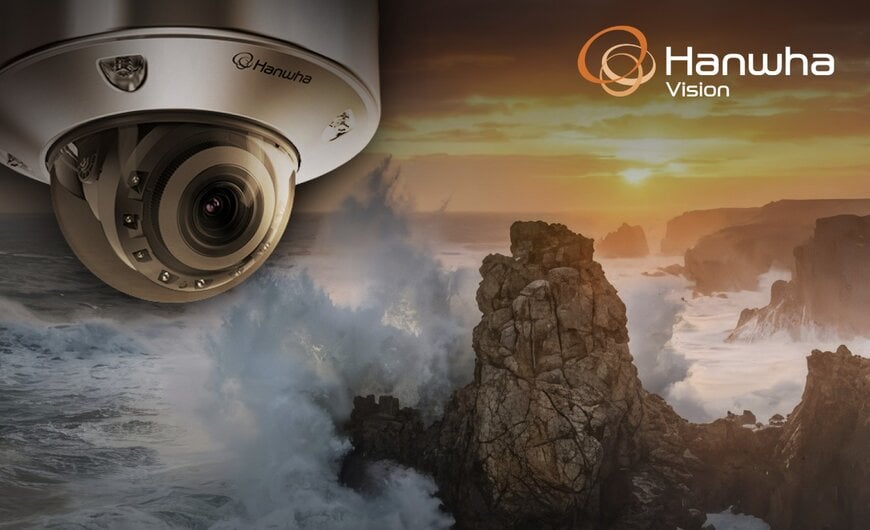
The challenging conditions in industrial facilities require special solutions for security and monitoring systems. While chemically corrosive environments, high humidity, and mechanical stress shorten the lifespan of traditional cameras, Hanwha Vision has launched its new generation of stainless steel AI cameras to fill this gap. These cameras aim to increase operational efficiency and security by offering continuous video analysis in harsh industrial environments.
─────────────────────────
💡 Dual NPU Architecture in Edge Computing
Hanwha Vision's 2nd Generation X Series Stainless Steel AI Cameras combine the Wisenet 9 system-on-chip with marine-grade alloy bodies. Designed specifically for corrosive and mechanically stressful applications such as food production, coastal transportation infrastructure, and heavy manufacturing sectors, these cameras offer seamless edge processing capabilities.
The performance of the XNV-A8084RS and XNV-A9084RS models relies on the Wisenet 9 system-on-chip, which features a dual Neural Processing Unit (NPU) architecture. This architecture prevents resource contention during intensive edge operations by dividing video processing and AI analytics into separate hardware resources. This design reduces latency while optimizing bandwidth and extracts real-time metadata features such as vehicle type, clothing color, and gender. Processing data directly at the edge provides operators with instant situational awareness without overloading central servers.
─────────────────────────
🛡️ Material Durability and Environmental Resistance
Manufactured from STS316L stainless steel, this hardware is designed to withstand continuous exposure to environmental and chemical degradation. Optical components are protected by a special nylon dome resistant to chemical erosion and UV yellowing. The cameras boast multiple ingress and impact ratings, including IP66, IP67, IP68, and IP6K9K. These certifications confirm their suitability for submersion and high-pressure, high-temperature washdowns typical in food processing environments (compliant with NSF/ANSI Standard 169). Furthermore, IK11 impact resistance and NEMA 250 Type 4X ratings guarantee stable operation even under mechanical stress, severe vibrations, and corrosive salt spray conditions.
─────────────────────────
⚡ Dynamic Compression and Energy Efficiency
To address network and power limitations in remote industrial sites, the cameras incorporate proprietary power management and bandwidth reduction protocols. An intelligent power mode dynamically scales infrared illumination power based on ambient light requirements, minimizing baseline energy consumption while ensuring visibility even in absolute darkness. Concurrently, the system employs selective compression algorithms. Leveraging object detection, the camera applies intensive compression to static background elements while preserving maximum bitrate and image fidelity for critical targets like personnel or vehicles. This selective streaming significantly reduces storage requirements without compromising evidentiary detail.
─────────────────────────
🔒 Cryptographic Security and AI Governance
The 2nd Generation X Series integrates comprehensive cybersecurity measures starting from the hardware level and meets FIPS 140-3 Level 3 requirements for enterprise-grade cryptographic protection. The architecture includes Secure Boot and Secure OS to prevent unauthorized firmware execution. Data privacy is further protected through real-time Dynamic Privacy Masking (DPM). The manufacturer also publishes a Software Bill of Materials (SBOM) for the devices, allowing network administrators to proactively monitor component vulnerabilities. Additionally, core analytics development aligns with ISO/IEC 42001, the international standard for AI Management Systems, ensuring responsible algorithmic deployment.
─────────────────────────
📊 Competitive Analysis and Technical Superiority
In the corrosion-resistant industrial video surveillance market, the main comparable competitors are Axis Communications Q-line stainless steel cameras and Bosch Security Systems' ruggedized MIC and FLEXIDOME series. These competitors similarly demonstrate resistance to high-pressure washdowns and marine environments by utilizing marine-grade 316L electrolytic stainless steel, nylon dome covers, and IP6K9K ratings.
However, the computing architecture presents distinct differences. While Axis uses its proprietary ARTPEC system-on-chip with a single Deep Learning Processing Unit, Hanwha Vision employs a dual NPU architecture. This processing separation provides slightly higher parallel processing capabilities when simultaneously handling complex video streams with multiple metadata extraction tasks. Cryptographically, while many ruggedized competitors currently meet FIPS 140-2 Level 2 standards, the updated X Series elevates the security baseline by integrating FIPS 140-3 Level 3 certified secure elements directly into the edge device. Finally, the inclusion of ISO/IEC 42001 certification for AI governance provides a measurable standard for algorithmic transparency, which is increasingly demanded by critical infrastructure operators.
─────────────────────────
Hanwha Vision's new generation of stainless steel AI cameras offers a comprehensive solution designed to meet the demanding requirements of heavy industry. With advanced edge computing capabilities, superior material durability, energy efficiency, and robust cybersecurity measures, these cameras redefine security and operational efficiency standards in industrial facilities.