








Mucitler Elektrik
Corporate
- Thread Author
- #1
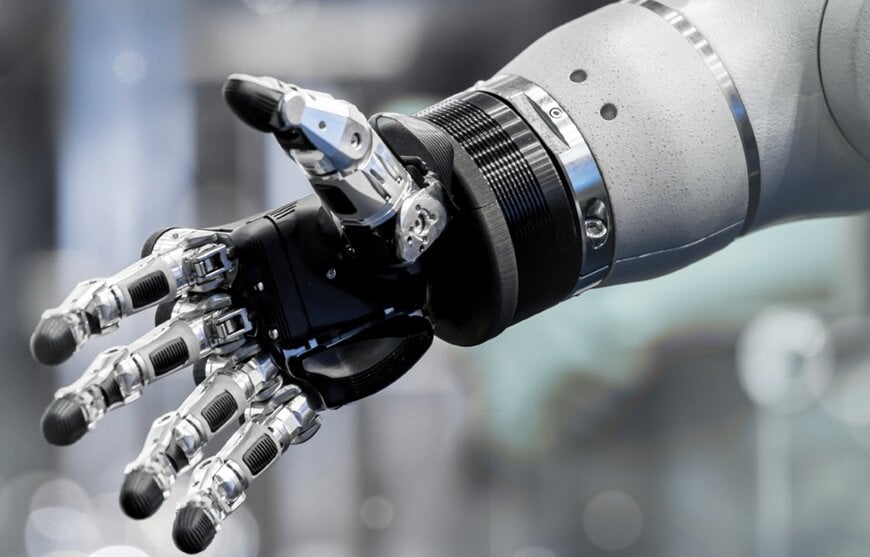
In robotic systems, the heart of industrial automation, precision and reliability are paramount. Especially in confined spaces, accurately monitoring the position of robotic grippers and preventing potential collisions plays a critical role in production efficiency and product quality. This is where the miniature sensors developed by Contrinex come into play.
─────────────────────────
💡 Why is Position Control Important in Robotic Grippers?
Modern robotic systems operate in environments where even the slightest positioning error can lead to serious consequences. Particularly in sensitive applications such as transporting fragile silicon wafers between processing stations in the solar energy industry, failure of gripper jaws to reach a fully open position can result in product damage or equipment collisions. Therefore, accurately monitoring jaw position is vital for maintaining process reliability and product quality.
─────────────────────────
⚡ Precise Automation with High-Speed Inductive Sensors
To meet this need, Contrinex offers miniature inductive sensors that can monitor both the opening angle and the exact position of robotic gripper jaws. These sensors support switching frequencies of up to 8,000 Hz, ensuring precise position tracking even in high-speed automation environments.
[]Compact Design: With dimensions of only 3 mm × 12 mm, these sensors can be easily integrated into tight mechanical setups where larger devices are impractical.
[]Temperature Resistance: The ability to operate stably within a temperature range of -25°C to +70°C (up to +85°C in some models) allows for use in various industrial environments.
[]Various Configurations:
Minimini: Offers a sensing distance of up to 1 mm.
[]Full Inox: With a one-piece stainless steel housing made of AISI 304 material, it is resistant to pressures up to 120 bar.
[]Extra Distance: Provides four times the sensing distance compared to standard inductive sensors.
─────────────────────────
👁️ Photoelectric Sensors for Collision Avoidance
In addition to position tracking, robotic systems often require obstacle detection capabilities to prevent unwanted contact between moving equipment and surrounding objects. Contrinex's miniature photoelectric sensors are designed to support collision avoidance functions in robotic grippers and automated handling systems.
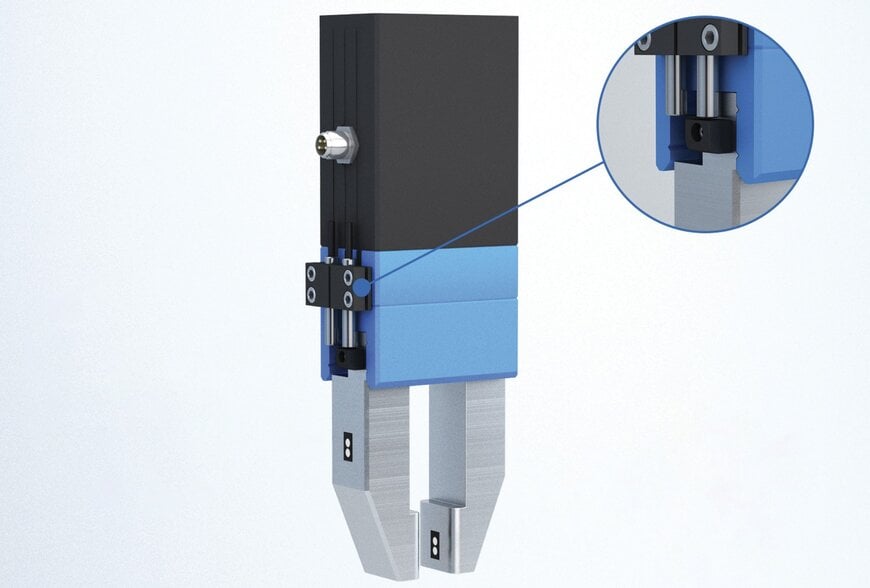
[
- ]Focused Red LED: Measures the distance to both metallic and non-metallic targets using a focused red LED light source with a 5 mm light spot.
[]Analog and Digital Output: Analog output from 0.1 VDC to 2.6 VDC and adjustable PNP light output enable integration into a wide range of industrial control architectures.
[]Robust Integration: Their compact designs allow for full integration into machine structures, minimizing the risk of mechanical damage.
─────────────────────────
🔬 Compact Integration with Optical and ASIC Technologies
These photoelectric sensors combine optical measurement technology with application-specific integrated circuits (ASIC) to process distance and target detection data in a small form factor. Their availability in both cased and caseless configurations provides flexibility for machine builders developing customized robotic systems. This adaptability is particularly important in precision automation sectors where sensor placement needs to be optimized relative to moving mechanical components.
─────────────────────────
🌐 IIoT-Enabled Industrial Automation
As manufacturers continue to adopt Industrial Internet of Things (IIoT) architectures, sensors serve not only as safety and control devices but also as sources of operational data. Contrinex's miniature sensor portfolio includes IO-Link-enabled models that can support digital communication, diagnostics, and parameterization in connected automation systems. This capability allows for the integration of sensor data into broader machine monitoring and predictive maintenance strategies.
─────────────────────────
📊 Market and Technical Comparison
The miniature industrial sensor market includes key players such as SICK, Pepperl+Fuchs, Balluff, ifm, Turck, Omron, and Keyence. Contrinex's inductive sensors, offering switching frequencies up to 8,000 Hz, are among the highest-speed devices available for precision automation applications. In robotic gripper monitoring, a high switching frequency is an important performance metric as it ensures accurate position tracking during rapid mechanical movements.
The compact dimensions of 3 mm × 12 mm are remarkable compared to traditional industrial proximity sensors, which often require significantly larger installation spaces. This feature is particularly important in areas where machine components are densely packed, such as semiconductor manufacturing, electronic assembly, medical device production, and solar panel handling systems.
The integration of IO-Link connectivity aligns with the broader Industry 4.0 and IIoT trends. Comparable sensor platforms increasingly support digital diagnostics and real-time condition monitoring, enabling manufacturers to incorporate sensor devices into connected automation architectures and improve maintenance visibility and system performance.
In summary, Contrinex's miniature sensors meet the growing demand for intelligent sensing solutions in robotic handling, precision assembly, electronics manufacturing, and renewable energy production environments by combining compact size, high switching frequencies, obstacle detection functions, and digital connectivity features.






















