







Hasan S. Cemkan
Corporate
- Thread Author
- #1
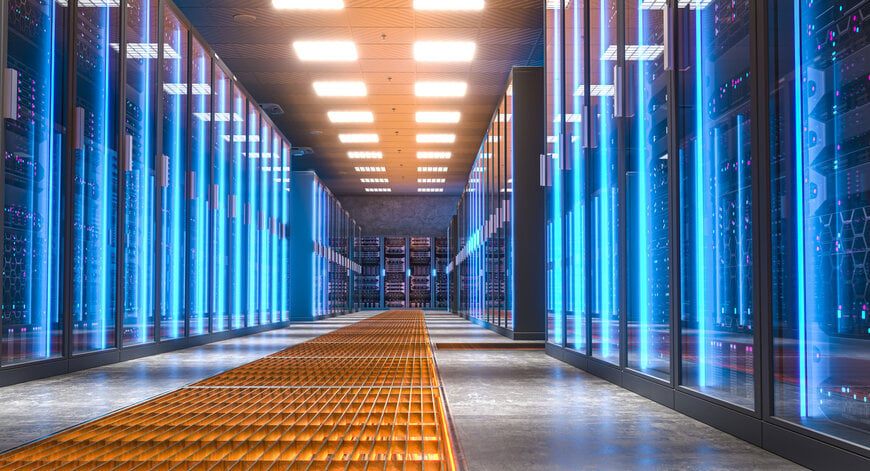
In the age of artificial intelligence (AI), meeting the energy demands of high-density hardware clusters has become a critical challenge. In response to this need, Siemens has developed a standardized electrical and control reference design for hyperscale and cloud infrastructure providers. This innovative approach aims to ensure the seamless and efficient deployment of AI workloads.
─────────────────────────
💡 A Shared Vision: Siemens and Partners
In collaboration with Nvidia, Fluence, and nVent, Siemens has designed an integrated electrical, power, and control reference architecture compatible with the Nvidia DSX Vera Rubin platform. This system is specifically optimized for hyperscale data centers, colocation facilities, and private cloud infrastructure providers running high-density artificial intelligence workloads.
─────────────────────────
⚙️ Power Distribution Infrastructure and Capacity Scaling
This reference design offers a complete power distribution path to support a total facility capacity of 136 MW and a dedicated IT load of 100 MW. The architecture starts from a nominal 34.5 kV grid connection, steps down the voltage through medium-voltage distribution systems, and extends to modular low-voltage power blocks directly connecting to the server rack interface.
The system is built to meet the Tier III concurrent maintainability standards defined by the Uptime Institute. This ensures that any component can be isolated and taken offline for maintenance or repair without disrupting IT operations.
[]Grid Connection: 34.5 kV
[]Medium Voltage Distribution
[]Modular Low Voltage Power Blocks
[]Server Rack Interface (Vera Rubin NVL72)
─────────────────────────
🌡️ Thermal Management and Pre-Engineered Deployment
To manage the thermal loads generated by dense computing hardware, the design includes structural electrical design parameters optimized for liquid cooling architectures. Traditional air-cooled systems lack the thermal distribution efficiency required for these high-density installations, which can exceed 100 kW per rack. Factory-assembled and pre-tested medium and low-voltage skids are used to reduce structural placement errors, minimize on-site construction times, and shorten system commissioning cycles.
The reference design supports the DSX MaxLPS configuration, optimizing computational output and data token generation within fixed and predetermined power allocations. Additionally, the infrastructure includes automated controls and digital twin emulation software that mirrors physical assets. This allows operators to simulate power dynamics and accelerate the deployment process.
─────────────────────────
🔋 Grid Integration, Storage, and Infrastructure Software
Battery energy storage integration provides operational flexibility in regions with power-constrained electrical grids. Utilizing the Fluence Smartstack platform, the energy storage system offers automatic voltage and frequency ride-through capabilities, ensuring continuous operation during transient grid anomalies. The storage architecture also supports black-start protocols to independently recover systems after an outage, manages grid demand response participation, and implements load-balancing algorithms to mitigate severe power fluctuations caused by fluctuating computing demands.
Centralized operation is maintained through the Integrated Data Center Management Suite. This software layer consolidates telemetry from power distribution hardware, cooling systems, and active computing nodes into a unified management interface, providing real-time monitoring and resource balancing across the facility ecosystem.
─────────────────────────
📊 Technical Details and Competitive Comparison
High-density computing deployments necessitate significant changes in traditional data center power distribution strategies. While conventional enterprise data center architectures typically support densities of 7 kW to 15 kW per rack, platforms like the Nvidia Vera Rubin NVL72 require liquid cooling frames to sustain power densities that can range from 100 kW to over 130 kW per rack.
To maintain efficiency at this density, the reference architecture minimizes transmission losses by implementing medium-voltage step-down transformations closer to the row level, rather than relying on centralized low-voltage distribution.
While standard Tier III systems rely solely on traditional uninterruptible power supply (UPS) systems for short-term energy bridging during grid outages, the inclusion of dedicated battery energy storage systems (BESS) provides active load balancing. This capability addresses the rapid transient power fluctuations characteristic of large language model training phases, preventing voltage sags in the main grid.
Furthermore, traditional enterprise facilities operate with smaller, highly variable total capacities (typically between 10 MW and 40 MW) and distribute power through centralized 480V or 400V installations. The Siemens reference design addresses these limitations by creating a predefined 136 MW total facility architecture specifically built around local liquid cooling interfaces and immediate sub-distribution blocks.
This reference design offers a scalable, reliable, and efficient solution to meet the energy demands of the AI era, shaping the future of data centers.