







Elif Özaksu
Corporate
- Thread Author
- #1
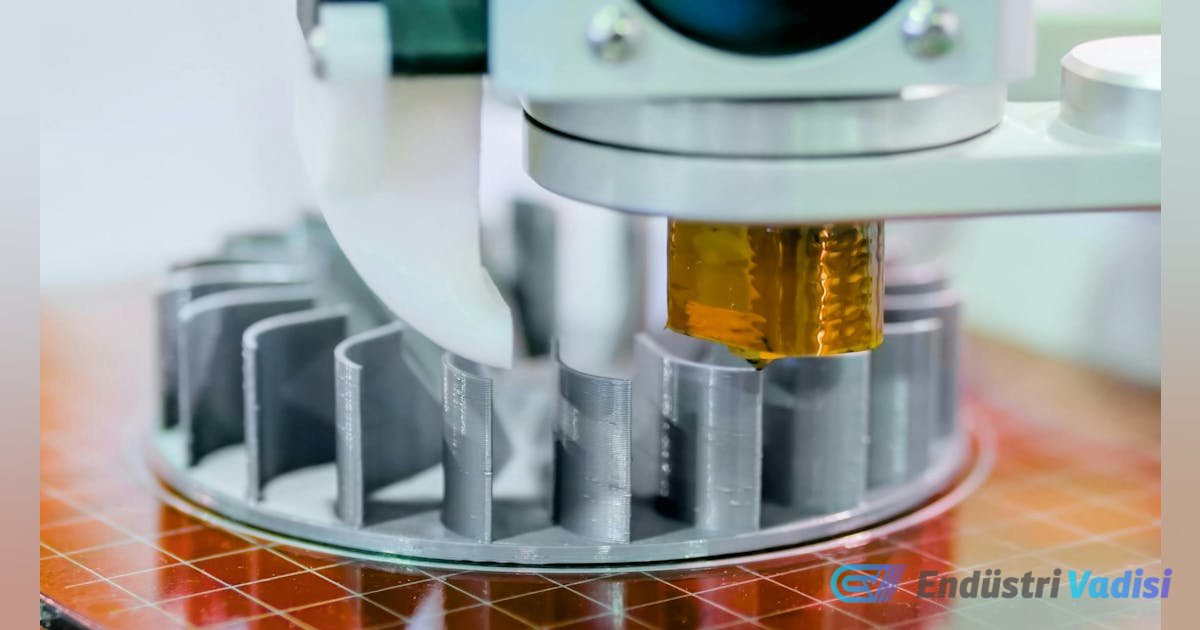
While additive manufacturing promises a revolution on the factory floor, most facilities still cannot rely on 3D printing technology for full-scale production. Science is approaching this goal, but significant gaps persist.
─────────────────────────
🛠️ Current Obstacles and Solution Seeking
Obstacles include materials clogging nozzles, printed alloys failing under load, robotic printing cells not acting as reliable production assets, and hybrid lines lacking the interoperability required by modern factories. However, researchers are directly addressing these issues.
[]Physics-based control models explain why paste printing misbehaves.
[]Versatile robotic deposition techniques are being developed.
[]Cold spray repair tools are under development.
[]Modular manufacturing platforms combining additive manufacturing with machining and inspection are emerging.
─────────────────────────
🤖 Major Support for Robotics-Assisted Additive Manufacturing from Virginia Tech 💡
Factories adopting additive manufacturing often hit the same wall: How can you scale complex printing processes without sacrificing efficiency or precision? The next breakthrough might come from robotics. Researchers are now moving beyond laboratory prototypes to multi-axis, multi-material printing systems that act as fully configurable production assets.
Such research could influence how future factories deploy robots for complex composite structures, monitor process deviation, and maintain uptime in increasingly hybrid manufacturing lines.
The Department of Mechanical Engineering at Virginia Tech has received a three-year, $3.5 million grant from the U.S. National Science Foundation for versatile robotic 3D printing research. The project aims to develop robotic arm-based additive manufacturing systems that can print composite materials from multiple directions instead of traditional flat layers. The goal is to create stronger and structurally optimized parts.
This work brings together experts in design optimization, materials science, robotics, and control engineering to leverage the flexibility of robotic arms in additive manufacturing.