Süeda Asil
Corporate
- Thread Author
- #1
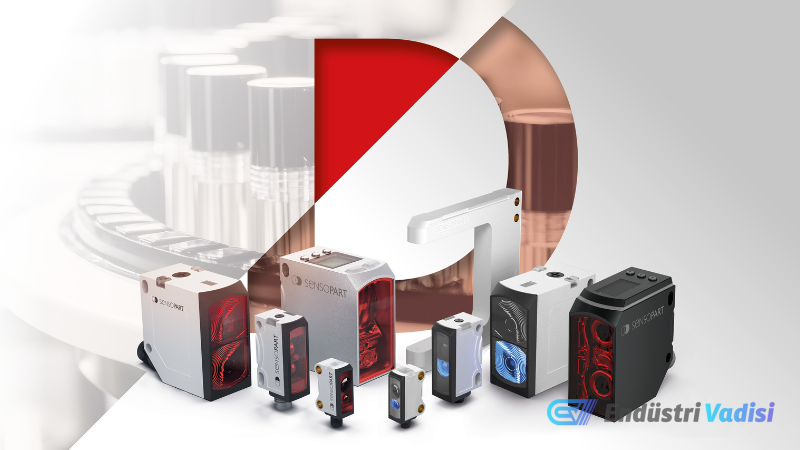
SensoPart has simplified sensor selection by consolidating its optical sensors for industrial automation under one roof. The new DTECT family classifies sensors into four groups: color, distance, presence, and 3D object detection. This allows users to more quickly identify the most suitable sensor for their needs.
### DTECT Family Features
- Color Detection: The DTECT Color group works by spectral analysis of light reflected from objects. It is effective in detecting thin or non-conductive materials.
- Distance Detection: DTECT Distance sensors measure the distance of an object to the control system using laser light. They are widely used in part detection and inspection applications.
- 3D Object Detection: DTECT Object 3D sensors measure the volume of a part as it passes through the sensor's field of view, determine part orientation, and detect missing parts in real-time.
- Presence Detection: DTECT presence sensors accurately detect the presence of objects at various distances using laser and LED technology. They are used for tracking components on conveyor belts.
### Application Areas
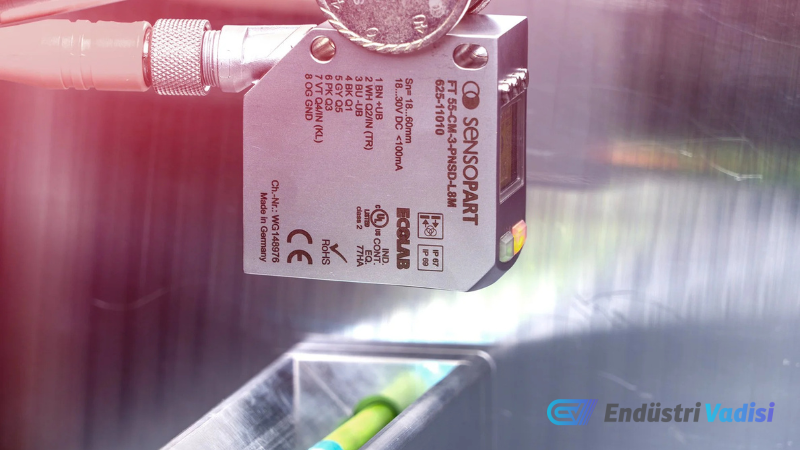
Detection sensors in automation systems inform the control system that an object has reached a specific position. For example, the DTECT family offers various solutions for challenging tasks such as detecting the water level in a transparent bottle or thin black carbon layers on a conveyor belt.
While some applications can be solved with standard diffuse or retroreflective sensors, others require advanced sensors. For instance, 3D object sensors are used to detect missing features in an injection molded part. Additionally, color sensors send the correct signal to the control system for detecting thin materials like paper.
SensoPart's DTECT family categorizes optical sensors by their detection capabilities, enabling designers and engineers to select the right sensor more efficiently.